

On June 15, 2026, the United States and Iran announced a preliminary peace framework agreement aimed at ending months of military conflict and reopening the Strait of Hormuz, one of the most importantOn June 15, 2026, the United States and Iran announced a preliminary peace framework agreement aimed at ending months of military conflict and reopening the Strait of Hormuz, one of the most important

On June 15, 2026, the United States and Iran announced a preliminary peace framework agreement aimed at ending months of military conflict and reopening the Strait of Hormuz, one of the most important oil transit routes in the world. While the agreement is not yet a fully ratified treaty, it has already triggered immediate reactions across global financial markets.
A formal signing ceremony is scheduled for June 19, 2026, in Switzerland, according to multiple official statements and mediator updates. Until that date, the agreement remains a framework arrangement rather than a finalized legal treaty.
Despite its incomplete status, markets have treated the development as a major geopolitical de-escalation event, leading to sharp movements in oil, equities, bonds, and cryptocurrencies.
1.Timeline of Key Events
To understand market reactions, the sequence of events is important. The conflict escalated in February 2026, disrupting Middle East shipping routes and increasing concerns over global energy supplies. By late May 2026, Brent crude briefly traded above $100 per barrel as geopolitical tensions added a significant risk premium to oil prices. Diplomatic efforts intensified over the following weeks, and on June 12–13, 2026, early signs of progress emerged through third-party mediation. Negotiators reached a framework agreement in principle on June 14, which was publicly confirmed on June 15, prompting an immediate reaction across global financial markets. The parties are expected to hold a formal signing ceremony in Switzerland on June 19, 2026, provided the remaining technical and legal provisions are finalized. This timeline demonstrates that financial markets are reacting primarily to expectations and the repricing of geopolitical risk rather than to a fully implemented treaty.
2.Oil Markets: Immediate Transmission Channel
The most immediate reaction has been seen in energy markets.
Following the announcement, Brent crude oil declined by approximately 3.5% to 4.5% during intraday trading, falling from around $87 per barrel to the $77–$79 range. At the same time, West Texas Intermediate (WTI) crude moved lower to approximately $80–$81 per barrel. The primary reason for this decline is the expectation that the Strait of Hormuz, through which nearly 20% of global oil supply typically passes, will remain open and operational.
Lower oil prices are significant for the global economy because they reduce inflationary pressure. During the earlier stages of the conflict, rising energy prices contributed to higher inflation expectations across several major economies. The recent decline in oil prices has therefore eased part of that inflation risk premium.
3.Global Risk Sentiment: From Defensive to Neutral
Financial markets typically classify geopolitical conditions into two broad regimes. During risk-off periods, investors generally move capital into defensive assets such as the US dollar, government bonds, and gold. In contrast, risk-on environments encourage investors to allocate capital toward equities and higher-volatility assets, including cryptocurrencies.
The US–Iran agreement has shifted market sentiment from a defensive posture toward a more neutral or cautiously risk-on environment. This change has been reflected in stronger performances across major global equity indices, including the S&P 500 and the Nasdaq, while energy-sector stocks weakened as lower oil prices reduced profit expectations. At the same time, sectors such as airlines and industrial companies benefited from expectations of lower fuel costs and improved economic stability. According to pricing in US Treasury futures, expectations for future monetary tightening also softened slightly as declining energy prices reduced inflation concerns.
4.Bitcoin Price Action
Bitcoin traded in the $65,000–66,000 range during the initial market reaction, recording intraday gains of approximately 2% to 4%, depending on the exchange and timing of the announcement. Compared with movements in oil and equity markets, volatility remained relatively moderate.
Rather than experiencing a sharp breakout, Bitcoin’s movement reflected an improvement in market sentiment and liquidity conditions rather than a fundamental shift in long-term demand.
5.How Geopolitics Affects Crypto Liquidity
The impact of geopolitical events on crypto is indirect and operates primarily through liquidity channels rather than changes to the underlying technology or network fundamentals.
Lower oil prices help reduce inflation expectations, and when inflation expectations ease, real yields tend to stabilize or decline. This environment generally makes higher-risk assets more attractive and can indirectly support cryptocurrency markets through improved liquidity conditions.
Geopolitical de-escalation also tends to reduce demand for the US dollar as a traditional safe-haven asset. As global dollar liquidity improves, investors often become more willing to allocate capital toward higher-risk investments, including cryptocurrencies. This can contribute to stronger inflows into crypto ETFs and increased activity across digital asset markets.
Institutional positioning is another important transmission channel. As cryptocurrencies become more integrated into traditional financial markets through ETFs and other investment products, institutional capital plays an increasingly significant role. Early market data has shown a moderate increase in open interest, reaching approximately $17 billion across Bitcoin derivatives markets, while funding rates have remained relatively stable, suggesting cautious positioning rather than excessive speculative activity.
6.Why Crypto Reaction Was Muted Compared to Oil
One notable feature of this event is the asymmetric reaction across different asset classes.
Oil prices responded sharply because they are directly linked to concerns over physical supply disruptions. Cryptocurrency markets, however, are influenced by a much broader set of variables, including ETF inflows and outflows, regulatory developments, global liquidity conditions, equity market performance, and long-term adoption trends. As a result, crypto markets typically respond more gradually to macroeconomic and geopolitical developments than commodities directly affected by those events.
7.Key Risks and Uncertainties
Despite the improvement in market sentiment, several uncertainties remain.
The agreement has not yet been fully finalized, as the formal signing is scheduled for June 19, 2026, and technical details continue to be negotiated. Regional geopolitical risks also remain present, meaning that any renewed tensions could quickly reverse current market sentiment. In addition, financial markets often price in positive expectations before official confirmation, which means volatility may increase if the agreement is delayed, revised, or encounters unexpected obstacles.
8.Conclusion
The US–Iran framework agreement has created a significant shift in global financial sentiment, primarily through its impact on oil prices and inflation expectations. While equity and commodity markets have reacted strongly, cryptocurrency markets have shown a more moderate response, reflecting their dependence on broader liquidity conditions and institutional capital flows.
The most important factor going forward is not the initial headline reaction but whether the agreement is fully implemented following the scheduled June 19, 2026, signing and whether energy markets remain stable in the weeks ahead.
If stability continues, cryptocurrency markets may benefit indirectly from improved liquidity conditions and stronger investor confidence. However, until the agreement is formally ratified and implemented, market participants should continue to expect periods of volatility across both traditional financial markets and digital assets
Disclaimer:This content is for educational and reference purposes only and does not constitute any investment advice. Digital asset investments carry high risk. Please evaluate carefully and assume full responsibility for your own decisions.
市場機遇
4實時價格 (4)
--
----
USD
4 (4) 實時價格圖表
描述:幣圈脈動基於 AI 技術與公開信息,第一時間呈現最熱代幣趨勢。如果想了解更多專業解讀與深度分析,請訪問新手學院。
本頁面分享的文章均源自公開平台,僅供參考。該內容不代表 MEXC 的立場或觀點。所有版權歸 Mubashir 所有。如果您認為任何內容侵犯了第三方的權益,請聯絡 service@support.mexc.com 以便及時刪除。 MEXC 不保證任何內容的準確性、完整性或及時性,且不對基於所提供信息而採取的任何行動負責。本內容不構成財務、法律或其他專業建議,亦不應被解釋為 MEXC 的推薦或認可。如需專家見解和深入分析,請造訪 MEXC 學院。
學習更多 4 知識
查看更多
為什麼 OXYON 追蹤 OXY?油價、股息與代幣化股票定價解析
摘要 OXYON 是一種 Ondo 代幣化產品,旨在提供與 西方石油公司(NYSE: OXY) 掛鉤的經濟敞口。 其定價關係可簡化為: 石油與天然氣價格 ↓ 西方石油的產量、收益與自由現金流 ↓ OXY 股票價格 ↓ 翁多 OXYON 經濟參考 ↓ MEXC 上的 OXYON/USDT 最重要的區別是: OXYON 追蹤的是 OXY 的經濟表現——而非直接追蹤 WTI 原油。 Ondo 將其代幣化
2026/08/15

油價如何影響 OXY 股票:WTI、布倫特、二疊紀產量與 OXYON 解析
摘要 油價是推動 西方石油公司(NYSE: OXY) 的最重要因素之一,但兩者之間的關係並非一對一。 簡化的鏈為: WTI / 布蘭特 ↓ 西方石油實現油價 × 產量 ↓ 石油與天然氣收入 ↓ 現金流 ↓ 減債 / 股息 / 投資 ↓ OXY 股票 ↓ OXYON 2026 年第二季度提供了一個引人注目的例子。 西方石油的平均已實現油價上升至約 $96.78 每桶,同時產量平均約為 每日 1.43
2026/08/14

OXY 股票在 2026 年值得買入嗎?看多觀點、看空觀點與關鍵催化劑
摘要 西方石油(NYSE: OXY)在 2026 年是否具有吸引力,很大程度上取決於兩種敘事中哪一種更強。 看多情境 Occidental 是: 每日產量約 1.4+ 百萬 BOE; 受惠於強勁的美國資產; 降低資本需求; 快速降低負債; 提升自由現金流; 獲得伯克希爾的大額持股部位支撐; 發展可能具價值的碳管理業務。 看空情境 Occidental 仍為: 對油價高度敏感; 在出售 OxyChe
2026/08/14
4 最新動態
查看更多
西班牙對比利時比分預測:預期結果、勝率走向與比賽前景
2026/07/08
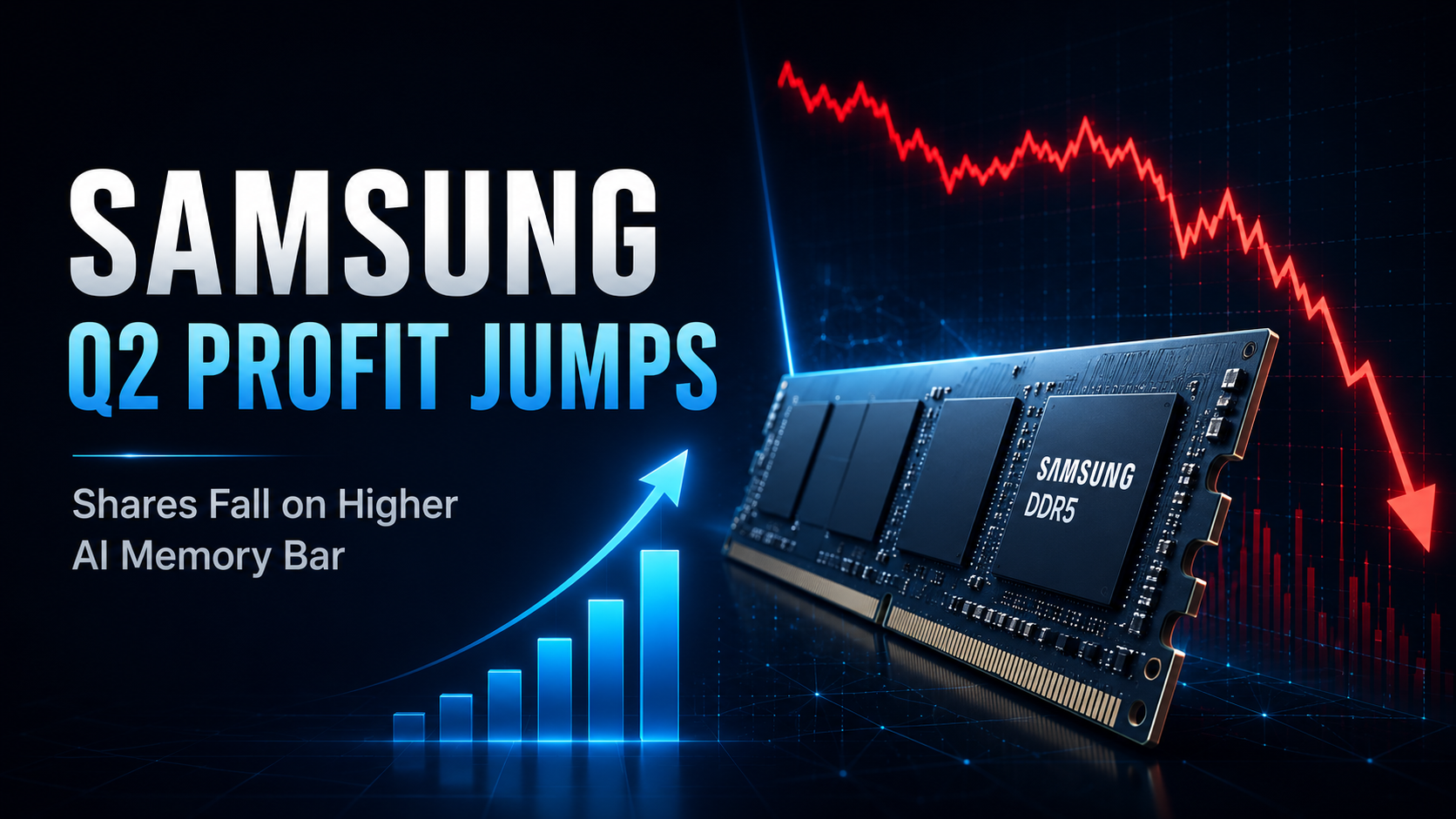
三星第二季獲利飆升19倍,但股價下跌:為何AI記憶體股面臨更高門檻
三星電子最近指引其2026年第二季營收約為171兆韓元,營業利潤為89.4兆韓元,較一年前驚人地增加了19倍。從帳面上看,這是迄今為止AI記憶體週期中最強勁的獲利信號之一。
然而,市場拒絕將其視為簡單的財報優於預期來交易。三星股價盤中跌幅高達10.1%,在韓國收盤下跌6.9%,並拖累SK海力士、美光和西部數據等同業。給交易員的信號非常明確:投資者不再只是詢問AI記憶體需求是否強勁。他們現在質疑,在經歷歷史性的全行業漲勢後,當前的記憶體定價、擴大的利潤率以及激進的AI資本支出(Capex)能否持續維持。
2026/07/08
Hyperliquid 未平倉合約達 115 億美元:鏈上永續合約是否正擴展至美國股票市場?
Hyperliquid 的未平倉合約已達到約 115 億美元,創下 2026 年新高,其中 HIP-3 市場貢獻了近 40 億美元。與 S&P 500 掛鉤的合約已成為最大的 HIP-3 市場,而追蹤 SK Hynix 和 Micron Technology 的合約則反映了對 AI 和半導體相關曝險的需求日益增長。
2026/07/28
熱門
目前熱門備受市場關注的加密貨幣
加密貨幣價格
按交易量計算交易量最大的加密貨幣