

OverviewTwo of the world's larger economies spent September moving in opposite directions on the same question, which is what rules should govern a regulated crypto market. On September 15 the US SenaOverviewTwo of the world's larger economies spent September moving in opposite directions on the same question, which is what rules should govern a regulated crypto market. On September 15 the US Sena
Russia Races to Open a Regulated Crypto Market by December While US Market Structure Stalls

Overview
Two of the world's larger economies spent September moving in opposite directions on the same question, which is what rules should govern a regulated crypto market. On September 15 the US Senate failed to invoke cloture on the Digital Asset Market Clarity Act by 49 votes to 50, leaving the boundary between the SEC and the CFTC to agency rulemaking instead of statute. Six days later, at the Moscow Financial Forum, Chistyukhin told reporters that Russia's crypto industry could be operating legally before the end of 2026, with consultations already running between the central bank and the institutions that would participate.
1. What Russia Built, and When
The Bank of Russia proposed a framework to legalise and regulate crypto trading for individuals and institutions in December 2025, recognising digital currencies and stablecoins as monetary assets that can be bought and sold while remaining barred from domestic payments.
The legislative path ran quickly from there, Chistyukhin set out the timetable on July 3 at the Bank of Russia's Financial Congress, naming September 1 as the commencement date and July 1, 2027 as the end of the transition period. The State Duma passed the law on July 21, the central bank published a draft implementing regulations on July 27, President Putin signed legislation defining digital assets in August, and the statute took effect on September 1.
The law creates a regulated market resembling Russia's securities market, requiring exchanges, brokers, custodians and other service providers to hold central bank licences by July 1, 2027. All transactions, custody and record-keeping must occur inside the regulated system, and banks are required to reject transfers to unauthorised crypto service providers. Criminal and administrative liability for operating outside the perimeter begins when the transition period ends. In July the central bank published capital requirements for digital depositories ranging from 50 million to 250 million rubles depending on the activities undertaken. Anatoly Aksakov, who chairs the State Duma's Financial Markets Committee, framed the restrictions as investor protection, saying that widespread use of anonymous wallets and grey-market circulation contradicts the idea of a legal market.
2. Where the Framework Stands Now
The central bank is talking informally to major banks, brokers, depositories, trading organisers and non-financial companies involved in crypto exchange. No formal applications have been submitted, because several first-tier regulatory acts still need to be adopted, published and brought into force before firms can apply.
Twenty-seven subordinate acts sit beneath the statute, seven first-tier and twenty second-tier, covering registers, qualification requirements, digital depositories and the asset whitelist. Six of the seven first-tier measures have gone to the Justice Ministry, with the seventh expected to follow. Chistyukhin has described the volume of subordinate regulation as very large and significant, and suggested the fine-tuning of internal rules could be finished before December. The practical target the central bank has given is licensed firms beginning full-scale operations by late 2026 or early 2027.
3. The Rules for Investors
Access splits along the qualified and non-qualified line that governs Russian securities markets generally. Non-qualified investors must pass a knowledge test and can purchase up to 300,000 rubles, roughly $3,582, of digital assets per year through a single intermediary. Qualified investors face no monetary cap, though they must also complete testing and acknowledge the risks before trading. Both groups trade through licensed platforms, which are permitted to facilitate crypto trading and the purchase of other financial assets using crypto. The central bank has been consistent about the risk framing throughout, stating that digital assets are not issued or guaranteed by any jurisdiction and carry elevated volatility and sanctions exposure.
4. The Whitelist and Its Thresholds
Eligibility for public trading runs on quantitative thresholds instead of regulatory discretion alone. A cryptocurrency automatically qualifies if it has maintained an average market capitalisation above 5 trillion rubles, approximately $64 billion, and average daily trading volumes exceeding 1 trillion rubles, around $12.8 billion, across the previous two years. Chistyukhin has said Bitcoin, Ether and Tether's USDT meet those criteria, and the central bank's board decides whether to admit anything else. Those thresholds are high enough to exclude almost everything. A $64 billion average market cap sustained over two years describes a very short list of assets, and the $12.8 billion daily volume requirement narrows it further. The design gives Russian retail investors access to the largest, most liquid assets while keeping the long tail outside the regulated perimeter entirely.
5. Cross-Border Settlement
Crypto remains prohibited as a means of payment for goods and services inside Russia, preserving the state's monopoly over domestic monetary policy. Cross-border settlement in cryptocurrencies and stablecoins under foreign trade contracts is permitted, and it is not unrestricted, since those settlements remain subject to standard currency control, anti-money-laundering and counter-terrorist financing procedures. The combination gives exporters and importers a settlement channel that does not depend on correspondent banking relationships or dollar clearing, while keeping the transactions inside a supervised system the central bank can observe. Building licensed custody, exchange and depository infrastructure domestically is what makes that channel usable at scale, which is why the institutional buildout matters more than retail access to the strategy behind it.
Sberbank, Russia's largest bank, plans to launch crypto wallet and custody services in December, and projected in August that new crypto services would generate trading volumes near 4 trillion rubles, about $47 billion, in their first year. Mining already consumes around 16 billion kilowatt-hours annually in Russia, roughly 1.5% of national electricity use, giving the country a domestic crypto industry that predates the framework being built to regulate it.
6. What the United States Did in the Same Month
The Senate's cloture vote on H.R. 3633 failed 49 to 50 on September 15, short of the 60 required and below a simple majority. Every Democrat voted against, including the seven who had spent months negotiating the text, and four Republicans joined them. The bill collapsed over ethics provisions covering federal officials' digital asset holdings. Republicans had agreed to substantial restrictions, including a permanent bar on officials and spouses issuing or sponsoring digital assets and an enforcement role for state attorneys general, and Democrats held out for firmer divestment requirements.
The consequence is that the United States enters the fourth quarter without a statutory boundary between its two market regulators. Both agencies continue rulemaking under existing authority, with the SEC's Regulation Crypto Assets framework open for comment until October 20, and the two jointly classified 16 digital assets as commodities in March. Agency rules can be rewritten by a successor administration and challenged in court on whether the authority existed, which is the durability gap that legislation would have closed.
7. What the Comparison Shows
Both governments want the same thing, which is a legal crypto market under supervision. What separates them is how much each has to accommodate on the way there. Russia's answer is to close the perimeter. Every transaction, custody arrangement and record must sit inside a licensed system, banks must refuse transfers to anything outside it, the eligible asset list runs to three names, retail purchases are capped near $3,582 a year, and criminal liability attaches to operating outside the boundary from July 2027.
The cost of that approach is written into the rules themselves. A framework that admits Bitcoin, Ether and USDT while capping ordinary investors at a few thousand dollars a year is not building a market so much as building a supervised channel, and the whitelist thresholds are set high enough that almost nothing else can reach them. Washington cannot borrow the method even if it wanted the speed. The CLARITY Act had to cover an open market with two competing regulators, an industry large enough to lobby both, constitutional limits on what agencies can decide without Congress, and a chamber requiring sixty votes for anything contested. The test that matters now is whether Russia's market attracts anyone. Sberbank expects roughly 4 trillion rubles, about $47 billion, of trading volume in its first year of crypto services, and licensed firms are supposed to begin operating between late 2026 and early 2027. If the rules arrive on schedule and that volume does not, it will suggest regulatory clarity was never the binding constraint on either side of the comparison.
Frequently Asked Questions
Is Russia's crypto market open now?
The governing law took effect on September 1, 2026, but no firm has submitted a licence application because several first-tier regulatory acts still need to be adopted, published and brought into force. Chistyukhin said on September 21 that the central bank is holding informal consultations with banks, brokers and depositories, and that licensed firms could begin full-scale operations by late 2026 or early 2027.
Can Russians buy Bitcoin legally?
Under the framework, non-qualified investors must pass a knowledge test and can purchase up to 300,000 rubles, roughly $3,582, per year through a single intermediary. Qualified investors face no monetary cap but must also complete testing. Purchases go through licensed platforms once those platforms are authorised.
Which cryptocurrencies are eligible?
Automatic eligibility requires an average market capitalisation above 5 trillion rubles, about $64 billion, and average daily volume above 1 trillion rubles, around $12.8 billion, over the previous two years. Chistyukhin has said Bitcoin, Ether and USDT meet those thresholds, with the central bank's board deciding on any others.
Can Russian companies use crypto for international trade?
Yes, within limits. Cross-border settlement in cryptocurrencies and stablecoins under foreign trade contracts is permitted, and those settlements remain subject to standard currency control, anti-money-laundering and counter-terrorist financing procedures.
Disclaimer: This article is for informational purposes only and does not constitute financial, investment, legal, or trading advice. Digital assets are volatile and you may lose capital. Conduct your own research before making any decision.
市场机遇
4实时价格 (4)
$0.020806
$0.020806$0.020806
USD
4 (4) 实时价格图表
本页面分享的文章均源自公开平台,仅供参考。该内容不代表 MEXC 的立场或观点。所有版权归 Emmanuel Olamiye 所有。如果您认为任何内容侵犯了第三方的权益,请联系 service@support.mexc.com 以便及时删除。 MEXC 不保证任何内容的准确性、完整性或及时性,且不对基于所提供信息而采取的任何行动负责。本内容不构成财务、法律或其他专业建议,亦不应被解释为 MEXC 的推荐或认可。如需专家见解和深入分析,请造访 MEXC 学院。
4 最新动态
查看更多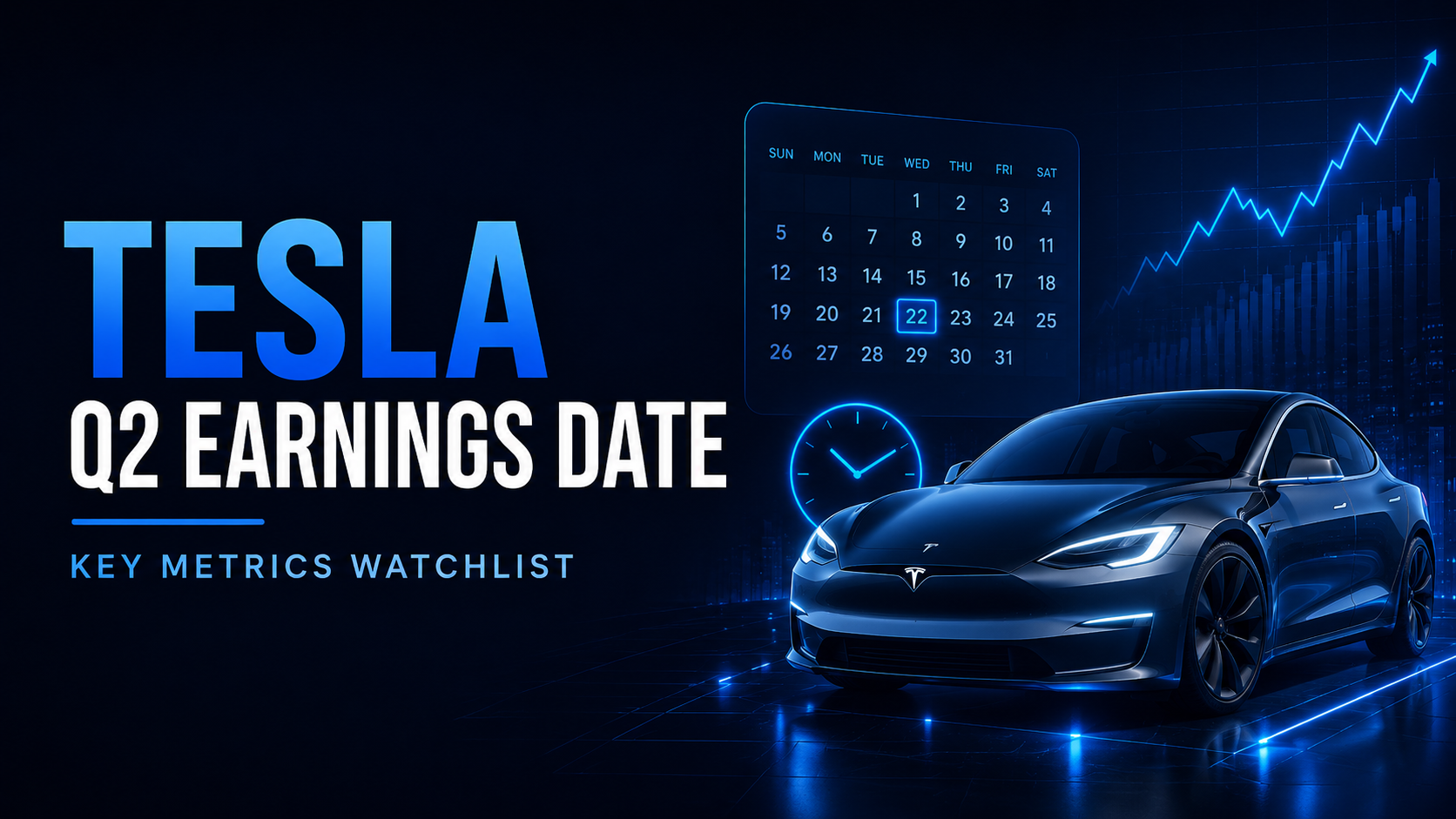
特斯拉2026年第二季度财报日期:发布时间、网络直播及关键指标
特斯拉2026年第二季度财报定于2026年7月22日(星期三)美国股市收盘后发布,管理层计划于美国中部时间下午4:30 / 东部时间下午5:30主持实时Q&A网络直播。第二季度的更新和网络直播将通过特斯拉的投资者关系网站提供,并在电话会议后提供存档重播。
这不仅仅是另一个普通的特斯拉财报日。特斯拉已经报告了超预期的交付季度:在2026年第二季度,公司生产了451,758辆汽车,交付了480,126辆汽车,并部署了13.5 GWh的储能产品。
对于交易员来说,关键问题不再是特斯拉是否交付了更多汽车,这部分已经是已知事实。真正的问题是,这些交付是否足够盈利,储能业务的增长是否能支撑特斯拉更宏大的愿景,以及管理层能否证明其在人工智能、自动驾驶和Robotaxi(无人驾驶出租车)领域的投资正从“叙事”走向可衡量的业务进展。
2026/07/06
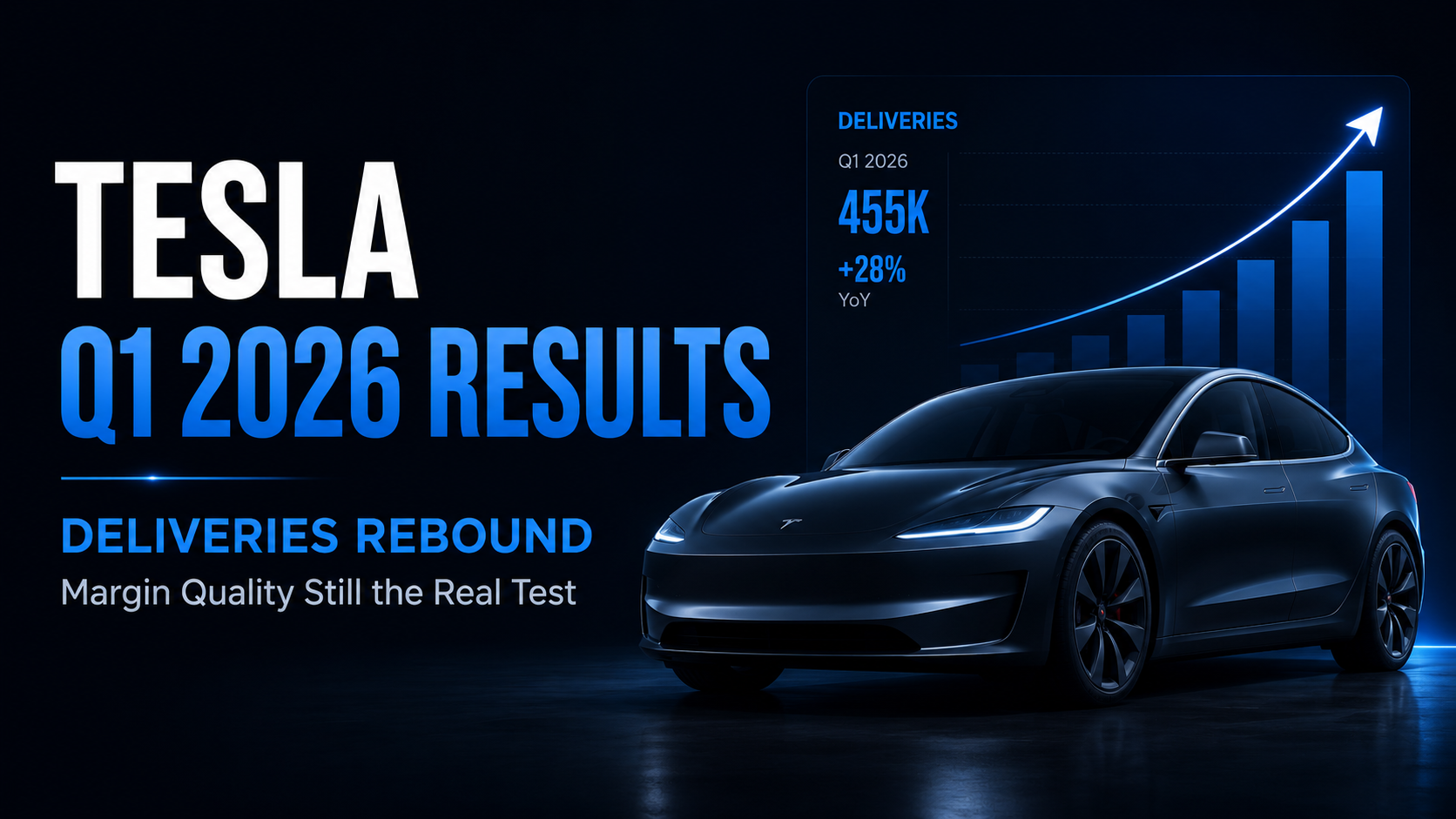
特斯拉2026年第一季度财报回顾:交付量反弹,但利润率质量仍是真正的考验
特斯拉于2026年4月22日美国股市收盘后公布了其2026年第一季度的财务业绩。该公司本季度交付了358,023辆汽车,创造了224亿美元的总营收,并报告归属于普通股股东的GAAP净利润为4.77亿美元。总GAAP毛利率提升至21.1%,而营业利润率达到4.2%。
核心信号不仅在于特斯拉的交付量从去年同期的疲软基数中恢复。更重要的问题是:更高的交付量、FSD相关营收、更低的单车成本以及改善的汽车毛利率,能否重建市场对特斯拉盈利能力的信心。对于寻找下一次TSLA财报日期或关注特斯拉财报的投资者来说,第一季度的表现为第二季度设立了一个关键考验:即销量的增长能否可持续地转化为更高质量的收益。
2026/07/09
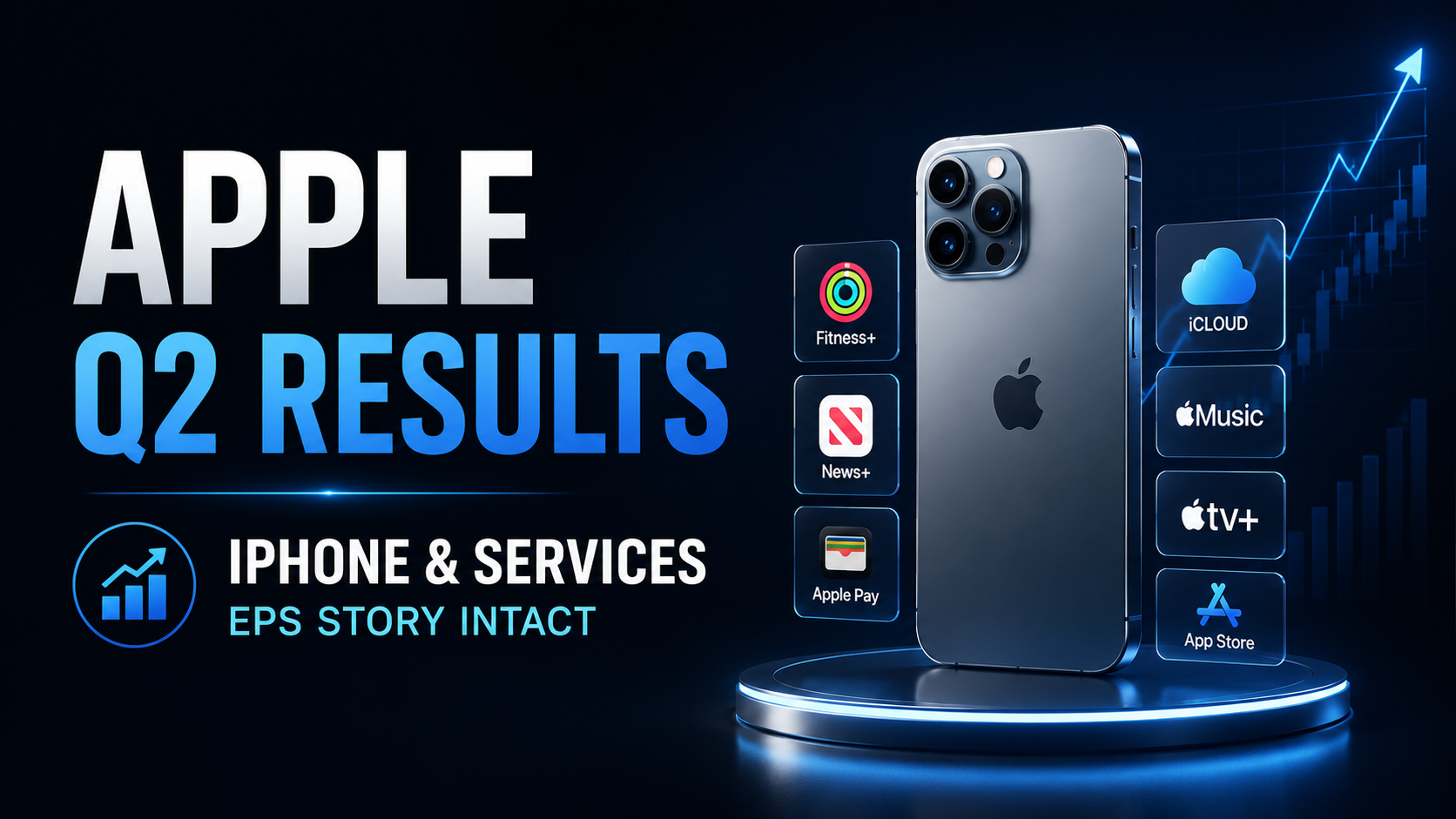
苹果 2026 财年第二季度财报回顾:iPhone 营收与服务业务增长维持 EPS 预期
苹果于 2026 年 4 月 30 日发布了 2026 财年第二季度财报,涵盖截至 2026 年 3 月 28 日的季度。总营收达到 1112 亿美元,同比增长 17%,摊薄后每股收益(EPS)增长 22% 至 2.01 美元。苹果表示,该季度创下了公司 3 月份季度的总营收、iPhone 营收和 EPS 纪录,同时服务业务营收也创下历史新高。
这不仅仅是一份常规的硬件周期财报。苹果第二季度的业绩证明,iPhone 需求、服务业务增长以及积极的资本回报计划仍在共同支撑着该公司强大的 EPS 增长故事。对于寻找下一个苹果财报或 AAPL 财报更新的投资者而言,未来的关键问题是,在市场等待更强劲的 AI 和产品周期催化剂之际,苹果能否维持其溢价估值。
2026/07/09


您可能也会喜欢
热门
目前热门备受市场关注的加密货币
加密货币价格
按交易量计算交易量最大的加密货币