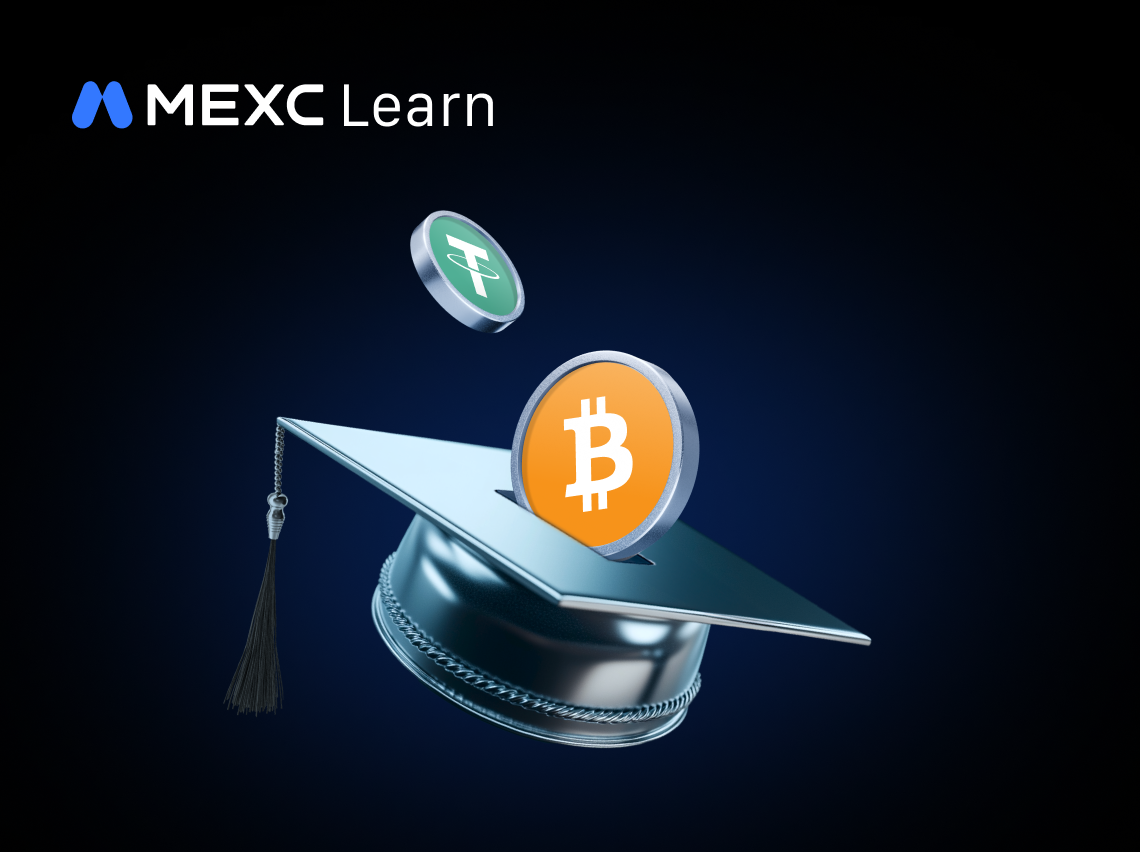
Tether (USDT), originally launched as RealCoin in 2014,has evolved into the most widely used stablecoin in the cryptocurrency market. Tether’s growth has significantly contributed to marketTether (USDT), originally launched as RealCoin in 2014,has evolved into the most widely used stablecoin in the cryptocurrency market. Tether’s growth has significantly contributed to market
Learn/Cryptocurrency Knowledge/Hot Concepts/The Evoluti...n Dominance

The Evolution of Tether: From RealCoin to Global Stablecoin Dominance

Beginner
Apr 21, 2026MEXC
0m
4
4$0.010971+2.49%
DeFi
DEFI$0.0001224+4.17%
RISE
RISE$----%
Tether (USDT), originally launched as RealCoin in 2014,has evolved into the most widely used stablecoin in the cryptocurrency market. Tether’s growth has significantly contributed to market liquidity, and it now serves as an essential tool for traders, investors, and DeFi (Decentralized Finance) applications.


TL;DR


  • Tether (USDT) started as RealCoin in 2014, created to provide a digital representation of the US Dollar with stability.
  • Over time, Tether has expanded its use across exchanges, DeFi platforms, and as a key trading pair with major cryptocurrencies like Bitcoin (BTC) and Ethereum (ETH).
  • USDT’s dominance is clear, but its role continues to evolve as market demand and regulatory scrutiny increase.
  • Tether’s evolution highlights its pivotal role in price discovery, liquidity provision, and market risk management.
  • Tether’s continued growth will depend on its ability to navigate regulatory challenges and adapt to changing market dynamics.

Introduction


Tether (USDT), initially known as RealCoin, was created in 2014 as a stablecoin designed to address the volatility issues that plagued other cryptocurrencies like Bitcoin (BTC) and Ethereum (ETH). Tether’s primary goal was to offer a digital asset tied to the US Dollar, providing a more stable form of cryptocurrency for traders and investors. Since then, Tether has expanded its role in the cryptocurrency ecosystem, becoming essential to market liquidity, trading pairs, and the growing field of DeFi (Decentralized Finance).
In this article, we explore the evolution of Tether, from its early days as RealCoin to its current position as a dominant force in the cryptocurrency market. We’ll also discuss how Tether maintains its leading position and the challenges it faces, including regulatory scrutiny and market competition. If you’re seeking to understand what USDT is and how it works,What is USDT? A Complete Guide to USDT (Tether), its origin and mechanisms provides further insights.

Tether's Origins: RealCoin to Tether


Tether (USDT) began as RealCoin in 2014. The goal behind RealCoin was straightforward: to create a stable digital currency backed by the US Dollar. This was intended to provide traders with a safe harbor during periods of market volatility that typically affect cryptocurrencies like Bitcoin and Ethereum.
The founders of Tether recognized the need for a stable digital asset that would allow for less volatile trading compared to existing cryptocurrencies. RealCoin was designed to provide a 1:1 peg to the US Dollar, making it easier for users to trade with confidence. In 2015, the name was changed to Tether (USDT), reflecting its connection to fiat-backed stability and its growing use as a medium of exchange within the cryptocurrency market.

The Rise of USDT Dominance


Since its rebranding to Tether, the stablecoin has experienced rapid growth in usage and adoption. Today, USDT dominance is visible across major cryptocurrency exchanges such as MEXC, where it is frequently used for trading pairs and ensuring market stability.

USDT and Market Liquidity


The key feature of Tether is its ability to maintain a 1:1 peg to the US Dollar, making it an attractive option for traders seeking stability while remaining active in the highly volatile cryptocurrency markets. By using USDT, traders can hedge against the price fluctuations of other cryptocurrencies like Bitcoin and Ethereum.


Beyond exchanges, Tether’s dominance extends into DeFi, where it is used for lending, liquidity provision, and yield farming. Tether plays a crucial role in maintaining high liquidity, ensuring that decentralized platforms have the necessary resources to operate efficiently. Its stability provides security and predictability, which are essential for the broader adoption of DeFi.

Tether and Regulatory Challenges


As Tether (USDT) has grown, so has the attention it receives from regulators. One of the primary concerns surrounding USDT is reserve management. While Tether claims that each USDT is fully backed by fiat reserves, the company has faced multiple regulatory inquiries regarding the transparency of these reserves. The most notable investigation occurred in 2021, when the New York Attorney General’s office looked into allegations that Tether had misrepresented its reserves.

To address these concerns, Tether has increased its transparency by releasing quarterly reports and undergoing audits of its reserves. While these steps have helped build confidence, USDT’s regulatory future remains an ongoing concern. For further details on Tether’s regulatory challenges and how it’s responding, read USDT Regulatory Landscape: Compliance and Global Standards.


USDT's Role in Price Discovery and Liquidity


One of the reasons USDT has achieved dominance is its essential role in price discovery and liquidity provision. USDT trading pairs are among the most widely used across exchanges, enabling traders to efficiently convert between USDT and other cryptocurrencies like Bitcoin (BTC), Ethereum (ETH), and XRP. By providing a stable medium of exchange, Tether contributes to a more efficient trading environment.

USDT’s dominance also helps improve market efficiency. It allows institutional investors and large traders to enter or exit the market with minimal slippage, making it easier to navigate large-cap crypto markets without causing significant price movements.

Tether Price Dynamics: Volatility and Stability


While USDT is designed to be a stablecoin, its price has experienced temporary fluctuations at times. Tether’s price can sometimes deviate slightly from its 1:1 peg, particularly during market turmoil or when there are large liquidity surges. These deviations tend to be short-lived, as Tether’s reserve management system is designed to quickly restore the 1:1 peg.

Tether price fluctuations are an essential consideration for traders who use USDT for liquidity provision. Understanding Tether’s price behavior during volatile periods can help users make informed decisions when using USDT for trading or investing.

The Future of Tether: Challenges and Growth


Looking ahead, Tether will likely continue to face regulatory challenges, competition from other stablecoins like USDC and USDS, and pressures from evolving market dynamics. However, Tether’s dominance remains significant, and its central role in DeFi, trading pairs, and market liquidity positions it as a key player in the future of digital finance. Tether’s ability to adapt to regulatory challenges and market demands will be critical to its long-term success.

Frequently Asked Questions (FAQ)


What is Tether (USDT) and why is it important in the crypto market?

Tether (USDT) is a stablecoin that is pegged 1:1 to the US Dollar, providing stability in the volatile cryptocurrency market. It is widely used for liquidity, trading pairs, and market efficiency.

How did Tether evolve from RealCoin to USDT?

Tether, initially called RealCoin, was launched in 2014 as a digital representation of the US Dollar. It was later rebranded to Tether (USDT) to reflect its use in stabilizing cryptocurrency transactions.

What role does Tether play in DeFi?

Tether (USDT) plays a crucial role in DeFi by providing liquidity for lending, yield farming, and decentralized exchanges, where it serves as a stable collateral and trading pair.

What challenges does Tether face regarding reserve management?

Tether has faced scrutiny regarding its reserve management and transparency, especially after regulatory investigations into whether its reserves match the amount of USDT in circulation.

How does Tether’s dominance affect the broader crypto market?

Tether’s dominance helps improve market liquidity, ensures price discovery, and reduces volatility during times of market uncertainty, making it a key asset for both institutional and retail traders.

Conclusion


Tether’s evolution from RealCoin to USDT has solidified its role as a dominant stablecoin in the cryptocurrency market.By providing liquidity, enabling price discovery, and stabilizing volatile markets, Tether has become indispensable for both crypto traders and institutions. As USDT dominance continues to grow, Tether will need to navigate regulatory challenges, reserve management, and competition from other stablecoins to maintain its position in the evolving digital asset space.

Disclaimer


This article is for educational purposes only and does not constitute financial advice. Cryptocurrency markets are volatile, and the use of stablecoins like Tether (USDT) involves inherent risks. Always conduct thorough research and consider your risk tolerance before engaging in any cryptocurrency activities.
Market Opportunity
4 Logo
4 Price(4)
$0.010971
$0.010971$0.010971
-1.89%
USD
4 (4) Live Price Chart

Popular Articles

View More
Best Zero-Fee Crypto Exchanges 2026: We Checked 8 Fee Schedules. Only One Is Zero on Every Line.

Best Zero-Fee Crypto Exchanges 2026: We Checked 8 Fee Schedules. Only One Is Zero on Every Line.

MEXC is our top pick among the best zero-fee crypto exchanges in this comparison: it is the only platform in this comparison that combines 0% maker on every spot pair with 600+ spot pairs and 320+
Is Binance Banned in the EU? The July 1 MiCA Suspension, Explained

Is Binance Banned in the EU? The July 1 MiCA Suspension, Explained

Binance suspended most services for European Union users on July 1, 2026, after withdrawing its MiCA license application in Greece on June 24. New orders, deposits, and sign-ups have stopped, while
Where to Buy Cryptocurrency in 2026? The Best Place to Buy Crypto by Region, Path, and Cost

Where to Buy Cryptocurrency in 2026? The Best Place to Buy Crypto by Region, Path, and Cost

For most people, the best place to buy cryptocurrency is a large centralized exchange. Outside the US and UK, MEXC is our top pick in this guide: 0% spot maker fees, a 0%–0.05% taker range, and more
How to Convert USDT to OKLOON on MEXC: Oklo Spot Convert Guide

How to Convert USDT to OKLOON on MEXC: Oklo Spot Convert Guide

Summary OKLOON is an Ondo tokenized product designed to provide economic exposure linked to Oklo Inc. (NYSE: OKLO). MEXC officially added OKLOON to its Convert service on March 13, 2026 at 10:00 UTC.

Hot Crypto Updates

View More
Can Strategy (MicroStrategy) Still Affect the Crypto Market by Buying Bitcoin?

Can Strategy (MicroStrategy) Still Affect the Crypto Market by Buying Bitcoin?

MicroStrategy, now known as Strategy, has long been known for its aggressive Bitcoin accumulation strategy and its near-total reluctance to sell. But recently, the company has made a notable shift in
Cerebras Unveils CS-4 and a $20 Billion OpenAI Deal: Why Did CBRS Stock Fall 12% Anyway?

Cerebras Unveils CS-4 and a $20 Billion OpenAI Deal: Why Did CBRS Stock Fall 12% Anyway?

Executive Summary Cerebras Systems (NASDAQ:CBRS) fell 12.69% on Tuesday, August 18, 2026, closing at $220.01, even as the company unveiled its next-generation CS-4 AI accelerator at its flagship
US Housing Starts Plunge 12.4%: What It Means for the Fed and the U.S. Economy

US Housing Starts Plunge 12.4%: What It Means for the Fed and the U.S. Economy

Overview United States homebuilding activity contracted sharply in July 2026 as high mortgage rates and elevated new home inventories weighed heavily on residential construction. According to data
Why Is Western Digital Stock Down 7% Today? AI Storage Stocks Slide as Bond Yields Rise

Why Is Western Digital Stock Down 7% Today? AI Storage Stocks Slide as Bond Yields Rise

Overview Global data storage manufacturer Western Digital (NASDAQ: WDC) experienced heavy institutional selling pressure on August 18, with shares declining roughly 7.4 percent during the trading

Trending News

View More
Harmony ONE Price Plunges After Suspected 4 Billion Token Mint

Harmony ONE Price Plunges After Suspected 4 Billion Token Mint

Harmony’s ONE price plunged after reports of an unauthorized 4 billion-token mint. Here is what the supply shock means for traders.
Gold Price Breaks $4,400 as Safe-Haven Demand Returns

Gold Price Breaks $4,400 as Safe-Haven Demand Returns

Gold has moved above $4,400 as weaker US data, rate uncertainty and safe-haven demand support the precious metal’s recovery.
CXMT Stock Briefly Tops RMB 4 Trillion as Investors Rush Into China’s Memory-Chip Leader

CXMT Stock Briefly Tops RMB 4 Trillion as Investors Rush Into China’s Memory-Chip Leader

CXMT briefly surpassed RMB 4 trillion in market value after its Shanghai IPO. Its growth is real, but limited float and DRAM cyclicality raise risks.

Hyperliquid HIP-3 Open Interest Reaches Record $4.3 Billion

Hyperliquid HIP-3 Open Interest Reaches Record $4.3 Billion

Hyperliquid HIP-3 open interest has reached a record $4.3 billion as traders move into 24/7 stock, index and commodity perpetual markets.

Related Articles

View More
Can XRP Reach $1,000? The Math Says No, Here's Why

Can XRP Reach $1,000? The Math Says No, Here's Why

Every crypto rally brings the same question back: can XRP reach $1,000?It is one of the most-searched price targets in all of crypto, and the short answer is no — not at anything close to XRP's curren
How to Short Dogecoin: A Step-by-Step Hedging Guide

How to Short Dogecoin: A Step-by-Step Hedging Guide

Shorting Dogecoin involves opening a position that generates a profit when the price of DOGE declines. Instead of the typical buy and hold strategy, a trader borrows or enters a contract against the a
What is a Stablecoin? A Complete Beginner’s Guide to Stable Cryptocurrencies

What is a Stablecoin? A Complete Beginner’s Guide to Stable Cryptocurrencies

Are you interested in stablecoins but find the world of cryptocurrency daunting? You’re not alone. Digital currencies can be complex, especially for those new to the space. This comprehensive guide of
Does XRP Burn Coins? Yes, but Not for the Reason You Think

Does XRP Burn Coins? Yes, but Not for the Reason You Think

If you've been holding XRP or thinking about buying it, you've probably seen people arguing about "XRP burns" and wondered what all the fuss is about. The short answer: yes, XRP burns coins — a tiny a

Sign Up on MEXC
Sign Up & Receive Up to 10,000 USDT Bonus
Is Your Stablecoin Truly Safe?
Is Your Stablecoin Truly Safe?Is Your Stablecoin Truly Safe?
Know the risks of USDT, USDC, OpenUSD & USD1