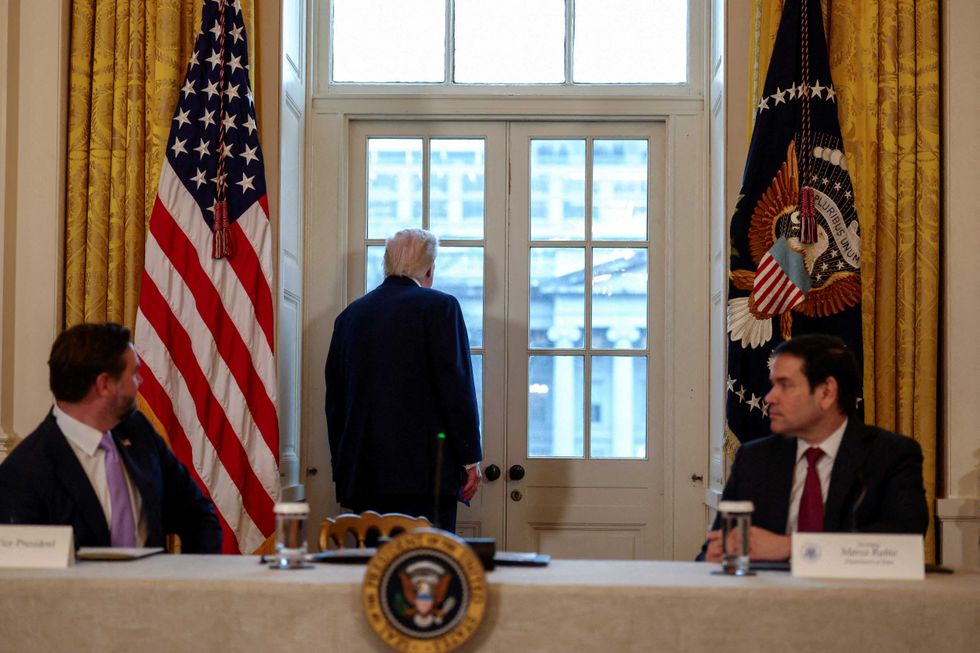
El presidente de Estados Unidos, Donald Trump, pidió a la primera ministra japonesa, Sanae Takaichi, que evite una mayor escalada de una disputa con China durante las conversaciones de esta semana, dijeron fuentes con conocimiento del asunto.El presidente de Estados Unidos, Donald Trump, pidió a la primera ministra japonesa, Sanae Takaichi, que evite una mayor escalada de una disputa con China durante las conversaciones de esta semana, dijeron fuentes con conocimiento del asunto.

Trump insta a Takaichi a evitar una escalada de Japón en la disputa con China

2025/11/27 20:08
Okuma süresi: 4 dk
Bu içerikle ilgili geri bildirim veya endişeleriniz için lütfen crypto.news@mexc.com üzerinden bizimle iletişime geçin.

El presidente de Estados Unidos, Donald Trump, pidió a la primera ministra japonesa, Sanae Takaichi, que evite una mayor escalada de una disputa con China durante las conversaciones de esta semana, dijeron fuentes con conocimiento del asunto, mientras pretende mantener una frágil tregua de guerra comercial con Pekín.

Takaichi desencadenó la mayor disputa diplomática con Pekín en años al comentar este mes en el Parlamento que un hipotético ataque chino a Taiwán podría desencadenar una acción militar japonesa, lo que provocó la furia de Pekín.

Te puede interesar

  • El Economista

    Geopolítica

    Taiwán reparte un manual de crisis ante posibles desastres y una invasión de China

  • El Economista

    Geopolítica

    China y Japón chocan por comentarios sobre Taiwán

En la llamada telefónica del martes con Takaichi, Trump dijo que no quería ver una nueva escalada, dijeron las dos fuentes gubernamentales japonesas, que pidieron el anonimato por tratarse de un asunto delicado.

Sin embargo, Trump no hizo ninguna petición específica a Takaichi, dijo una de las fuentes, lo que sugiere que no se hizo eco de la petición de Pekín de una retractación de los comentarios. Japón no se ha retractado, sino que ha afirmado que los comentarios reflejaban una política de larga data.

El secretario jefe del Gabinete japonés, Minoru Kihara, declinó comentar los informes el jueves.

A algunos representantes de Tokio les preocupa desde hace tiempo que Trump pueda estar dispuesto a debilitar el apoyo a Taiwán en busca de un acuerdo comercial con China, una medida que podría envalentonar a Pekín y desencadenar un conflicto en Asia Oriental.

"Para Trump, lo más importante son las relaciones entre Estados Unidos y China", dijo Kazuhiro Maejima, profesor de política estadounidense en la Universidad de Sophia. "Japón siempre ha sido tratado como una herramienta o una carta para gestionar esa relación".

La llamada telefónica de Trump con Takaichi siguió inmediatamente a otra con Xi Jinping, en la que el presidente chino dijo que el "regreso de Taiwán a China" era una parte clave de la visión de Pekín sobre el orden mundial, según la agencia oficial de noticias Xinhua.

Te puede interesar
  • El Economista

    Geopolítica

    Xi y Trump sostienen llamada: Retorno de Taiwán a China y comercio, entre los temas que hablaron
  • El Economista

    Geopolítica

    Xi muestra su apoyo a "todos los esfuerzos por la paz" para Ucrania tras el plan de Estados Unidos

Taiwán, gobernado democráticamente y que rechaza la reivindicación de Pekín de la propiedad, diciendo que solo su pueblo puede decidir el futuro de la isla, ha descartado tal retorno.

Trump no ha hecho comentarios sobre las supuestas conversaciones con Xi acerca de Taiwán, subrayando en cambio que las dos mayores economías del mundo disfrutan de relaciones "extremadamente fuertes" y están trabajando para finalizar un amplio acuerdo comercial.

"La relación de Estados Unidos con China es muy buena, y eso también es muy bueno para Japón, que es nuestro querido y cercano aliado", dijo la Casa Blanca en un comunicado atribuido a Trump, a preguntas de Reuters.

"Firmamos acuerdos comerciales maravillosos con Japón, China, Corea del Sur y muchas otras naciones, y el mundo está en paz. ¡Mantengámoslo así!".

El silencio público de Trump sobre la escalada de la disputa de Japón con China, en la que Pekín ha instado a los ciudadanos a no viajar allí, asestando un duro golpe al turismo, ha crispado aún más los nervios en Tokio.

La oficina del primer ministro japonés remitió a Reuters a su resumen oficial de la llamada de Takaichi con Trump, que decía que los dos líderes discutieron las relaciones entre EU y China, pero no dio más detalles.

La petición de Trump para que Takaichi baje el tono con Pekín fue reportada por primera vez por el Wall Street Journal.


Piyasa Fırsatı
OFFICIAL TRUMP Logosu
OFFICIAL TRUMP Fiyatı(TRUMP)
$1.837
$1.837$1.837
-7.36%
USD
OFFICIAL TRUMP (TRUMP) Canlı Fiyat Grafiği

SPACEX(PRE) Launchpad

SPACEX(PRE) LaunchpadSPACEX(PRE) Launchpad

Register for a chance to win a free lucky draw

Sorumluluk Reddi: Bu sitede yeniden yayınlanan makaleler, halka açık platformlardan alınmıştır ve yalnızca bilgilendirme amaçlıdır. MEXC'nin görüşlerini yansıtmayabilir. Tüm hakları telif sahiplerine aittir. Herhangi bir içeriğin üçüncü taraf haklarını ihlal ettiğini düşünüyorsanız, kaldırılması için lütfen crypto.news@mexc.com ile iletişime geçin. MEXC, içeriğin doğruluğu, eksiksizliği veya güncelliği konusunda hiçbir garanti vermez ve sağlanan bilgilere dayalı olarak alınan herhangi bir eylemden sorumlu değildir. İçerik, finansal, yasal veya diğer profesyonel tavsiye niteliğinde değildir ve MEXC tarafından bir tavsiye veya onay olarak değerlendirilmemelidir.

Ayrıca Şunları da Beğenebilirsiniz

Pi Network V26 Shock Prediction Could Change Pi Coin Forever

Pi Network V26 Shock Prediction Could Change Pi Coin Forever

Pi Network V26 Shock Prediction Could Change Pi Coin Forever Pi Network is once again becoming one of the hottest topics in the crypto world after growing
Paylaş
Hokanews2026/06/04 18:44
USDH Power Struggle Ignites Stablecoin “Bidding Wars” Across DeFi: Bloomberg

USDH Power Struggle Ignites Stablecoin “Bidding Wars” Across DeFi: Bloomberg

A heated contest for control over a new dollar-pegged token has set the stage for what analysts say could define the next phase of the stablecoin industry. According to Bloomberg, a bidding war unfolded on Hyperliquid, one of crypto’s fastest-growing trading platforms, with the prize being the right to issue USDH, its native stablecoin. The competition drew some of the sector’s most prominent names, including Paxos, Sky, and Ethena, who later withdrew their bid, alongside the lesser-known Native Markets, a startup backed by Stripe stablecoin subsidiary Bridge. Hyperliquid Stablecoin Race Shows Branding and Partnerships Matter as Much as Tech Over the weekend, Hyperliquid’s validators, the contributors who secure the network and vote on key decisions, awarded the USDH contract to Native Markets over the weekend. Despite its relatively new status, the firm’s connection with Stripe helped it outpace more established rivals. Stablecoins underpin decentralized finance by providing a dollar-backed medium for collateral, settlement, and payments across applications. What began as a grassroots, community-led sector has evolved into a battleground for institutions and payment companies seeking revenue from interest on reserves. Circle, for example, shares proceeds from its USDC with Coinbase under a partnership designed to stabilize earnings during market swings. The Hyperliquid contest offered a rare glimpse into just how intense competition has become. Paxos pledged to take no revenue until USDH surpassed $1 billion in circulation. Agora offered to share 100% of net revenue with Hyperliquid, while Ethena put forward 95%. All were outbid by Native Markets, whose ties to Stripe’s $1.1 billion acquisition of Bridge and subsequent rollout of the Tempo blockchain positioned it as a strong contender. “Every stablecoin issuer is extremely desperate for supply,” said Zaheer Ebtikar, co-founder of Split Capital. “They are willing to publicly announce how much they are willing to offer. It just shows it’s a very tough business for stablecoin issuers.” While USDC remains dominant on Hyperliquid with more than $5.6 billion in deposits, the arrival of USDH could shift flows and revenue dynamics. Paxos co-founder Bhau Kotecha said the firm sees the exchange’s growth as an important opportunity, while Agora’s co-founder Nick van Eck warned that awarding the contract to a vertically integrated issuer risked undermining decentralization. Regulatory positioning also factored into the debate. Paxos operates under a New York trust charter and is seeking a federal license, while Bridge holds money transmitter approvals in 30 states. Native Markets, in a blog post, cited regulatory flexibility and deployment speed as reasons for its selection. Hyperliquid said the strong engagement from its community validated the process. Circle CEO Jeremy Allaire dismissed concerns over USDC’s status, noting on X that competition benefits the ecosystem. Analysts suggested that fears of centralization may be exaggerated, noting that Hyperliquid is likely to remain neutral and support multiple stablecoins. Still, the contest over USDH highlighted a new reality for stablecoins: branding, partnerships, and business strategy are becoming as decisive as technology. Native Markets Secures USDH Stablecoin Mandate on Hyperliquid Hyperliquid has concluded its governance vote for the USDH stablecoin, awarding the mandate to Native Markets after a closely watched process that drew weeks of community debate and rival proposals. USDH, described by Hyperliquid as a “Hyperliquid-first, compliant, and natively minted” dollar-backed token, is intended to reduce the platform’s dependence on USDC and strengthen its spot markets. Validators on the decentralized exchange voted in favor of Native Markets, a relatively new player backed by Stripe’s Bridge subsidiary, over established contenders including Paxos and Ethena. The outcome followed a string of proposals offering aggressive revenue-sharing terms to win validator support, underscoring the scale of incentives attached to controlling USDH. Hyperliquid’s exchange has become a critical hub for stablecoin liquidity, with $5.7 billion in USDC, around 8% of its total supply, currently held on the network. At prevailing treasury yields, that translates to an estimated $200 million to $220 million in annual revenue for Circle, underlining why a native alternative could be transformative. Hyperliquid’s validators, who secure the network and vote on key decisions, selected Native Markets following an on-chain governance process that concluded September 15. Native Markets has laid out a phased rollout for USDH, beginning with capped minting and redemption trials before expanding into spot markets. Its reserves will be managed in cash and treasuries by BlackRock, with on-chain tokenization through Superstate and Bridge. Yield from those reserves will be split between Hyperliquid’s Assistance Fund and ecosystem development. The launch of USDH comes as Hyperliquid records record profits from perpetual futures trading, with $106 million in revenue in August alone, and prepares to slash spot trading fees by 80% to bolster liquidity. Analysts say the move positions Hyperliquid to capture more of the stablecoin economics internally, marking a significant step in its bid to rival the largest players in decentralized finance
Paylaş
CryptoNews2025/09/18 00:48
Strategy Didn’t Sell Bitcoin in May, According to Polymarket

Strategy Didn’t Sell Bitcoin in May, According to Polymarket

Strategy's sale of 32 BTC in May sparked one of the most contentious debates around Polymarket's resolution criteria.
Paylaş
CryptoPotato2026/06/04 18:13

RealStocks Now Live

RealStocks Now LiveRealStocks Now Live

Trade real U.S. stock via regulated brokerage