

Stablecoin Payments vs Layer-2 Hype: Why Movement’s Pivot Matters
The last two cycles taught crypto teams that throughput alone does not win payments. Stablecoins, not rollup bragging rights, power real settlement, reconciliation and funding across borders.
Movement’s decision to pivot from a Layer-2 narrative toward cross-border stablecoin payments and savings reframes what “adoption” looks like: licensed rails, merchant acceptance, and treasury workflows. That change deserves a deeper look.
This analysis breaks down what Movement changed, how stablecoin commerce stacks differ from general L2s, what risks persist, and where opportunities could emerge if the remittance thesis holds.
Point Details Licensed rails commitment Movement said it secured access to licensed payment rails across the US, Canada and EU while pivoting to stablecoin payments, remittances and dollar savings for emerging markets (PR Newswire). Strategic focus Shift away from Layer-2 narrative toward cross-border settlement, merchant acceptance and savings rails, aligning with stablecoin commerce needs (CoinDesk). Remittance market Targeting a remittance market cited at roughly $685B serving low- and middle-income countries, per coverage of the pivot (CoinDesk). Commerce layer investment Investment in Stableyard to provide a single integration for acceptance, routing, settlement and reconciliation across wallets and chains (GlobeNewswire). Token buyback signal Movement Network Foundation repurchased ~19% of tokens previously allocated to investors (~4.2% of total supply), reframing token distribution alongside the pivot (PR Newswire). Why it matters Payments adoption depends on KYC’d on/off-ramps, merchant ops and reconciliation — not just blockspace — so this pivot aims at revenue-bearing use cases.
From L2 metrics to payment reality: what merchants actually need
General-purpose Layer-2s promise lower fees and higher throughput. But merchants and remittance providers care about something different: instant quotes, guaranteed settlement windows, fiat conversion, reconciliation exports, refunds and dispute flows. None of this is solved by faster blocks alone.
What a stablecoin payment journey looks like
- Customer pays in a supported stablecoin from a wallet or exchange.
- Commerce layer routes across chains, normalizes metadata and authorizes risk controls (sanctions screening, velocity rules).
- Settlement hits a merchant wallet or a programmatic account.
- Funds are swept via on/off-ramps to bank accounts or retained in stablecoins for FX timing.
- Reconciliation files map on-chain txids to invoices, tax categories and payout batches.
Pro tip: If you do not have daily reconciliation exports that your finance team can ingest, you do not have a payments product — you have a demo.
Inside Movement’s June 2 pivot: rails, remittances and savings
On June 2, 2026, Movement announced two crucial changes: securing access to licensed payment rails in the US, Canada and the EU, and a product focus on cross-border stablecoin payments, remittances and dollar-denominated savings for emerging markets (PR Newswire).
Coverage framed the shift as a move away from the Layer-2 boom — which many argue has lost momentum — toward solving a concrete market with measurable volumes: remittances to low- and middle-income countries, cited around $685B (CoinDesk).
This is a decisive bet that the next wave of crypto adoption will not be defined by new rollups but by stable, compliant throughput that connects wallets to bank accounts and local cash-out networks.
Stableyard, the commerce layer: acceptance, routing, reconciliation
In May 2026, Movement also disclosed a strategic investment in Stableyard, described as a full-stack stablecoin commerce layer with a single integration for acceptance, routing, settlement and reconciliation across wallets and chains (GlobeNewswire).
Why does this matter? Payments are a bundle: checkout UX, fraud controls, currency quoting, token and chain selection, and treasury operations. Stableyard’s positioning suggests Movement wants an “experience layer” on top of rails — the connective tissue mainstream merchants require.
What merchants will check before integration
- Supported stablecoins and chains; ability to steer to lower-cost, higher-liquidity routes.
- Guaranteed settlement timelines and clear exception handling.
- KYT/sanctions program that aligns with internal compliance policies.
- Automated fiat sweeps; multiple bank accounts and currencies.
- ERP-friendly reconciliation exports and audit trails.
Remittances: a large opportunity with real-world friction
Remittances combine high social value with operational complexity. Corridor liquidity, agent networks, identity verification, and last-mile cash-out dictate the customer experience as much as any chain’s TPS.
Movement’s decision to target remittances aligns with its rails strategy and the Stableyard move, which together address both origin (digital acceptance) and destination (settlement and cash-out) constraints. The stated focus on dollar savings in emerging markets aims to serve users who earn locally but prefer dollar exposure when possible (PR Newswire).
Token economics and governance signals behind the pivot
Alongside the product transition, Movement said its foundation repurchased roughly 19% of tokens previously allocated to investors, described as ~4.2% of total supply (PR Newswire; similar figures noted in CoinDesk coverage).
Buybacks in crypto ecosystems carry multiple interpretations. In a payments-first roadmap, they can signal tighter float, governance recalibration, or a desire to reduce speculation-driven supply overhang while the team courts enterprise merchants and regulators. The impact depends on vesting schedules, future emissions, and how treasury allocates capital to corridor incentives versus developer grants.
Pro tip: If you track token implications, map upcoming unlocks, emissions to validators/relayers (if applicable), and how protocol revenue or payment volume could fund buybacks or burns — while recognizing that none of these are guaranteed and conditions can change.
Two paths, different buyers: L2 platforms vs stablecoin rails
Builders often conflate scaling tech with payments distribution. They are related but purchased by different stakeholders with different success criteria.
Dimension General-purpose L2 Stablecoin payment stack Primary buyer Developers seeking lower fees and EVM compatibility Finance, compliance and operations at merchants/fintechs KPI TPS, cost per tx, TVL, developer growth Authorization rate, settlement reliability, reconciliation accuracy Regulatory exposure Protocol risk, securities/commodities debate Payments licensing, AML/KYC, sanctions, safeguarding Last mile Wallets, bridges and dApp UX On/off-ramps, bank payouts, local agents, cash-out networks Revenue model Sequencer fees, MEV, grants Processing fees, FX spread, treasury services Time-to-value Fast for crypto-native users Longer sales cycles; compliance and finance sign-offs
Builder checklist: going from prototype to corridor
Payments succeed when product and operations move in lockstep. If you’re building in this space, use this checklist to pressure-test readiness.
Product and routing
- Support multiple stablecoins and chains; implement dynamic routing to match liquidity and cost.
- Offer quotes with expiry and clear fees; disclose FX impacts if settling to local currency.
- Design refund and dispute flows that mirror card-like expectations, even if the rails are push-based.
Compliance and risk
- Embed sanctions screening and KYT on inbound flows; align with partner bank policies.
- Set velocity, geofence and travel rule logic where required.
- Maintain audit-ready logs and produce reconciliation files your finance team can sign off.
On/off-ramps and treasury
- Establish multiple fiat partners per corridor to avoid single points of failure.
- Automate sweeps with thresholds; track issuer and custodian exposure limits to manage counterparty concentration.
- Plan for depeg contingencies; codify which assets you will accept and in what size during volatility.
Go-to-market
- Prioritize corridors where you have payout certainty and compliance coverage.
- Sell to finance and operations, not just dev teams; bring sample reconciliation exports to demos.
- Price simply: one processing fee plus FX where applicable; avoid surprise costs.
Risks to monitor before you build or invest
- Stablecoin risk: issuer transparency, reserve management, and jurisdictional limits. Depegs can be rare but consequential.
- Regulatory drift: EU MiCA stablecoin rules are live; other regions may tighten or change requirements, affecting corridor viability.
- Partner dependency: on/off-ramps and banks can offboard quickly; keep alternates and diversify rails.
- Bridge and smart-contract exposure: minimize hops; prefer well-audited routes with clear incident response.
- Liquidity fragmentation: multichain acceptance without smart routing increases failed payments and treasury headaches.
- Operational fraud: social engineering, refunds abuse and address-swapping scams require layered controls.
For readers comparing narratives: Movement’s pivot, including its investment in Stableyard (GlobeNewswire) and claims of licensed rails across the US, Canada and EU (PR Newswire), is a bet that revenue will accrue to teams who solve acceptance and reconciliation — not only to those who mint more blockspace.
If you want more grounded coverage of stablecoin payments, remittances, and the builders shipping rails that work, follow Crypto Daily’s ongoing analysis at cryptodaily.co.uk.
Frequently Asked Questions
How is a stablecoin payments stack different from a general Layer-2?
An L2 optimizes blockspace economics for developers. A payments stack layers acceptance, routing, KYC/AML controls, fiat on/off-ramps and reconciliation. Merchants buy reliability and operations, not just cheaper transactions.
What exactly did Movement announce on June 2, 2026?
The company said it secured access to licensed payment rails in the US, Canada and EU and is pivoting to cross-border stablecoin payments, remittances and dollar savings for emerging markets (PR Newswire).
Why target remittances first?
Remittances are a large, measurable market with persistent pain points in cost, timing and transparency. Coverage of the pivot highlights a roughly $685B market serving low- and middle-income countries (CoinDesk).
How does Stableyard fit into Movement’s plan?
Stableyard is described as a full-stack commerce layer for acceptance, routing, settlement and reconciliation, aiming to simplify merchant and fintech integrations across wallets and chains (GlobeNewswire).
What is the significance of the token repurchase?
Movement’s foundation repurchased approximately 19% of investor-allocated tokens (~4.2% of supply). It can signal governance and distribution changes aligned to a payments-first roadmap, but actual impact depends on future emissions and treasury policy (PR Newswire).
Will this pivot reduce developer focus on L2 features?
It reallocates emphasis toward rails, compliance and merchant ops. Builder tooling can still matter, but the commercial buyer becomes finance and operations, not only dApp developers.
What risks should users and investors keep in mind?
Stablecoin issuer risk, regulatory changes across corridors, counterparty exposure to on/off-ramps, smart-contract and bridge risks, and liquidity fragmentation. None of these can be fully eliminated; they must be managed.
Disclaimer: This article is provided for informational purposes only. It is not offered or intended to be used as legal, tax, investment, financial, or other advice.


Ayrıca Şunları da Beğenebilirsiniz

Bitcoin Open Interest Plunges 25% as Mass Liquidations Reset Crypto Derivatives Markets
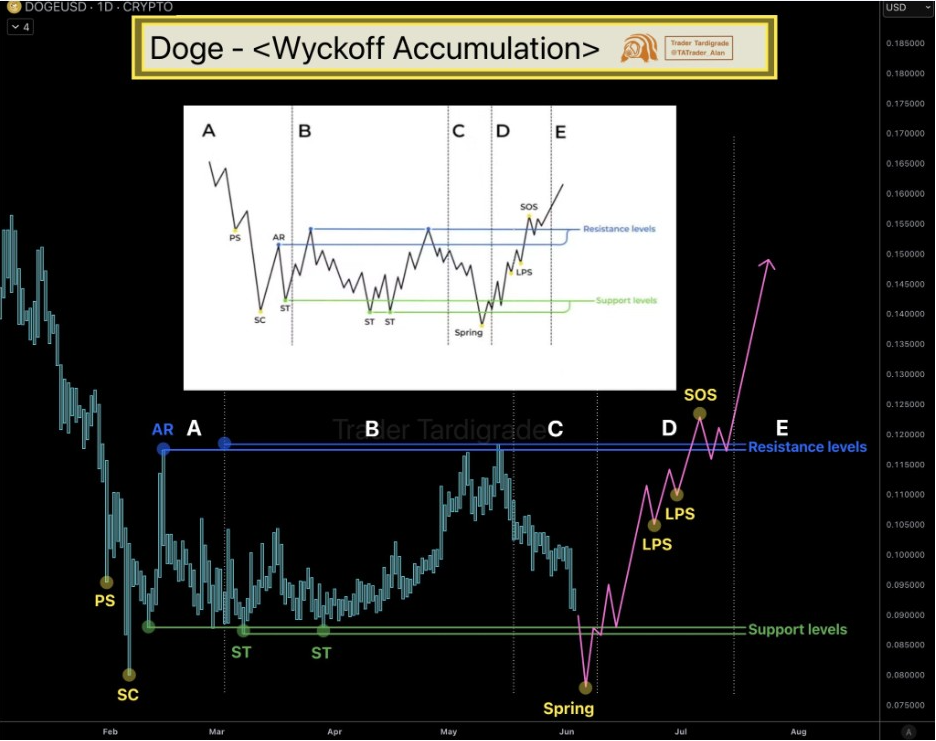
Dogecoin Price Could Rebound If Wyckoff Accumulation Holds

Ripple Partner Thunes Unveils Development That Could Strengthen XRP’s Global Payment Narrative


Popüler Haberler
Daha fazla
