

Casper Launches AI Toolkit That Lets Autonomous Agents Pay for Services and Deploy Applications
Key highlights:
- Casper has launched an AI toolkit that allows autonomous agents to transact on-chain and deploy smart contracts without human involvement.
- The release includes live x402 payment infrastructure, making Casper the first WebAssembly-native blockchain with HTTP-based AI micropayments on mainnet.
- A new $150,000 buildathon aims to encourage developers to build AI-powered applications across payments, DeFi, cross-chain, and tokenization sectors.
Casper brings AI-focused infrastructure to mainnet
Casper Network has introduced a new suite of AI-focused tools designed to support autonomous agents operating directly on blockchain infrastructure. The launch marks the first major product release stemming from the Casper Manifest, the network’s multi-year roadmap published in May, and focuses on enabling AI systems to function as both economic participants and software developers.
According to Casper, the newly released AI Toolkit is now live on mainnet and combines payment infrastructure, development frameworks, blockchain integrations, and middleware services into a single ecosystem.
One of the central components is support for the x402 protocol, a payment standard designed to facilitate machine-to-machine transactions. While AI agents are increasingly capable of executing tasks such as data analysis, trading strategies, and automated workflows, they often face limitations when attempting to purchase services online because existing payment systems are designed around human users.
Casper’s implementation seeks to remove those barriers by allowing payments to occur directly within HTTP requests. Under the x402 framework, an agent can access a paid endpoint, receive pricing information, authorize payment cryptographically, and obtain the requested service without requiring subscriptions, API keys, billing accounts, or manual approval processes.
The network’s x402 Facilitator is now operating on mainnet, making Casper the first WebAssembly-native Layer 1 blockchain to deploy live HTTP-based micropayment infrastructure aimed at autonomous software agents.
The release also expands the ways AI systems can interact with blockchain infrastructure through support for the Model Context Protocol (MCP), an emerging standard that enables AI models to discover and use external tools. Through MCP integrations, agents can query balances, monitor transfers, read smart contract data, and submit transactions directly to the network.
From blockchain users to autonomous developers
Beyond transaction capabilities, Casper’s toolkit is designed to support AI-driven software creation.
The platform incorporates the Odra Framework, Casper’s smart contract development toolkit, which allows AI coding agents to write, test, and deploy applications with minimal human involvement. Combined with the CSPR.build Agent Skills package, autonomous systems gain access to wallet connectivity, transaction signing, event handling, and blockchain data services through CSPR.cloud infrastructure.
The toolkit also includes the CSPR.trade MCP Server, which extends blockchain interaction into decentralized finance. Using natural language instructions, agents can perform activities such as token swaps, liquidity provision, portfolio management, and other DeFi-related operations.
Together, these tools are intended to create a feedback loop where autonomous systems can build applications, publish services, and participate in an ecosystem where other agents consume those services through automated micropayments.
Casper describes this as a foundational step toward what it calls a machine economy, where software systems interact, transact, and coordinate independently rather than relying on human intermediaries.
Future developments outlined in the Casper Manifest include account abstraction, a planned protocol enhancement that would unify user accounts and smart contracts under a common on-chain model. The proposed system would allow agents to maintain dedicated on-chain identities, operate with predefined spending permissions, and execute predictable fixed-cost transactions without depending on traditional wallet workflows.
Steuer added that while billions of AI agents are already performing tasks across digital platforms, most payments still rely on infrastructure originally built for human users. He argued that the new toolkit provides a framework where agents can pay for services and deploy blockchain applications independently using cryptographic verification and automated execution.
$150,000 buildathon aims to accelerate adoption
Alongside the toolkit launch, the Casper Association announced the Casper Agentic Buildathon, a developer competition featuring $150,000 in prizes.
The initiative includes sponsored access to Casper’s x402 infrastructure, allowing participating teams to build and test micropayment-enabled applications without covering transaction costs themselves. Competition categories include Agentic AI, decentralized finance, cross-chain applications, and real-world asset tokenization.
The program officially began during Istanbul Blockchain Week, where developers participated in workshops focused on creating x402-powered AI agents on Casper.
The bottom line
The Casper AI Toolkit represents a notable expansion of blockchain infrastructure tailored specifically for autonomous software systems. By combining micropayment functionality, smart contract development tools, decentralized finance integrations, and AI-focused middleware into a single stack, the network is positioning itself around a future where machines can independently build, purchase, and operate digital services.
With live mainnet infrastructure already available and financial incentives aimed at attracting developers, Casper is making an early push into a growing segment at the intersection of artificial intelligence and blockchain technology.


Ayrıca Şunları da Beğenebilirsiniz

Bitcoin Open Interest Plunges 25% as Mass Liquidations Reset Crypto Derivatives Markets
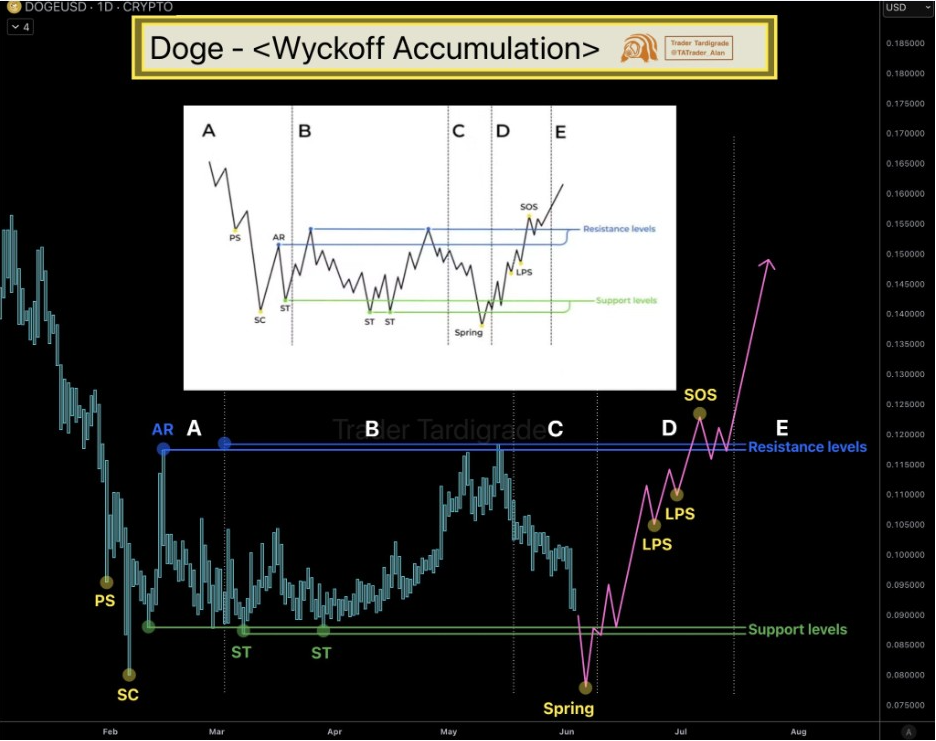
Dogecoin Price Could Rebound If Wyckoff Accumulation Holds

Ripple Partner Thunes Unveils Development That Could Strengthen XRP’s Global Payment Narrative


Popüler Haberler
Daha fazla
