Polymarket Tops $1B Annualized Revenue
Polymarket Annualized Revenue Surpasses $1 Billion Following U.S. Exchange Expansion
Prediction market platform Polymarket has reached a significant financial milestone, with annualized revenue surpassing $1 billion only six weeks after expanding access to its U.S. exchange. The achievement marks one of the fastest growth periods in the company's history and reflects increasing interest in blockchain-powered prediction markets among both retail and institutional participants.
According to reports, the surge in revenue follows the platform's broader availability in the United States, allowing a larger number of users to participate in markets tied to politics, economics, sports, technology, cryptocurrencies, and global events. The rapid increase demonstrates the growing demand for decentralized forecasting platforms that combine blockchain technology with real-time market intelligence.
The development also gained widespread attention after it was highlighted by Cointelegraph through its official X account, further emphasizing the expanding influence of prediction markets within the broader digital asset ecosystem.
 |
| Source: XPost |
A Major Milestone for Polymarket
Crossing the $1 billion annualized revenue mark represents an important achievement for Polymarket.
Annualized revenue measures the pace of current earnings over a full year based on recent performance rather than actual revenue already generated during the year. While it does not represent realized yearly income, it provides investors and analysts with a useful indicator of business momentum and growth.
Reaching this level only weeks after expanding access to U.S. users suggests that demand for blockchain-based prediction markets continues accelerating.
The milestone also reflects growing public interest in alternative financial platforms built on decentralized infrastructure.
The Impact of U.S. Market Expansion
The timing of the revenue increase closely aligns with Polymarket's expansion into the U.S. market.
The United States represents one of the world's largest financial and technology markets, with millions of investors actively participating in digital asset ecosystems.
Greater accessibility has allowed more users to engage with Polymarket's prediction contracts across numerous categories.
Higher user participation naturally contributes to increased trading volume, stronger liquidity, and higher platform revenue.
For emerging digital platforms, expanding into the U.S. often serves as a major catalyst for long-term growth.
Understanding Prediction Markets
Prediction markets allow participants to trade contracts based on the probability of future events.
Rather than relying solely on surveys or expert opinions, these markets aggregate the collective expectations of thousands of participants who place financial value behind their predictions.
Markets may cover elections, macroeconomic indicators, sporting events, technological developments, cryptocurrency prices, regulatory decisions, and other real-world outcomes.
Supporters argue that prediction markets often produce highly efficient forecasts because participants have financial incentives to incorporate available information accurately.
Blockchain technology further enhances transparency by recording transactions on decentralized networks.
Blockchain Powers Market Transparency
One of Polymarket's defining features is its use of blockchain infrastructure.
Traditional betting or forecasting platforms typically rely on centralized databases.
Blockchain networks, by contrast, provide publicly verifiable transaction histories that improve transparency and reduce reliance on centralized intermediaries.
Smart contracts automate settlement processes once event outcomes become known.
This automation increases efficiency while minimizing operational complexity.
Blockchain-based prediction markets therefore combine financial incentives with decentralized technology to create an innovative information marketplace.
Why User Activity Is Growing
Several factors appear to be contributing to Polymarket's rapid growth.
Interest in cryptocurrencies has expanded significantly over recent years.
At the same time, investors increasingly seek alternative methods of expressing market views beyond traditional equities or derivatives.
Prediction markets provide exposure to real-world events without requiring direct ownership of underlying financial assets.
Political developments, economic policy, artificial intelligence, international conflicts, sporting competitions, and cryptocurrency regulation all generate active forecasting opportunities.
As global uncertainty increases, demand for information-driven markets often rises as well.
Institutional Interest Continues to Increase
Prediction markets are attracting growing attention beyond retail traders.
Researchers, hedge funds, economists, media organizations, and financial analysts increasingly monitor market probabilities as indicators of public expectations.
Because participants commit actual capital to their forecasts, prediction markets are often viewed as more dynamic than conventional polling methods.
Some institutions incorporate market-implied probabilities into broader analytical models used for economic forecasting and investment research.
As liquidity improves, institutional participation may continue expanding.
Revenue Growth Reflects Broader Industry Momentum
Polymarket's reported revenue milestone also highlights the broader expansion of blockchain-based financial applications.
Initially, decentralized finance focused primarily on cryptocurrency lending, decentralized exchanges, and stablecoins.
Today, blockchain infrastructure supports a much wider range of financial products, including tokenized assets, prediction markets, real-world asset tokenization, decentralized identity, and programmable financial contracts.
Prediction markets represent one of the fastest-growing segments within this evolving ecosystem.
Their ability to aggregate information while operating continuously has attracted increasing attention from investors worldwide.
Competition in Prediction Markets
Although Polymarket has emerged as one of the industry's leading platforms, competition within decentralized prediction markets continues increasing.
New blockchain projects continue exploring innovative forecasting models, incentive mechanisms, and governance structures.
Technology improvements focusing on scalability, transaction costs, and user experience may further accelerate adoption across the sector.
As competition intensifies, platforms will likely continue investing in product innovation while expanding geographic accessibility where regulations permit.
Regulatory Considerations
Prediction markets continue operating within evolving regulatory environments.
Different jurisdictions apply varying legal frameworks depending on whether markets are classified as financial products, derivatives, gaming activities, or other regulated instruments.
Companies operating internationally must therefore carefully navigate licensing requirements and compliance obligations.
As governments continue developing clearer digital asset regulations, prediction market platforms may experience both new opportunities and additional regulatory responsibilities.
Greater legal clarity could encourage broader institutional participation while strengthening consumer confidence.
Looking Ahead
Polymarket's reported annualized revenue exceeding $1 billion represents more than a financial milestone.
It demonstrates the growing maturity of blockchain-based prediction markets and the increasing willingness of users to rely on decentralized platforms for forecasting real-world events.
The platform's rapid growth following expanded U.S. access suggests that demand for information markets remains strong despite ongoing volatility across broader financial markets.
As blockchain technology continues evolving, prediction markets may become increasingly integrated into financial analysis, investment research, public policy discussions, and corporate decision-making.
For investors, analysts, and technology companies alike, Polymarket's latest achievement signals that decentralized forecasting platforms are moving beyond niche applications toward becoming an increasingly influential component of the global digital economy.
If current growth trends continue, prediction markets could play an even larger role in shaping how individuals and institutions assess probability, risk, and future outcomes in an increasingly data-driven financial landscape.
hokanews.com – Not Just Crypto News. It’s Crypto Culture.
Writer @Ethan
Ethan Collins is a passionate crypto journalist and blockchain enthusiast, always on the hunt for the latest trends shaking up the digital finance world. With a knack for turning complex blockchain developments into engaging, easy-to-understand stories, he keeps readers ahead of the curve in the fast-paced crypto universe. Whether it’s Bitcoin, Ethereum, or emerging altcoins, Ethan dives deep into the markets to uncover insights, rumors, and opportunities that matter to crypto fans everywhere.
Disclaimer:
The articles on HOKANEWS are here to keep you updated on the latest buzz in crypto, tech, and beyond—but they’re not financial advice. We’re sharing info, trends, and insights, not telling you to buy, sell, or invest. Always do your own homework before making any money moves.
HOKANEWS isn’t responsible for any losses, gains, or chaos that might happen if you act on what you read here. Investment decisions should come from your own research—and, ideally, guidance from a qualified financial advisor. Remember: crypto and tech move fast, info changes in a blink, and while we aim for accuracy, we can’t promise it’s 100% complete or up-to-date.
You May Also Like
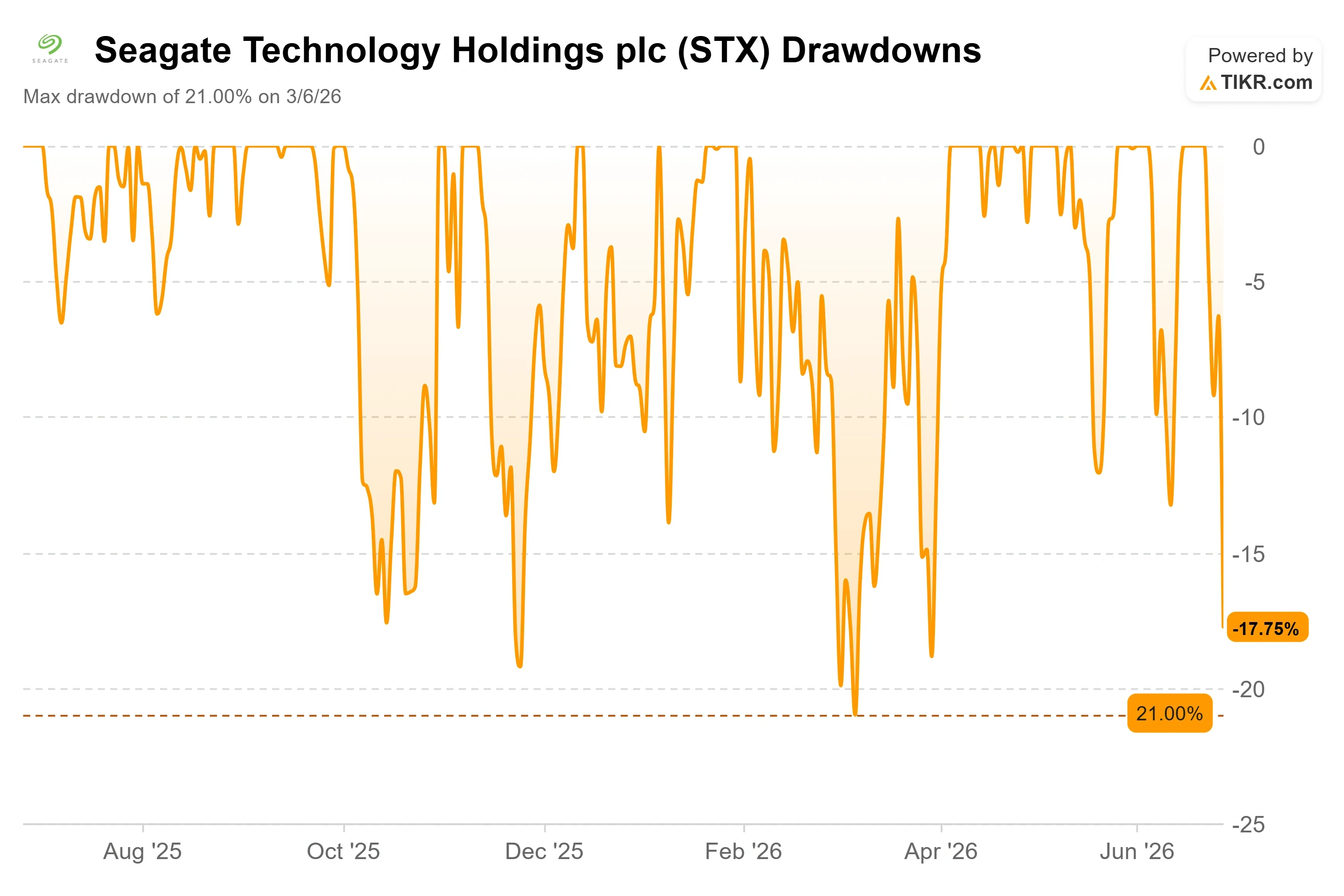
Seagate Stock Fell 12% in a Day. Here’s Where the Stock Could Go in 2026

George Conway and Mehdi Hasan deliver searing indictment of 'dumb' Trump’s presidency

BitMine Just 500K ETH Away From 5% Supply Goal