

The Case for Holding VT in Your Roth IRA
The post The Case for Holding VT in Your Roth IRA appeared first on 24/7 Wall St..
At the 24% federal bracket, qualified dividends from a broad global equity ETF still cost 15% of every distribution check, and long-term gains on a multi-decade holding eventually carry the same toll. Vanguard Total World Stock ETF (NYSEARCA: VT) is a different Roth case than a business development company (BDC) or mortgage real estate investment trust (REIT). Its yield is modest, but the appreciation runway is large, and that is where Roth placement quietly compounds into six-figure savings.
The Tax Cost Most Investors Miss
The stock closed at $154.85 on June 25, 2026. Trailing twelve-month distributions total $2.4832 per share across the four most recent quarterly payments, which works out to a current yield of roughly 1.6%. On its own, that yield looks modest. The appreciation alongside it is where Roth placement compounds: the fund returned 22.6% over the past year and 174.9% over the past 10 years.
The Tax Delta: Roth Versus Taxable
Consider a $500,000 position in the Vanguard Total World ETF at the 24% federal bracket. Gross annual dividend income at the current yield is roughly $8,015. Because the fund’s U.S. and most developed-market distributions are largely qualified, the taxable-account rate is 15%, not 24%.
| Scenario | Gross Income | Tax Cost | Net Income |
|---|---|---|---|
| Taxable (24% bracket) | $8,015 | $1,202 | $6,813 |
| Roth IRA | $8,015 | $0 | $8,015 |
| Annual Roth advantage | $1,202 | ||
| 10-year Roth advantage (no reinvestment) | $12,020 |
That dividend delta is just the beginning. The larger benefit is appreciation. A $500,000 position held for a decade at the fund’s trailing 10-year return would carry an embedded gain of roughly $1,234,750. Sold inside a taxable account at the 15% long-term capital gains rate, that gain triggers about $185,213 in federal tax. Inside a Roth, the realized gain is zero.
The Bracket Multiplier
The qualified dividend rate flattens the dividend delta across the 22%, 24%, and most of the 32% bracket. The 37% bracket pays 20% on qualified dividends plus the 3.8% net investment income tax, which is where the math sharpens.
| Bracket | Dividend Tax Rate | Tax on $8,015 | Annual Roth Advantage |
|---|---|---|---|
| 22% | 15% | $1,202 | $1,202 |
| 24% | 15% | $1,202 | $1,202 |
| 32% | 15%/20% | $1,202 to $1,603 | $1,202 to $1,603 |
| 37% | 23.8% | $1,908 | $1,908 |
On the same hypothetical 10-year embedded gain, the 37% bracket investor would owe roughly $293,871 in long-term capital gains and net investment income tax at sale. Roth placement erases that line.
The Foreign Tax Credit Consideration
The Vanguard Total World ETF holds international equities whose dividends are subject to foreign tax withholding before they ever reach the fund. In a taxable account, U.S. investors can typically claim the foreign tax credit to recover that withholding. Inside a Roth IRA or traditional IRA, the foreign tax credit is lost. That is a real cost, often estimated at a handful of basis points of the international sleeve, and it is the strongest argument for holding a global fund outside a Roth.
However, it rarely wins the argument. The forgone foreign tax credit represents a small annual cost. The sheltered qualified dividends compound at the bracket’s qualified rate every year, and the eventual capital gains shelter on a multi-decade position is measured in five and six figures. For a 24% bracket holder, 10 years of $1,202 annual dividend deltas reinvested into the same fund at the current yield total roughly $13,000 of additional tax-free income, before accounting for the much larger appreciation shelter.
What to Do
- If the Vanguard Total World ETF sits in a taxable account today, model the foreign tax credit you currently claim against the long-term capital gains tax you will eventually owe on the position. The latter almost always dominates.
- For investors splitting contributions between taxable and Roth, prioritize the global equity sleeve inside the Roth and keep municipal bonds or single-country U.S. funds, where no foreign credit applies, in the taxable account.
- Before any Roth conversion of this position, calculate the conversion tax cost against the projected capital gains tax on a 10-year or 20-year hold at your bracket. The Reddit r/investing community has trended bullish on the fund through late June 2026, but sentiment is not a substitute for running your own bracket math.
Don't wait: the analyst who called NVIDIA in 2010 just revealed his top 10 AI stocks. See the full list FREE now.
The post The Case for Holding VT in Your Roth IRA appeared first on 24/7 Wall St..


You May Also Like

Goldman Sachs’ 1 Delta Desk Warns AI’s Greatest Threat Is the Reflexive Loop
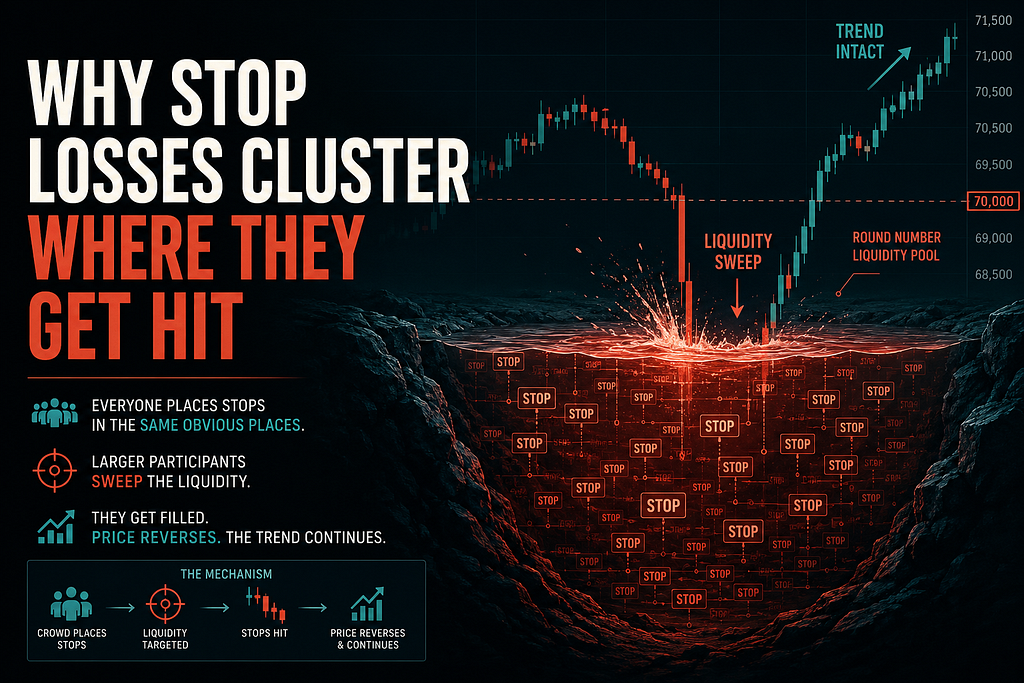
Why Stop Losses Cluster Where They Get Hit
Tesla (TSLA) Stock: China EV Sales Rise for Second Straight Quarter



