

Oil Tanks 15% in a Week — Here’s Why the Iran Deal Is Reshaping Energy Markets
TLDR
- Brent crude fell 2.2% to $77.82/barrel; WTI dropped 2.5% to $74.88/barrel Thursday
- Trump signed a memorandum of understanding with Iran to end the war and reopen the Strait of Hormuz
- Oil prices have fallen roughly 15% this week across six sessions
- The IEA forecasts a global oil surplus of over 5 million barrels per day by 2027
- The Fed held rates steady but signaled a possible hike later this year, adding pressure on demand
Oil prices dropped sharply on Thursday after the United States and Iran signed a deal to end their war and reopen the Strait of Hormuz.
Brent crude fell 2.2% to $77.82 per barrel. U.S. West Texas Intermediate dropped 2.5% to $74.88 per barrel.
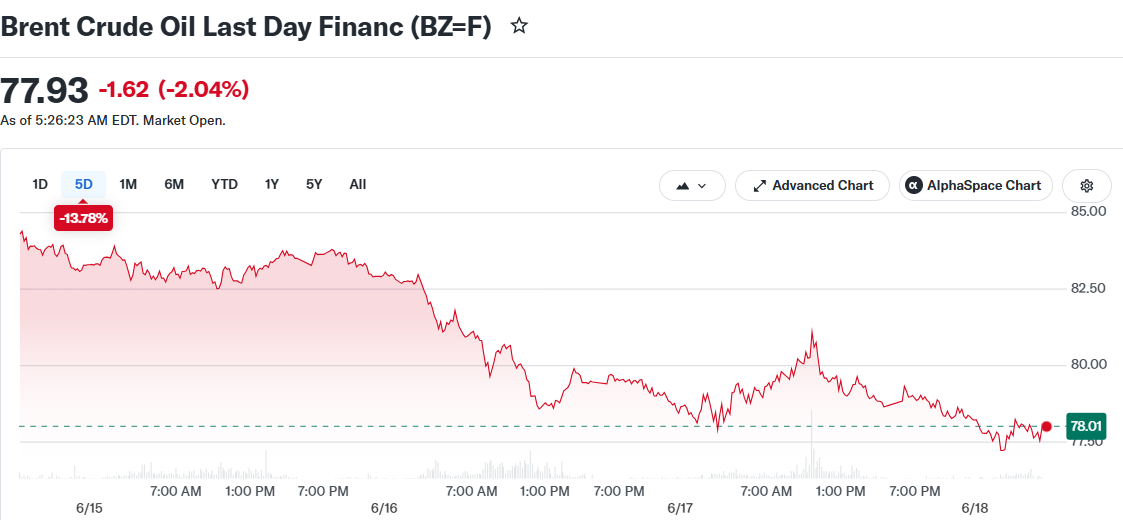 Brent Crude Oil Last Day Financ (BZ=F)
Both benchmarks hit their lowest levels since March 2. Prices have now fallen roughly 15% this week.
The deal was signed by President Trump and Iranian President Masoud Pezeshkian. It calls for a permanent end to hostilities and a gradual easing of U.S. sanctions on Iranian oil sales.
The Strait of Hormuz, a key waterway for roughly a fifth of the world’s oil and liquefied natural gas, has been effectively closed for most of the three-month conflict. Its closure had pushed oil prices higher and raised inflation concerns.
Some tankers have already resumed movements through the strait. Exporters like Iraq are preparing to increase shipments.
What the Iran Deal Means for Oil Supply
Markets had already priced in a geopolitical risk premium during the conflict. With the deal now signed, much of that premium has been erased.
Analysts at ING noted that Iran expects a swift lifting of U.S. oil sanctions. But they warned that the timeline for normalizing flows remains uncertain due to operational, logistical, and sanctions-related factors.
Global inventories remain tight. U.S. crude stockpiles fell by 8.3 million barrels last week, which has limited the immediate downside pressure on prices.
The International Energy Agency forecasts global oil supply growth of about 8 million barrels per day between 2026 and 2027. That far outpaces expected demand growth of roughly 2 million barrels per day.
The IEA projects a surplus of more than 5 million barrels per day by 2027. Analysts at ING called the report’s tone “bearish.”
Analysts at MUFG said the industry remains cautious about the pace of normalization, even as early signs of recovery are visible.
Fed Decision Adds Another Layer
The Federal Reserve held interest rates steady on Wednesday, in line with expectations. However, policymakers signaled a potential rate hike later this year.
Higher borrowing costs can slow economic activity and reduce oil demand. This added to the selling pressure on crude prices Thursday.
Before the war, the Strait of Hormuz closure had helped push prices higher. Now, the prospect of its reopening is reversing those gains.
The situation is still developing. How quickly Iranian barrels return to global markets will depend on how fast sanctions are lifted and infrastructure is restored.
The post Oil Tanks 15% in a Week — Here’s Why the Iran Deal Is Reshaping Energy Markets appeared first on CoinCentral.


You May Also Like

Pathologist warns of Trump’s 'observable signs' of rapid 'severe decline'
At The Money: Deregulation Will Free Your Portfolio

Hamster Cipher June 19, 2026 Secret Code Drops Win Coins Fast


Trending News
More24/7 Live News
MoreQuick Reads
More
