

Oil Prices Fall After Israel-Lebanon Ceasefire Deal — What It Means for Markets
TLDR
- Oil prices fell Thursday, with Brent crude down around 1.3–1.5% and WTI dropping over 1%, snapping a three-session rally
- Israel and Lebanon agreed to a ceasefire, but it depends on Hezbollah halting hostilities — the group was not part of the negotiations
- The Strait of Hormuz has been effectively closed since late February, cutting off roughly one-fifth of global oil supply
- U.S. crude stockpiles fell by 8 million barrels last week — more than double the expected 3 million barrel drop
- U.S. crude exports hit near-record levels at 5.9 million barrels per day as European and Asian buyers seek alternative supplies
Oil prices dropped on Thursday after Israel and Lebanon agreed to implement a ceasefire, easing some of the geopolitical tension that had pushed crude higher over the past three sessions.
Brent crude fell around 1.3% to roughly $96.30 a barrel. U.S. West Texas Intermediate crude dropped about 1.2% to $94.84 a barrel.
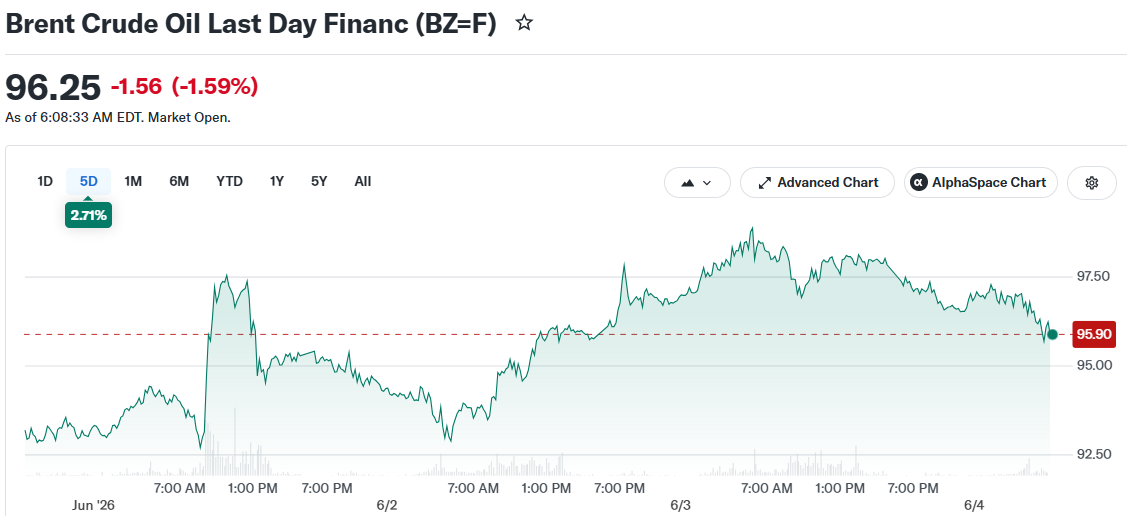 Brent Crude Oil Last Day Financ (BZ=F)
The decline followed gains of nearly 2% in the previous session, which had pushed both benchmarks to their highest levels in more than a week.
The ceasefire agreement depends on Iran-backed Hezbollah stopping its attacks. Hezbollah did not take part in the U.S.-brokered talks, which analysts say leaves the deal on shaky ground.
Fighting in the region has been ongoing since late February. Fresh hostilities this week included reported Iranian missile strikes on Kuwait and Bahrain, and U.S. strikes on Iran’s Qeshm Island near the Strait of Hormuz.
Strait of Hormuz Closure Keeps Market on Edge
The Strait of Hormuz — a waterway that normally carries around one-fifth of the world’s oil — has been effectively shut since the conflict began. That closure has removed a large volume of crude from global markets.
Diplomatic talks between Washington and Tehran have made little progress. The market is watching closely for any sign of a deal that could reopen oil flows from the region.
U.S. President Donald Trump said in a podcast interview that Iran had agreed not to pursue a nuclear weapon, raising some hope for a diplomatic resolution. Trump also told aides he would not resume attacks on Iran unless U.S. forces are killed, according to the Wall Street Journal.
At home, the U.S. House of Representatives voted in favor of a resolution to block Trump from continuing military operations. The measure still needs Senate approval and two-thirds majorities in both chambers to override a presidential veto.
U.S. Crude Inventory Drop Limits Oil’s Decline
A sharp drop in U.S. crude stockpiles helped limit how far prices fell on Thursday.
Data from the Energy Information Administration showed crude stocks fell by 8 million barrels in the week ending May 29. Analysts had expected a decline of about 3 million barrels.
The drawdown was driven in part by a surge in exports. U.S. crude exports reached 5.9 million barrels per day, one of the highest levels on record, as buyers in Europe and Asia scrambled for alternative supply.
The U.S. also released an additional 8 million barrels from the Strategic Petroleum Reserve last week.
ING analysts noted the pace of inventory decline has been faster than usual for this time of year. With peak summer demand approaching, global stockpiles could reach critical levels if current trends continue.
The Energy Information Administration estimates global oil inventories are drawing down rapidly. Analysts say this keeps upside price risk in place even as geopolitical tensions show signs of easing.
The post Oil Prices Fall After Israel-Lebanon Ceasefire Deal — What It Means for Markets appeared first on CoinCentral.


You May Also Like

Pi Network V26 Forecast Sparks Claims of Full Blockchain Economy Shift

UK Reform Party Leads Third-Quarter Fundraising, Bolstered by Crypto Billionaire Donations

S&P 500 Under Pressure: Deutsche Bank Flags AI-Driven Market Concerns



