House Panel Examines Potential Rewrite of Fed’s ‘Maximum Employment’ Mandate
BitcoinWorld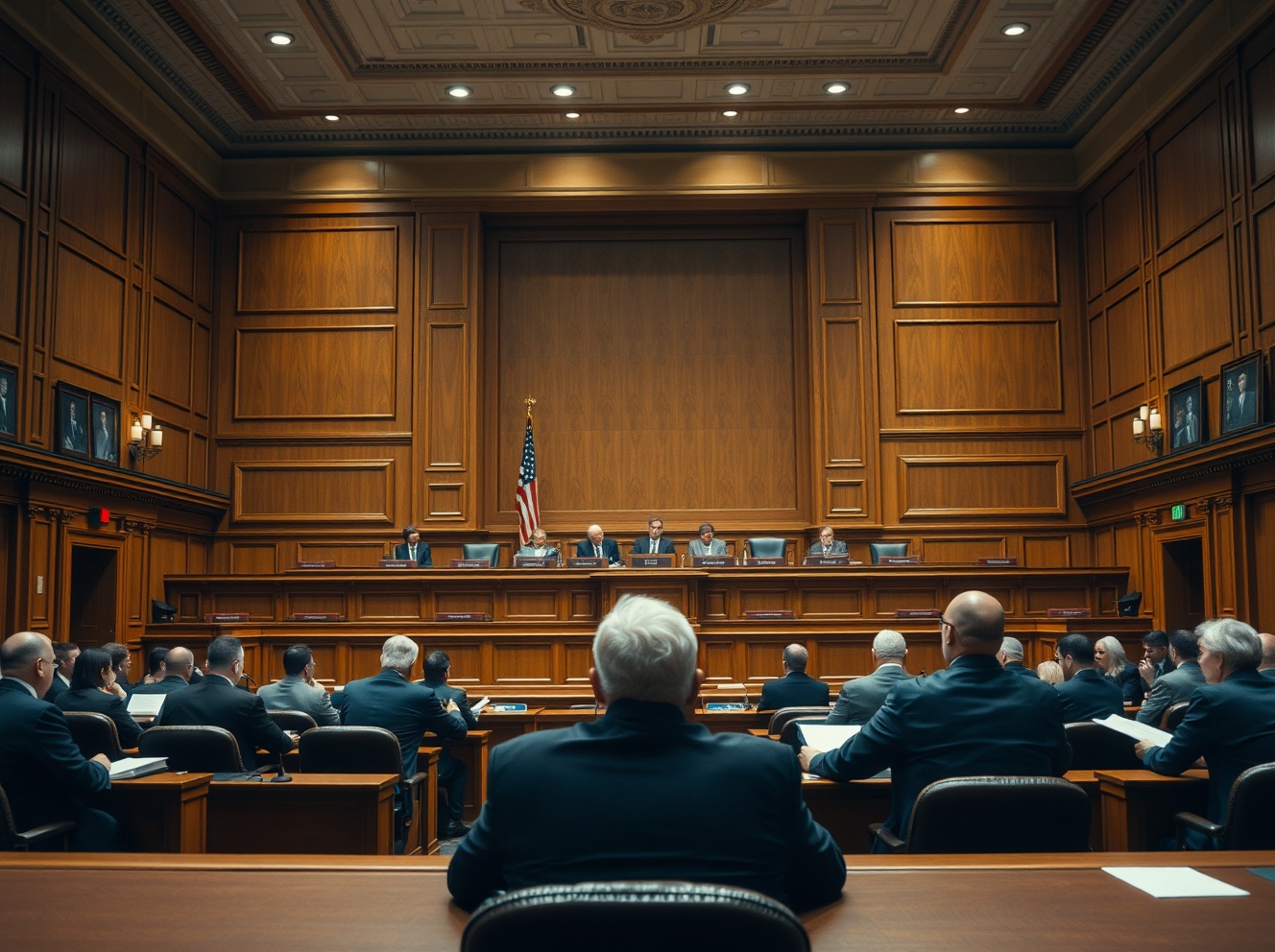
House Panel Examines Potential Rewrite of Fed’s ‘Maximum Employment’ Mandate
A key congressional committee is set to scrutinize one of the Federal Reserve’s core policy objectives, raising questions about whether the central bank’s ‘maximum employment’ mandate could be redefined or removed. The House Financial Services Committee (HFSC), chaired by Representative French Hill (R-AR), is preparing for hearings that could mark the beginning of a significant debate over the Fed’s dual mandate.
The Federal Reserve’s Dual Mandate Under Review
The Federal Reserve operates under a dual mandate from Congress: to promote maximum employment and stable prices. This framework, established in the Federal Reserve Act, has guided U.S. monetary policy for decades. The ‘maximum employment’ goal, however, is not defined by a fixed numerical target. Instead, the Fed assesses it based on a broad range of labor market indicators, including the unemployment rate, labor force participation, and wage growth.
Critics argue that this ambiguity allows the Fed to prioritize inflation control over job creation, or vice versa, depending on the economic cycle. Supporters contend that flexibility is essential for responding to complex and evolving economic conditions. The HFSC’s focus on this specific language suggests a legislative effort to bring greater clarity or change to how the Fed interprets its employment objective.
What a Change Could Mean for Monetary Policy
Altering or removing the ‘maximum employment’ component would represent a fundamental shift in U.S. monetary policy architecture. The Fed’s decisions on interest rates and its balance sheet directly affect borrowing costs, investment, and hiring across the economy. A narrower mandate could, in theory, lead to a more singular focus on inflation, potentially resulting in higher interest rates during periods of economic slack.
Economists are divided on the implications. Some argue that a clearer mandate could reduce market uncertainty and improve the Fed’s accountability. Others warn that downgrading employment could harm vulnerable workers and slow recoveries from recessions. The hearing is expected to feature testimony from monetary policy experts, former Fed officials, and representatives from labor and business groups.
Political and Market Implications
The timing of this review is notable. With inflation having moderated from its peak but still above the Fed’s 2% target, and the labor market showing signs of cooling, the debate over the Fed’s priorities is intensifying. Any legislative proposal to amend the Federal Reserve Act would require bipartisan support, which remains uncertain in a divided Congress.
Financial markets are closely watching these developments. A perceived shift in the Fed’s mandate could alter expectations for the path of interest rates, influencing bond yields, stock prices, and the U.S. dollar. The HFSC’s hearings will provide the first concrete signal of whether such a change has legislative momentum.
Conclusion
The House Financial Services Committee’s examination of the ‘maximum employment’ mandate is a significant development for U.S. monetary policy. While any legislative change would face substantial hurdles, the hearings themselves signal a renewed congressional interest in the Fed’s foundational objectives. For investors, businesses, and workers, the outcome of this debate could reshape the economic landscape for years to come.
FAQs
Q1: What is the Federal Reserve’s dual mandate?
The dual mandate refers to the Fed’s two main goals set by Congress: maximum employment and stable prices (controlling inflation).
Q2: Why is the House Financial Services Committee reviewing the ‘maximum employment’ goal?
Committee members, led by Chairman French Hill, are exploring whether the current language provides too much ambiguity and whether a clearer or different mandate would improve economic outcomes.
Q3: Could the Fed’s mandate actually be changed?
Changing the Federal Reserve Act requires an act of Congress. While hearings are a first step, any legislative change would need broad bipartisan support, which is not guaranteed.
This post House Panel Examines Potential Rewrite of Fed’s ‘Maximum Employment’ Mandate first appeared on BitcoinWorld.


You May Also Like

Goatseus Maximus (GOAT) Price Prediction 2026, 2027-2030

CoreWeave (CRWV) Stock Surges 12% on $8.5B GPU-Backed Financing Deal — Here’s the Full Picture