

UK Standards Probe Into Farage Over $7M Gift From a Crypto Billionaire
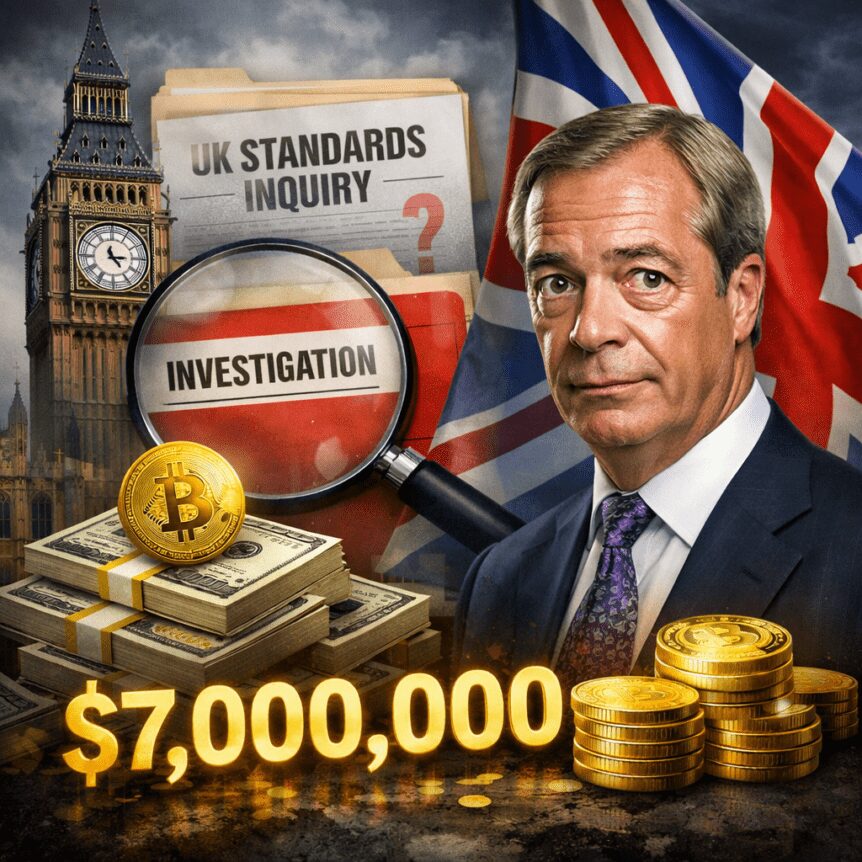
The UK Parliamentary Standards Commissioner has opened a formal inquiry into Nigel Farage, the Reform UK leader, over whether he breached House of Commons rules by failing to declare a £5 million gift from crypto-backed financier Christopher Harborne. The BBC reported the inquiry on Wednesday, underscoring a fresh wave of scrutiny surrounding political finance and crypto-linked contributions in the United Kingdom. Farage has argued there was no obligation to declare the payment, which he received before his election to Parliament in 2024. Critics contend that once he became a member of Parliament, registration obligations applied.
The Conservative Party has urged the parliamentary standards watchdog to investigate the matter, and the Electoral Commission is reportedly weighing whether to launch a formal probe into the donation. Together, these developments broaden the focus on how crypto-fueled funding intersects with political finance rules, amplifying regulatory attention on the sources and disclosure of money in UK politics.
The case sits within a broader regulatory backdrop as UK lawmakers and regulators deepen their examination of the role of digital-asset money in political life. The discourse has intensified in recent weeks after the UK Liberal Democrats urged the Financial Conduct Authority to investigate whether Farage breached market rules by featuring in a Stack BTC promotional video while holding a financial stake in the company. Farage had previously disclosed a $286,000 equity investment in Stack BTC after acquiring a 6.31% stake through his media vehicle Thorn In The Side in March.
Related: Liberal Democrats push FCA probe over Farage Stack BTC concerns
Key takeaways
- The Parliamentary Standards Commissioner has opened a probe into whether Farage breached House of Commons rules by not declaring a £5 million gift from Christopher Harborne, a crypto-linked financier, received before Farage’s 2024 election.
- The inquiry follows a Conservative push to initiate an official review and signals heightened regulatory interest in crypto-linked political financing and post-election disclosure obligations.
- The Electoral Commission is reportedly assessing whether to launch a formal investigation into the donation, adding a potential enforcement dimension to the case.
- UK political crypto donations are legal under current Electoral Commission guidance, but the issue has sparked calls for a moratorium and tighter governance, as lawmakers seek statutory guidance ahead of the next general election.
- The broader regulatory context includes scrutiny of Farage’s crypto exposure (including a disclosed Stack BTC investment) and ongoing debates over how crypto interests should be disclosed and regulated in political activities.
Regulatory proceedings and political-finance implications
According to BBC reporting, the Standards Commissioner’s inquiry centers on whether Farage failed to register a significant gift from a high-profile crypto backer. The rules governing registration are clear in principle, but the timing and filing requirements can become contested when gifts are received before a candidate attains parliamentary status or when individuals transition into public office. Critics say that post-election registerability should apply to large contributions or gifts connected to political activity, whereas proponents of Farage’s position argue there was no binding obligation to declare outside the usual framework.
In parallel, the Conservatives wrote to the parliamentary standards watchdog requesting a formal review, a move that aligns with broader questions about accountability and transparency in political financing. The Electoral Commission’s reported consideration of a formal investigation would add a separate layer of compliance scrutiny, potentially triggering procedural reviews of donor disclosure, donor verification, and the public reporting of electoral money. These developments arrive as UK authorities intensify oversight of how crypto wealth is used in political contexts, a trend that may shape future enforcement actions and guidance for political parties.
Crypto donations in UK politics: regulatory landscape and policy debates
Reform UK became notable for being the first major party to publicly accept cryptocurrency donations in 2025, reflecting a broader shift in fundraising practices among political movements. The party recently disclosed a £ million-level gift from Harborne in the fourth quarter of 2025, following a record donation in the prior quarter. While crypto donations are legal under current Electoral Commission guidance, the evolving nature of digital assets has driven calls from parliamentary committees for a temporary pause on crypto donations until the Commission issues statutory guidance ahead of the next general election, which is expected no later than 2029.
On March 18, the Joint Committee on the National Security Strategy urged the government to impose an immediate moratorium on crypto donations until formal guidance is in place. The committee also proposed structural reforms, including the creation of a Political Finance Enforcement Unit and a reduction of the declaration threshold for political donations—from approximately £12,000 (roughly $14,900) to around £500–£600 range—reflecting concern over foreign influence and the potential for strategic influence through digital assets. Earlier, Matt Western, the committee’s chair, urged a temporary ban on crypto donations to mitigate foreign interference risks and safeguard the integrity of political processes.
These policy discussions occur against a backdrop of ongoing regulatory exploration in the UK, including the use of digital assets within the financial system and the potential cross-border implications for governance and oversight. The evolving framework seeks to balance innovation and fundraising flexibility with robust disclosure, provenance, and anti-foreign interference safeguards, a tension that will shape the regulatory envelope for crypto-enabled political giving in years to come.
Farage, Stack BTC and compliance risk
Beyond the gift at the center of the standards inquiry, Farage’s crypto-related ties have drawn regulatory attention. Cointelegraph reported that the Liberal Democrats pressed the FCA to examine whether Farage violated market rules by appearing in a Stack BTC promotional video while holding a stake in the company. Separately, Farage disclosed a $286,000 equity position in Stack BTC after acquiring a 6.31% stake via Thorn In The Side in March, highlighting the potential for perceived conflicts of interest when political figures participate in or back crypto ventures. These disclosures intensify the compliance considerations for MPs engaging with crypto projects and the responsibilities associated with asset ownership, public representation, and disclosure obligations.
From a governance perspective, the juxtaposition of a high-profile political figure with crypto investments underscores the need for clear, enforceable rules around disclosure, voting conflicts, and political messaging tied to financial interests. For compliance professionals and institutional observers, the case highlights the importance of rigorous due diligence, transparent record-keeping, and consistent application of donor and asset disclosure requirements across party lines. It also illustrates the evolving nature of regulatory risk in an area where technology, finance, and politics intersect.
Related reporting has connected these debates to broader policy discussions about stablecoins and digital assets within the UK financial ecosystem, including indicators of how regulators might approach non-traditional fundraising tools in the future. For context, UK policymakers have already engaged with the topic through regulatory sandboxes and targeted inquiries into crypto-enabled finance, signaling a cautious but progressive stance toward normalization and oversight of crypto activities in public life.
Closing perspective
As parliamentary institutions sharpen their oversight of crypto-linked funding and asset ownership, the Farage inquiry illustrates the practical implications for compliance frameworks, donor governance, and political communication. The case could influence how political actors manage disclosures, how parties structure fundraising in digital assets, and how regulators align enforcement with evolving market practices. The next steps—whether the Electoral Commission formalizes an investigation, how the standards inquiry proceeds, and how policy proposals unfold—will shape the regulatory and political environment for crypto-related contributions in the UK.
Watch for further developments as committees, enforcing agencies, and political actors navigate the intersection of crypto money, disclosure rules, and public accountability.
Attribution: For broader context on related regulatory debates, Cointelegraph has reported on the Liberal Democrats’ push for FCA action and other UK crypto-political issues.
This article was originally published as UK Standards Probe Into Farage Over $7M Gift From a Crypto Billionaire on Crypto Breaking News – your trusted source for crypto news, Bitcoin news, and blockchain updates.


You May Also Like

Data focus shifts to payrolls – Societe Generale

Elon Musk Says SpaceX May Build Advanced Spaceports Worldwide




