Orange to double solar-powered telecom sites across Africa as energy costs rise
France’s largest telecommunications company, Orange, plans to double the number of solar-powered base stations it operates throughout Africa. Rising energy costs due to the ongoing conflict in Iran are making renewable power an increasingly practical and financially attractive option for telecom infrastructure on the continent.
The company says this move is motivated by the growing attractiveness of renewable energy investments, partly due to the war in Iran. Orange SA is transitioning to solar power in 11 countries across Africa and the Middle East.
They have already installed clean energy systems in 15,000 locations, which accounts for 30% of their total sites, according to their 2025 annual report.
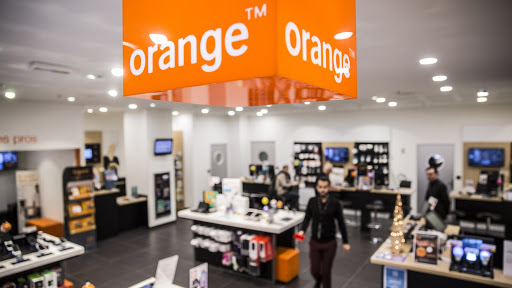 The Orange logo hangs inside an Orange SA mobile phone store in Marseille, France. Photographer: Balint Porneczi/Bloomberg
Orange is one of Europe’s largest telecommunications groups, providing mobile and fixed-line voice, broadband internet, and digital services to consumers and businesses. In Africa, the company operates across markets including Senegal, Côte d’Ivoire, Cameroon, Mali, Burkina Faso, Guinea, Madagascar, Niger, the Democratic Republic of Congo, and Egypt, among others, making it one of the continent’s most widely distributed telecom operators.
Orange intends to double the number of its solar-powered sites in Africa and the Middle East, from 15,000 to around 30,000. The expansion addresses two major operational challenges for the company, which relies on a steady power supply for its base stations. First, it lessens their reliance on expensive diesel generators and grid power. It also improves network reliability in regions with unstable electricity supply.
 Solar panels
Orange to shift across Africa’s telecom sector
Orange is not the only company moving in this direction. Vodacom, Safaricom, and Airtel Africa are also adding solar and hybrid power systems to their networks. Some of their sites now run entirely on renewable energy, reducing their need for generators.
The reason for this shift is consistent across all these companies: in many parts of Africa, telecom towers have traditionally relied on diesel generators as their main backup power source, making fuel costs a major expense for network operators.
In the Democratic Republic of Congo and South Sudan, CrossBoundary Energy and iSAT Africa are implementing fully renewable energy systems to power telecom sites in rural areas. These areas lack both reliable electricity and good internet connectivity. In these specific markets, using solar-powered base stations is not only a way to save money but also the only practical way to keep the network running.
Orange’s announcement coincides with a period of rapid growth in Africa’s renewable energy sector. In the first quarter of 2026, approximately 970 MW of new large-scale solar power capacity was installed, exceeding the total for all of 2025 and representing the largest quarterly increase ever. The total installed solar capacity across all sectors has now reached 26.15 GW.
The rapid adoption of renewable energy reflects both immediate energy shortages and long-term cost considerations. Many countries experience constant power outages, and as energy demand increases and global energy prices change, governments and companies are working to rely less on fossil fuels.
For Orange, the benefits are evident. By doubling its solar energy production in 11 countries, the company secures cheaper and more stable energy costs, minimises risks from global events that inflate oil and diesel prices, and enables network expansion into rural regions with unreliable or nonexistent grid power while strengthening the resilience of its telecom infrastructure.
Also read: Renewvia Energy plans $750m solar expansion across 4 African countries


You May Also Like

USD/JPY Price Forecast: Buyers Defend 100-Day SMA After Intervention-Driven Volatility

Cango Inc. Completes $65M Investment and Secures $10M Convertible Note Financing