If you're exploring the Solana ecosystem, you've probably wondered about its native token. SOL is the native cryptocurrency of the Solana blockchain, serving as the fundamental fuel that powers everyIf you're exploring the Solana ecosystem, you've probably wondered about its native token. SOL is the native cryptocurrency of the Solana blockchain, serving as the fundamental fuel that powers every
Learn/Cryptocurrency Knowledge/Hot Concepts/What is the Native Token of the Solana Blockchain?

What is the Native Token of the Solana Blockchain?

Intermediate
Sep 21, 2026MEXC
7 min
If you're exploring the Solana ecosystem, you've probably wondered about its native token.
SOL is the native cryptocurrency of the Solana blockchain, serving as the fundamental fuel that powers every transaction and operation on the network.
This guide explains what SOL is, how it works, and why it's essential for anyone using Solana's fast and affordable blockchain platform.
Whether you're interested in staking, trading, or building decentralized applications, understanding SOL is your first step into the Solana ecosystem.


For a complete blockchain overview, see our Solana beginner's guide.


Key Takeaways:
  • SOL is the native token that powers all transactions and operations on the Solana blockchain.
  • Transaction fees on Solana average $0.00025, with 50% of fees permanently burned to reduce supply.
  • SOL enables staking, where holders can delegate tokens to validators and earn rewards while securing the network.
  • The token uses a controlled inflation model starting at 8% annually, declining by 15% every two years until reaching 1.5%.
  • Over 570 million SOL tokens currently circulate with no maximum supply cap.
  • SOL's value derives from its utility across DeFi protocols, NFT marketplaces, smart contracts, and network governance.

Understanding SOL: Solana Blockchain's Native Token

SOL is the native token of the Solana blockchain, functioning similarly to how the US dollar serves as the native currency of the United States.
The tokenlaunched in March 2020alongside the Solana mainnet and has since become a top-ten cryptocurrency by market capitalization.
Unlike other digital assets built on Solana that follow the SPL token standard, SOL exists at the protocol level as the blockchain's fundamental currency.
Every action on Solana requires SOL, from sending transactions to deploying smart contracts.
The current circulating supply exceeds 570 million tokens, with no maximum supply cap.
Instead, Solana uses a controlled inflation model that started at8% annually and decreases by 15% every two years until reaching a permanent rate of 1.5%.
As of 2024, theinflation rate sits at approximately 5.4%, balancing network growth with long-term sustainability.


How the Native Token of Solana Blockchain is Used


1. Transaction Fees

SOL pays for all network operations on the Solana blockchain, making it essential for every user interaction.
Transaction fees average around $0.00025per transaction, which makes Solana one of the most affordable blockchains for frequent trading, NFT minting, and decentralized application usage.
When you send tokens, swap assets, or interact with smart contracts, you're paying validators in SOL to process your transaction.
Half of each transaction fee gets permanently burned, removing it from circulation, while validators receive the other half as compensation for securing the network.


2. Staking and Network Security

Staking represents one of the most important functions of the native token of the Solana blockchain.
Validators must stake SOL to participate in the network's Proof of Stake consensus mechanism, which secures the blockchain and validates transactions.
Token holders who don't want to run validator infrastructure can delegate their SOL to existing validators and earn staking rewards.
This delegation process helps decentralize the network while allowing everyday users to earn passive income by contributing to Solana's security.


3. Smart Contracts and Decentralized Applications

Developers building on Solana use SOL to deploy smart contracts and power decentralized applications across DeFi, NFTs, gaming, and Web3.
Every program deployed to the blockchain requires SOL for account creation and ongoing operations.
The token acts as the primary medium of exchange within the Solana ecosystem, enabling seamless value transfer between users and applications.


4. Governance Participation

SOL holders can participate in network governance by voting on protocol upgrades, feature implementations, and ecosystem development proposals.
This governance function gives the community direct influence over Solana's future direction and technical evolution.


How Solana's Native Token Powers Network Performance

Solana's breakthrough performance stems from its unique combination ofProof of Historyand Proof of Stake consensus mechanisms, with SOL serving as the economic incentive layer that makes both systems work.
Proof of History creates acryptographic timestamp for transactionsbefore they enter the consensus process, essentially functioning as a decentralized clock that helps validators efficiently order events without extensive communication.
This innovation allows Solana to process approximately2,700 transactions per secondin typical conditions, with theoretical capacity reaching 65,000 TPS on optimized networks.
The native token of the Solana blockchain enables validators to participate in this consensus mechanism by requiring them to stake SOL as collateral.
Validators with higher stakes have proportionally better chances of being selected to produce blocks, creating economic alignment between network security and validator behavior.
The fee structure paid in SOL maintains network efficiency by preventing spam attacks while keeping costs low enough for mainstream adoption.
Solana's Sealevel parallel processing engine executes multiple non-conflicting smart contracts simultaneously, unlike blockchains that process transactions sequentially.
This parallel execution capability, combined with low SOL-denominated fees, enables real-time applications like gaming, high-frequency trading on decentralized exchanges, and instant payment systems that wouldn't be practical on slower, more expensive networks.


SOL Tokenomics and Value Factors


1. Supply and Distribution Model

The Solana blockchain launched with an initial supply of79.25 million SOL tokens distributed across various stakeholder groups.
Seed sale participants received 15.86%, while founding sale investors obtained 12.63% of the initial allocation.
The validator sale accounted for 5.07%, strategic sale received 1.84%, and the public auction sale distributed 1.60% of tokens.
The Solana team andSolana Foundationeach received 12.50%, with the remaining 38% allocated to community reserves for ecosystem development.


2. Inflation and Deflationary Mechanisms

Solana implements a unique monetary policy that balances network growth incentives with long-term value preservation.
The inflation rate began at 8% annually to incentivize early validator participation and network security.
This rate decreases by 15% every two years, gradually declining toward a permanent base rate of 1.5% that will sustain validator rewards indefinitely.
The fee-burning mechanism creates deflationary pressure by permanently removing 50% of all transaction fees from circulation, which helps offset inflation over time.


3. Value Drivers and Market Dynamics

The native token of the Solana blockchain derives value from genuine utility rather than speculation alone.
Network adoption directly impacts SOL demand since every transaction, smart contract deployment, and staking activity requires the token.
The growing DeFi ecosystem on Solana includes decentralized exchanges like Serum and Raydium, and lending platforms like Mango Markets.
Solana's NFT marketplace, anchored by platforms like Magic Eden and Solanart, contributes to network activity.
Applications are being developed across gaming, payments, and Web3 infrastructure.


4. Acquiring and Storing SOL

Users can purchase SOL on major cryptocurrency exchanges including MEXC, where the token trades with high liquidity and competitive fees.
For long-term holders, transferring SOL to self-custody wallets provides greater security and enables direct staking participation.
Hardware wallets offer the highest security level for significant holdings, while software wallets like Phantom and Solflare provide convenient access for active users.


Frequently Asked Questions

Q: What is the native token of the Solana blockchain?
SOL is the native cryptocurrency that powers all transactions and operations on the Solana network.


Q: How much does a Solana transaction cost?
Solana transactions average approximately $0.00025 in SOL, making it one of the most affordable blockchain networks.


Q: Can I stake my SOL tokens?
Yes, SOL holders can stake directly as validators or delegate to existing validators to earn staking rewards.


Q: Where can I buy SOL?
Major cryptocurrency exchanges like MEXC list SOL for trading against fiat currencies and other cryptocurrencies.


Q: What makes SOL different from other Solana tokens?
SOL exists at the protocol level as the native currency, while other tokens follow the SPL standard built on top of Solana.


Q: How many SOL tokens exist?
Over 570 million SOL tokens currently circulate, with no maximum supply cap but controlled inflation declining to 1.5%long-term.


Q: What gives SOL value?
SOL's value comes from its utility for transaction fees, staking, smart contracts, and participation in Solana's growing DeFi and NFT ecosystems.


Conclusion

Understanding that SOL is the native token of the Solana blockchain is fundamental to participating in this high-performance ecosystem.
Whether you're paying transaction fees, staking for rewards, or building decentralized applications, SOL serves as the essential currency that makes Solana's speed and affordability possible.
The token's carefully designed economics, combining controlled inflation with fee-burning mechanisms, creates long-term sustainability while maintaining network security through Proof of Stake consensus.
As Solana's ecosystem continues expanding across DeFi, NFTs, gaming, and Web3 applications, SOL's utility and importance will only grow.


Learn more about Solana's technology and uses.

Market Opportunity
Lagrange Logo
Lagrange Price(LA)
$0.06987
$0.06987$0.06987
+0.31%
USD
Lagrange (LA) Live Price Chart

Popular Articles

View More
Oura Competitors: Samsung, Apple and the Smart Ring Market

Oura Competitors: Samsung, Apple and the Smart Ring Market

Oura's competitors fall into three groups, according to its IPO prospectus: smartwatch makers such as Apple, Google and Samsung; fitness wearables such as Garmin, Coros and Whoop; and software-only
Is Oura Profitable? Revenue, Business Model and Valuation

Is Oura Profitable? Revenue, Business Model and Valuation

Yes, Oura is profitable on a net income basis. Its IPO prospectus shows net income of $60.8 million on revenue of $1.21 billion in the nine months to June 30, 2026. The $924.3 million loss in some
Bitget Review 2026: 3.8 Out of 5, the Deepest Copy-Trading Shelf, and a Japan Exit With Three Dates You Need

Bitget Review 2026: 3.8 Out of 5, the Deepest Copy-Trading Shelf, and a Japan Exit With Three Dates You Need

Bitget scores 3.8 out of 5 on our six-dimension scorecard as of 25 September 2026, leading on derivatives, holding a provisional 3.5 on security after the hot-wallet incident of about $351.6 million
Oura IPO 2026: Date, Price, Valuation and How to Trade OURA

Oura IPO 2026: Date, Price, Valuation and How to Trade OURA

Oura, the company behind the Oura Ring, is expected to price its U.S. initial public offering during the week of September 28, 2026 and list on the Nasdaq Global Select Market under the ticker OURA.

Hot Crypto Updates

View More
Red Sea Tensions Return as Houthi Threats Put Oil Shipping Costs at Risk

Red Sea Tensions Return as Houthi Threats Put Oil Shipping Costs at Risk

Overview Red Sea tensions have returned to the centre of global market attention because the risk is no longer confined to isolated attacks on individual vessels. Investors are now considering the

BTC Spot ETFs Record Net Inflows for Eight Consecutive Days【MEXC Alpha Trader – Daily Market Brief (September 30, 2026)】

BTC Spot ETFs Record Net Inflows for Eight Consecutive Days【MEXC Alpha Trader – Daily Market Brief (September 30, 2026)】

I. Macro & Market Sentiment · Market Data: BTC $83,413.00 (+0.45%) | ETH $2,671.21 (+0.21%) | SOL $119.42 (+1.96%) · Market Sentiment: Funding Rate +0.0060% | Fear & Greed Index 71 (Greed) · Interest

BTC Spot ETFs See $2.98 Billion in Net Inflows Over Seven Trading Days【MEXC Alpha Trader – Daily Market Brief (September 28, 2026)】

BTC Spot ETFs See $2.98 Billion in Net Inflows Over Seven Trading Days【MEXC Alpha Trader – Daily Market Brief (September 28, 2026)】

I. Macro & Market Sentiment · Market Data: BTC $83,660.00 (-0.96%) | ETH $2,656.13 (-1.67%) | SOL $120.67 (-0.63%) · Market Sentiment: Funding Rate -0.0018% | Fear & Greed Index 74 (Greed) · Data

Solana Activates Transaction V1: What Does It Mean for SOL?

Solana Activates Transaction V1: What Does It Mean for SOL?

Solana activated Transaction V1 on mainnet at the start of epoch 1035, around 01:00 UTC on 15 September 2026. For Indonesian readers, that activation occurred at approximately 08:00 WIB. The upgrade

Trending News

View More
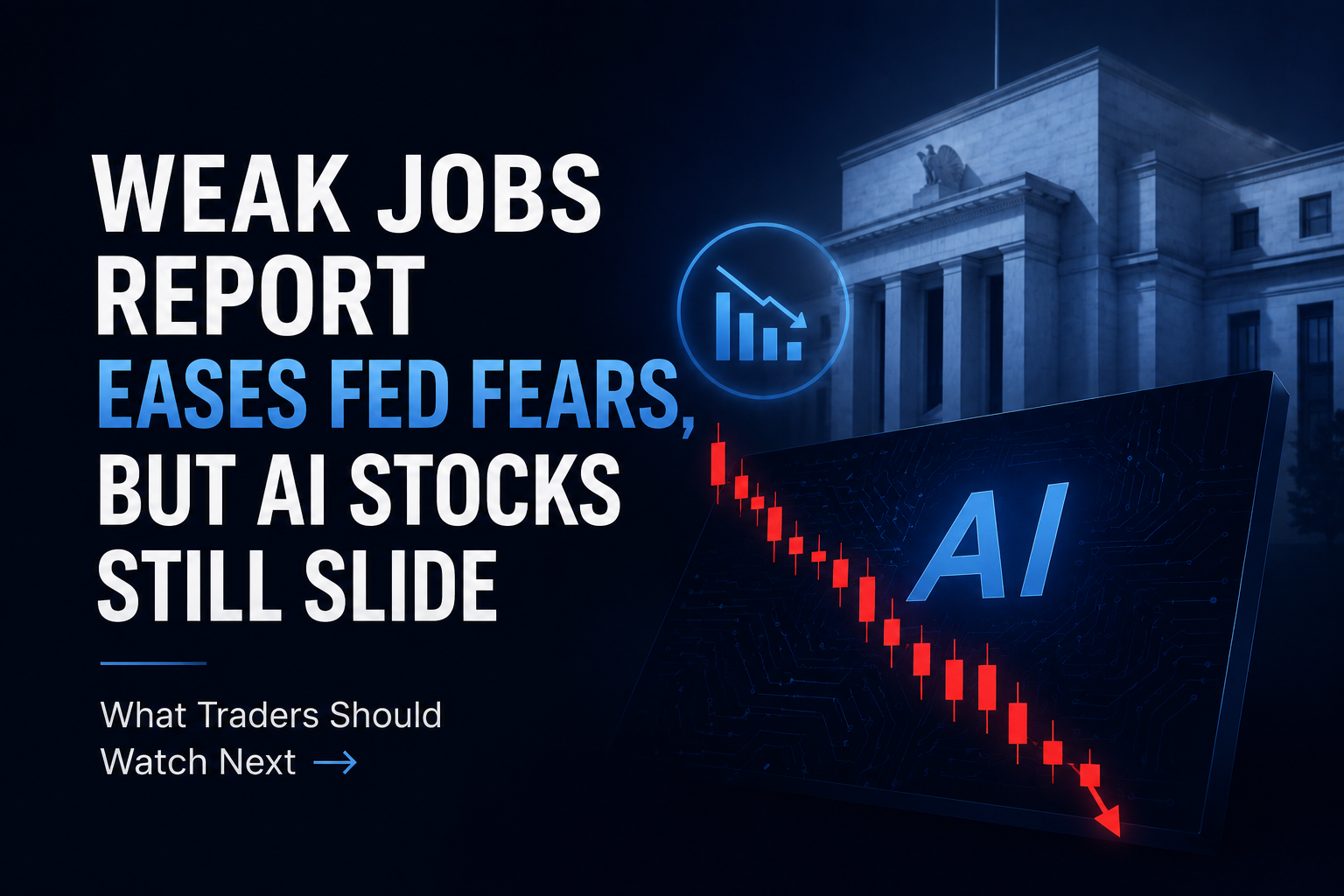
Weak Jobs Report Eases Fed Fears, But AI Stocks Still Slide: What Traders Should Watch Next

Weak Jobs Report Eases Fed Fears, But AI Stocks Still Slide: What Traders Should Watch Next

The U.S. June jobs report signaled a clear economic slowdown, missing expectations and lowering Federal Reserve rate hike fears. Despite lower Treasury yields, AI and tech stocks slid, proving that ma

FTIXX Lynq: Goldman's $100B Fund Connects to Crypto Rails

FTIXX Lynq: Goldman's $100B Fund Connects to Crypto Rails

Goldman Sachs is making its Financial Square Treasury Instruments Fund, known by the institutional share-class ticker FTIXX, available to qualified U.S. participants through Lynq, a real-time settleme

SWIFT Tokenized Deposits: Why Chainlink Matters Now

SWIFT Tokenized Deposits: Why Chainlink Matters Now

Chainlink is helping financial institutions connect their existing banking systems and key-signing infrastructure to Swift’s blockchain-based ledger, adding an interoperability layer to one of the mos

RWA Perpetuals Hit $1.4T: Why Trading Is Exploding

RWA Perpetuals Hit $1.4T: Why Trading Is Exploding

RWA perpetuals are becoming one of the fastest-growing bridges between traditional markets and crypto-native trading. Recent industry analysis cited by MEXC indicates that onchain RWA perpetual activi

Related Articles

View More
Dogecoin Marketcap Explained: What It Means and How It Shapes DOGE's Value

Dogecoin Marketcap Explained: What It Means and How It Shapes DOGE's Value

Key TakeawaysMarket capitalization (market cap) measures the total dollar value of Dogecoin (DOGE), calculated as current price × circulating supply.As of December 2025, Dogecoin's market cap stands a

How Tether Maintains Its 1:1 Peg: Mechanics of USDT Reserves

How Tether Maintains Its 1:1 Peg: Mechanics of USDT Reserves

Tether (USDT) is a stablecoin pegged 1:1 to the US Dollar, meaning each USDT is backed by an equivalent amount of reserves. Tether maintains its peg by holding a mix of fiat assets, cash equivalents,

Dogecoin Security Basics: Common Scams Targeting DOGE Holders and How to Avoid Them

Dogecoin Security Basics: Common Scams Targeting DOGE Holders and How to Avoid Them

Dogecoin (DOGE) has transformed from an internet meme into a legitimate financial asset. However, its mainstream visibility is a double-edged sword: while it drives adoption, it also attracts sophisti


Can XRP Reach $1,000? The Math Says No, Here's Why

Can XRP Reach $1,000? The Math Says No, Here's Why

Every crypto rally brings the same question back: can XRP reach $1,000?It is one of the most-searched price targets in all of crypto, and the short answer is no — not at anything close to XRP's curren

Sign Up on MEXC
Sign Up & Receive Up to 10,000 USDT Bonus
Is Your Stablecoin Truly Safe?
Is Your Stablecoin Truly Safe?Is Your Stablecoin Truly Safe?
Know the risks of USDT, USDC, OpenUSD & USD1

Join the MEXC Community

Get the latest listings, events, and updates in real time, straight from our official Telegram channel.

25k+ members