Occidental Petroleum Stock Analysis: Permian, Oil Prices, Debt, Berkshire and Carbon Capture
Summary
A 2026 analysis of Occidental Petroleum (NYSE: OXY) should focus on six major variables:
- Oil prices
- Production
- Free cash flow
- Debt reduction
- Berkshire Hathaway
- Low Carbon Ventures
The latest Q2 2026 results strengthened several parts of the story.
Occidental reported approximately:
- 1.43 million BOE/day global production;
- $96.78/bbl average realized oil price;
- $2.40 adjusted EPS.
Management also reduced its 2026 capital-spending expectation to approximately $5.5–$5.9 billion and maintained an annual production outlook of roughly 1.42–1.45 million BOE/day.
The investment question is increasingly:
Can Occidental use strong operations and lower capital requirements to convert commodity cash flow into a much stronger per-share balance sheet?
Metric 1: Oil Price
OXY remains highly sensitive to oil.
Q1 realized crude:
$69.91/bbl.
Q2 realized crude:
$96.78/bbl.
That dramatic change helps explain why Q2 profitability improved so sharply.
Metric 2: Production
Higher prices have more impact when production is stable or growing.
Q2 production averaged about:
1.43 million BOE/day.
Occidental's current full-year 2026 outlook is approximately:
1.42–1.45 million BOE/day.
This suggests management is prioritizing disciplined output rather than maximizing growth at any cost.
Metric 3: Permian Output
The Permian Basin is one of the most important OXY assets.
For Q3 2026, Occidental guided Permian production to:
795,000–815,000 BOE/day.
Investors should monitor:
- Well productivity;
- Decline rates;
- Drilling inventory;
- Capital efficiency;
- Operating costs.
Metric 4: Capital Expenditure
Occidental cut its 2026 capital-spending guidance to approximately:
$5.5–$5.9 billion
from a higher previous range.
Lower capital spending can improve free cash flow if production remains resilient.
That is a key part of the current investment thesis.
Metric 5: Sustaining Capital
Management has said it expects approximately $5.9 billion to be a starting point for 2027 capital spending while maintaining production broadly around 2026 levels.
It also targets a reduction in sustaining capital toward approximately $4.5 billion by 2030.
If successful, this could significantly increase cash generation without requiring higher commodity prices.
Metric 6: Free Cash Flow
CEO Richard Jackson said Occidental is on track to increase annual free cash flow by more than $1.2 billion in 2026, with a pathway toward over $4 billion of additional annual cash flow by 2030 before assuming higher oil prices.
That is a management target, not a guaranteed outcome.
Investors should monitor actual progress each quarter.
Metric 7: Principal Debt
Debt reduction remains central.
Occidental reported principal debt of approximately $13.3 billion as of May 5, 2026, after $7.1 billion of repayments during the year.
The next major target is:
$10 billion principal debt.
Why the $10 Billion Target Matters
Reaching $10 billion could change the capital-allocation conversation.
Once leverage is lower, more free cash flow may eventually become available for:
- Berkshire preferred redemption;
- Dividends;
- Buybacks;
- Growth investments.
Metric 8: Berkshire Preferred Equity
Berkshire's remaining preferred stake had approximately:
$8.5 billion liquidation value
as of March 31 and carries an 8% dividend.
That preferred financing is expensive.
Occidental can begin redeeming it under its terms in 2029.
This may become the next major balance-sheet project after ordinary debt reduction.
Metric 9: Berkshire Common Ownership
Berkshire owns approximately 26.9% of outstanding OXY common stock, excluding potential warrant exercise.
The size of this position makes Berkshire strategically important—but does not guarantee a takeover.
Metric 10: Warrants
Berkshire also holds warrants for up to:
83.9 million shares
at:
$59.59
per share.
This matters because warrant exercise can alter OXY's share count and Berkshire's ownership structure.
Metric 11: Dividend
OXY currently pays:
$0.26 quarterly.
The dividend has increased gradually, but management currently appears to place deleveraging above aggressive common-share repurchases.
Metric 12: OxyChem Sale
Selling OxyChem for $9.7 billion was transformational.
It:
- Reduced debt;
- Simplified the company;
- Increased upstream concentration.
For detailed analysis, see What Is Occidental Petroleum Stock?.
Metric 13: Carbon Capture
STRATOS and 1PointFive create long-term optionality.
STRATOS is designed for up to 500,000 metric tons of annual CO₂ removal capacity when fully operational.
But investors should not value early-stage DAC revenue as though it were already comparable with the mature upstream business.
Bull Case
The strongest OXY bull case combines:
- Sustained healthy oil prices;
- Stable production;
- Lower capex;
- Falling debt;
- Preferred redemption;
- Higher common shareholder returns;
- Commercial carbon success.
Bear Case
The bear case includes:
- Crude prices falling sharply;
- Production weakness;
- Higher costs;
- Middle East disruptions;
- Slower debt reduction;
- Preferred financing remaining outstanding longer;
- Carbon projects generating insufficient returns.
Current Valuation Context
OXY closed at $57.70 on August 13, 2026, about 14.5% below its 52-week high of $67.45.
Price alone does not indicate whether a stock is cheap or expensive.
The important question is how much sustainable free cash flow Occidental can generate at normalized commodity prices.
How OXYON Fits
OXYON carries all of these underlying business risks.
It then adds:
- Ondo structure;
- Tracking;
- Blockchain;
- Token liquidity;
- USDT;
- MEXC custody.
Eligible users can trade OXYON/USDT on MEXC.
FAQ
What are the most important OXY metrics?
Oil price, production, free cash flow, capex and debt.
How much does Occidental produce?
Around 1.43 million BOE/day in Q2 2026.
What is the debt target?
$10 billion principal debt.
How much of OXY does Berkshire own?
26.9% of outstanding common stock as of March 31, excluding warrants.
Is carbon capture already a major earnings contributor?
It remains a developing business rather than the core earnings engine.
Risk Disclaimer
This analysis is educational and does not constitute investment advice. Commodity prices can change rapidly, and company targets may not be achieved.
Popular Articles
View More
Is Anthropic Profitable? Revenue, ARR & Cash Burn Explained
Two headlines about Anthropic ran in the same month: one said the firm had turned its first profit, the other said it was burning billions in cash. Both were right. Ask whether Anthropic is
Oklo Stock Analysis: Revenue, Cash, Aurora, Meta, Licensing, Fuel and Dilution Risks
Summary Analyzing Oklo (NYSE: OKLO) requires a different framework from analyzing a mature utility. Current revenue and earnings do not yet represent the scale of the investment thesis. Instead,
Occidental After the OxyChem Sale: What Changed for OXY Stock in 2026?
Summary On January 2, 2026, Occidental Petroleum completed one of the most consequential transactions in its recent history: the sale of OxyChem to Berkshire Hathaway for $9.7 billion in cash,
Hot Crypto Updates
View More
Pre-Market Briefing on Sept 29: Nvidia Up 1.68% on $150B Buyback as Market Focus Turns to the Openings
All three major indexes fell on Monday, September 28: the S&P 500 closed at 7,683.69 for −0.8%, the Nasdaq at 26,820.38 for −0.9% and the Dow at 51,481.51 for −0.7%. The reason sat in the bond

Pre-Market Briefing on Sept 28: Qualcomm Climbs 3.97% on Apple License Renewal, Fed Speakers in Focus
All three major indexes closed higher on Friday, September 25: the Dow +0.93%, the S&P 500 at 7,743.41 for +0.51%, the Nasdaq at 27,068.72 for +0.48%, and the Philadelphia semiconductor index +1.4%.

BTC Spot ETFs See $2.98 Billion in Net Inflows Over Seven Trading Days【MEXC Alpha Trader – Daily Market Brief (September 28, 2026)】
I. Macro & Market Sentiment · Market Data: BTC $83,660.00 (-0.96%) | ETH $2,656.13 (-1.67%) | SOL $120.67 (-0.63%) · Market Sentiment: Funding Rate -0.0018% | Fear & Greed Index 74 (Greed) · Data

Trending News
View More
Micron Earnings Preview: AI Memory Scarcity Faces Its Biggest Durability Test Yet
Micron reports fiscal third-quarter 2026 results after the market close on June 24, with expectations already set at record levels. The company’s own guidance points to $33.5 billion in revenue, rough
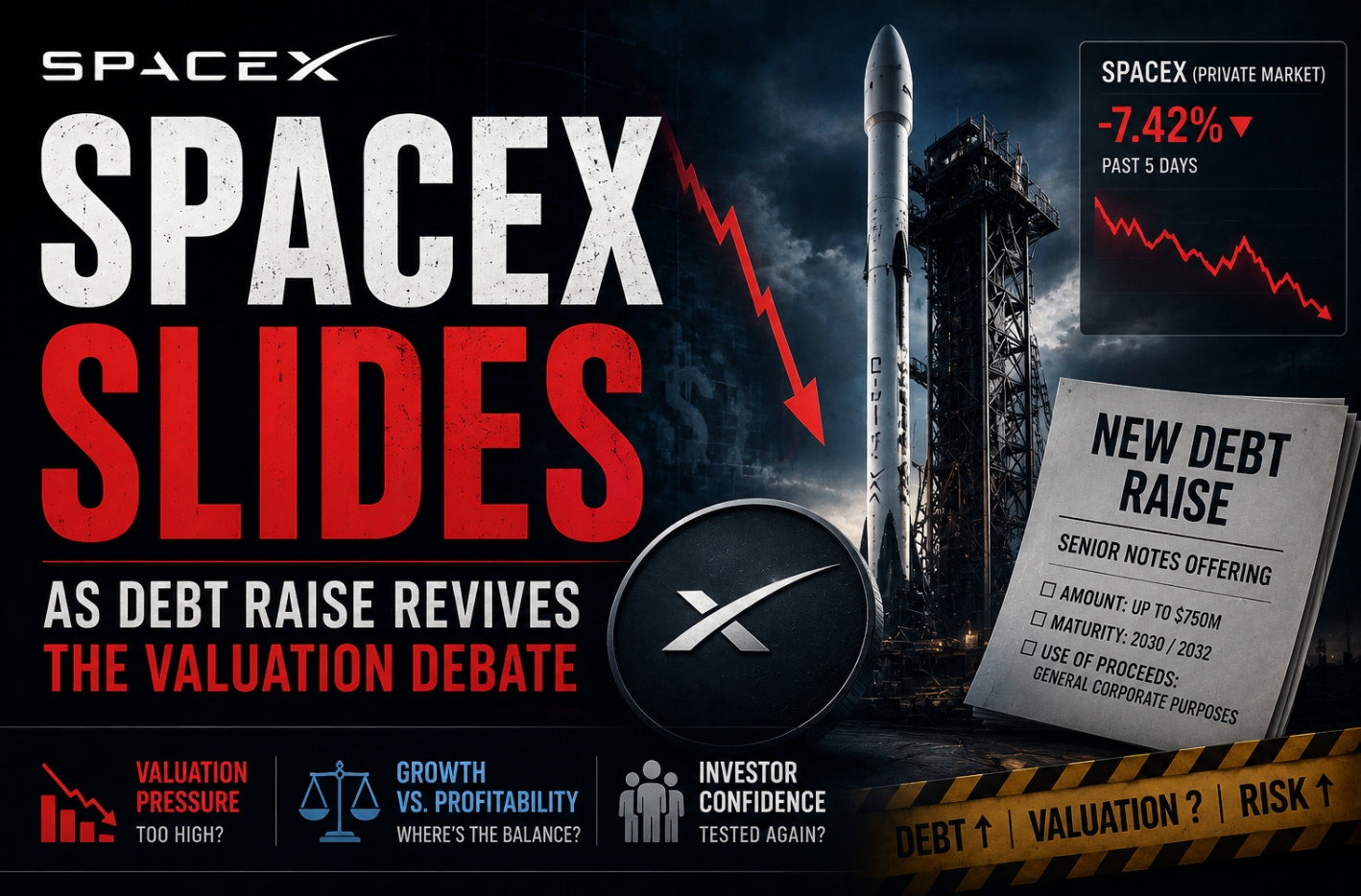
SpaceX Slides as Debt Raise Revives the Valuation Debate
SpaceX shares extended their post-IPO pullback after the company disclosed plans to enter the bond market despite reporting more than $100 billion in cash and equivalents. The move highlights a key sh

Related Articles
View More
Oura Competitors: Samsung, Apple and the Smart Ring Market
Oura's competitors fall into three groups, according to its IPO prospectus: smartwatch makers such as Apple, Google and Samsung; fitness wearables such as Garmin, Coros and Whoop; and software-only he

Is Oura Profitable? Revenue, Business Model and Valuation
Yes, Oura is profitable on a net income basis. Its IPO prospectus shows net income of $60.8 million on revenue of $1.21 billion in the nine months to June 30, 2026. The $924.3 million loss in some hea

Oura IPO 2026: Date, Price, Valuation and How to Trade OURA
Oura, the company behind the Oura Ring, is expected to price its U.S. initial public offering during the week of September 28, 2026 and list on the Nasdaq Global Select Market under the ticker OURA. A