Buy Crypto
Markets
Spot
FuturesBTC
Earn
Event Center
Rewards Hub
More
0-Fee Fest
Dogecoin (DOGE)has evolved from a meme-era experiment into one of the most widely recognized digital assets. As attention grew, exchanges expanded the ways users can access DOGE markets. Today, mostDogecoin (DOGE)has evolved from a meme-era experiment into one of the most widely recognized digital assets. As attention grew, exchanges expanded the ways users can access DOGE markets. Today, most
Learn/Trading Guide/Trading Concepts/Dogecoin (DOGE) Spot vs. Futures Trading: Which Suits Your Risk Profile?

Dogecoin (DOGE) Spot vs. Futures Trading: Which Suits Your Risk Profile?

Beginner
Oct 26, 2026MEXC
8 min
Share
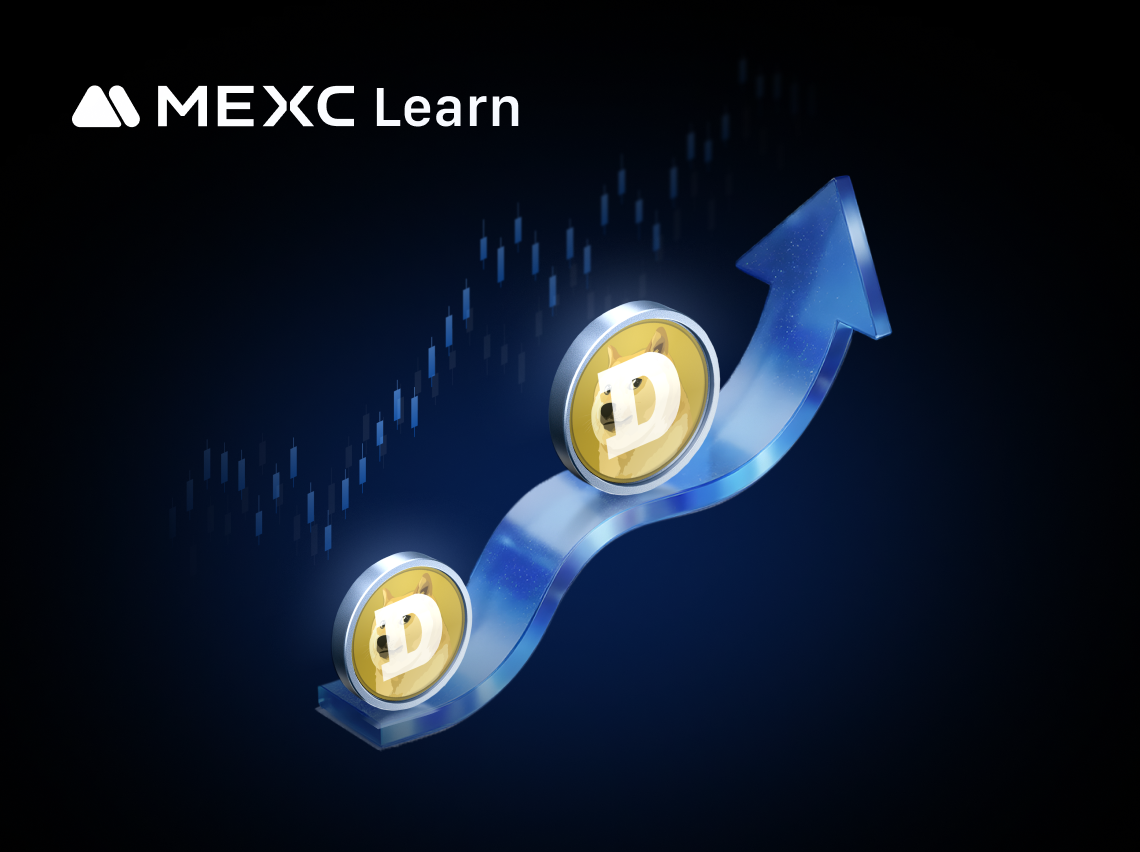
Dogecoin (DOGE)has evolved from a meme-era experiment into one of the most widely recognized digital assets. As attention grew, exchanges expanded the ways users can access DOGE markets. Today, most DOGE trading activity occurs through two product types:spot tradingandperpetual futures.

This article doesnotrecommend a "better" option. Instead, it defines "risk profile" concretely:how much product complexity you can accurately understand and tolerate. Spot and futures may display similar charts and prices, but their underlying rules—and therefore their failure modes—differ significantly.


Key Takeaways

  • Risk profileis not merely "aggressive vs. conservative." In crypto, it often depends on whether you understand the rules that can alter outcomes, especially during volatility.
  • Spot tradinginvolves direct asset exchange. After a spot purchase, you typically hold DOGE in your exchange wallet balance.
  • Perpetual futuresare derivatives: you hold a contract that tracks DOGE price exposure, and the product includesmargin and liquidation mechanics.
  • Futures interfaces display additional contract fields (e.g.,funding-related informationand multiple price references), which is why they can behave differently from spot in fast-moving markets.
  • A useful self-test: if you cannot clearly explain a feature (e.g., "liquidation" or "funding"), you face a higher risk of misunderstanding the product—not just the market.

1. What "Risk Profile" Means Here (Not a Personality Test)


People often discuss risk as if it were purely emotional: "I'm conservative" or "I'm aggressive." In practice, product risk in crypto also depends on how the product is structured.

A practical definition for this article:
Your risk profile = (volatility tolerance) + (ability to manage product rules under stress).

The second component matters because DOGE can move rapidly. When markets move fast, outcomes are shaped not only by price direction but also by liquidity, execution conditions, and product-specific mechanics. Instead of asking "Which one is better?" consider a more grounded question:

"Which set of rules do I understand well enough to avoid obvious mistakes?"

2. Spot Trading Checklist 


Spot trading is typically the simplest way to gain DOGE price exposure because it closely resembles direct exchange: you trade one asset for another, and after execution, you generally hold DOGE.

However, "simple" does not mean "risk-free." Spot trading has its own sources of risk, primarily related to price movements and execution conditions. Below is aspot checklist. If you can't explain these points successfully, please feel free to pause to learn the mechanics before taking action.

2.1 Can you explain what you actually "own" after a spot trade?


In standard spot trading (without margin borrowing), once a buy order is filled, you typically hold DOGE in your exchange wallet balance. Ownership here refers to holding the asset balance rather than a derivatives contract.

2.2 Do you understand the difference between a market order and a limit order?


This is a core execution concept. Market and limit orders can behave differently when markets move quickly and order book depth changes.


2.3 Can you describe "execution risk" in one sentence?


Execution risk is not about "being right" on direction. It concerns whether your order fills at the expected price, especially during volatility. Even in spot markets, rapid moves and thin depth can create discrepancies between your intention and the actual outcome.
If you evaluate a spot trade solely as "buy vs. sell," you may be overlooking the mechanics layer.

2.4 Do you recognize that spot exposure is directional by default?


Spot holdings are directly affected by price movements: if DOGE price rises, the value of your holdings rises; if price falls, the value falls. Spot products do not inherently provide inverse exposure unless a separate structure is used. This is not a judgment about spot—simply a reminder that "I own DOGE" represents a specific exposure type.

2.5 Can you separate market volatility from operational decisions?


Many avoidable mistakes stem from reacting to volatility with rushed decisions. Spot users remain exposed to attention-driven bursts (common in meme assets), and the product's simplicity can sometimes foster overconfidence.


3. Perpetual Futures Checklist 


Perpetual futures represent a different product class. You are not buying DOGE directly; you are gaining exposure through a contract that tracks DOGE price movement. As a derivative, the product introduces contract-specific rules that do not exist in standard spot trading. Below is afutures checklist. If several items are unfamiliar, that signals meaningful risk: your exposure includes not only market risk but also product misunderstanding risk.

3.1 Can you explain what you hold in futures (a contract, not DOGE)?


In futures, you generally hold a derivatives position (contract exposure), not the underlying asset. This changes how the product behaves and which additional mechanics apply.

3.2 Do you understand what leverage means at the conceptual level?


Leverage is commonly described as exposure amplification relative to committed collateral/margin. It can accelerate the speed and magnitude of outcomes in both directions.


3.3 Can you define margin and explain why it matters?


Margin is the collateral required to maintain a derivatives position. Futures products typically use margin-based rules to determine whether a position can remain open. This is why futures outcomes can include forced closures that spot holdings do not experience.

3.4 Do you understand liquidation as a product mechanism (not a market opinion)?


Liquidation is not a prediction. It is a rule-based mechanism: if margin becomes insufficient under the product's requirements, a position may be forcibly closed.
This is one of the most critical differences between spot and futures, as it means a position can end due to product rules—not solely because you "changed your mind."


Many perpetual futures contracts display funding-related fields (rate and timing). The purpose is commonly described as aligning contract pricing with broader market pricing. The key point: funding is acontract mechanic, not a "chart indicator."

For platform-specific terminology references:

3.6 Do you understand that futures screens may show multiple reference prices?


Perpetual futures interfaces commonly display multiple prices or price references (e.g., last price vs. index/reference price vs. fair/mark price, depending on platform). These references exist because derivatives employ additional pricing and risk controls that spot trading typically does not require. If you treat "price" as a single number in futures without understanding the references, you may misinterpret what the interface is displaying.

3.7 Can you separate "directional exposure" from "outcome certainty"?


Futures contracts can be structured to provide exposure in different directions (often described as long vs. short). This tells the direction of exposure, not a guaranteed outcome.

3.8 Do you recognize how volatility and liquidity interact with margin rules?


DOGE can experience sharp moves and liquidity shifts. In futures markets, volatility and liquidity conditions can interact with margin mechanics, producing outcomes that appear "sudden" to users who expect futures to behave like accelerated spot trading.
This is not a claim about what will happen—it is a statement about how the product is structured.

4. The Most Common "Product Confusions": Why People Misjudge Risk


If spot and futures both involve "DOGE," why do users often experience them so differently? Usually, because they conflate product layers.

Confusion #1: "It's the same DOGE chart, so it's essentially the same risk."

Charts may look similar, but the product rules differ. Futures introduce margin-based mechanisms and contract fields that can alter outcomes under stress.

Confusion #2: "In futures, price is just price."

In futures interfaces, multiple price references may exist (index/reference/fair concepts). These references are part of derivatives risk logic, not "extra trading indicators."

Confusion #3: "If I understand DOGE, I automatically understand the product."

Knowing DOGE's origin, meme culture, or network basics does not automatically mean you understand derivatives mechanics. Product comprehension is a separate skill.

Confusion #4: "Risk is only about direction."

A significant portion of real-world losses (in any market) stems from mechanics misunderstanding: execution differences, liquidity gaps, and derivative rules. This is why the checklists above matter more than personality labels.

5. A Simple Decision Filter (Non-Prescriptive)


For a practical takeaway without turning this into a tutorial, use this filter:

  • If you are evaluatingspot, your core mechanics are:ownership, order types, and execution conditions.
  • If you are evaluatingperpetual futures, your core mechanics also include:margin, liquidation, funding-related information, and multiple price references.

This article does not prescribe what to choose. It clarifies what you need to understand to avoid confusing "market risk" with "product misunderstanding risk."


Conclusion


"Spot vs. futures" is not a debate about which is superior—it is a decision about which rules you are willing and able to operate under.

Spot trading is structurally closer to direct asset exchange and typically results in DOGE holdings after execution. Perpetual futures are derivatives that add a layer of contract mechanics, including margin and liquidation behavior, plus additional interface fields such as funding-related information and multiple price references.

For meme-driven assets like DOGE, volatility and attention shifts can be intense. The most reliable way to reduce mistakes is to separatemarket uncertaintyfromproduct mechanicsand ensure you understand the product rules before engaging with either market.

Regional notice:Market access and features are subject to regional availability and are not available in certain jurisdictions, including the United States.

FAQ


Is spot trading the same as owning DOGE directly?In standard spot trading, after an order fills, you typically hold DOGE in your exchange wallet balance. This differs from futures, where you hold contract exposure.

Why do futures feel more complex than spot?Perpetual futures typically incorporate margin and liquidation mechanics, plus contract fields such as funding-related information and multiple price references.

Do perpetual futures always include funding-related fields?Many perpetual futures products include funding-related mechanisms to help align contract pricing with broader market pricing. The exact display and terminology may vary by platform.

Can spot and futures react differently during fast moves?Yes. Even if both reference DOGE price movement, execution conditions and derivatives mechanics (such as margin and liquidation) can lead to different outcomes during volatile periods.


Disclaimer:This article is for educational purposes only and does not constitute financial advice. Cryptocurrency markets are volatile. Availability of products and services may vary by region.
Market Opportunity
Lagrange Logo
Lagrange Price(LA)
$0.05852
$0.05852$0.05852
-1.63%
USD
Lagrange (LA) Live Price Chart

Popular Articles

View More
Oura Competitors: Samsung, Apple and the Smart Ring Market

Oura Competitors: Samsung, Apple and the Smart Ring Market

Oura's competitors fall into three groups, according to its IPO prospectus: smartwatch makers such as Apple, Google and Samsung; fitness wearables such as Garmin, Coros and Whoop; and software-only
Is Oura Profitable? Revenue, Business Model and Valuation

Is Oura Profitable? Revenue, Business Model and Valuation

Yes, Oura is profitable on a net income basis. Its IPO prospectus shows net income of $60.8 million on revenue of $1.21 billion in the nine months to June 30, 2026. The $924.3 million loss in some
Oura IPO 2026: Date, Price, Valuation and How to Trade OURA

Oura IPO 2026: Date, Price, Valuation and How to Trade OURA

Oura, the company behind the Oura Ring, is expected to price its U.S. initial public offering during the week of September 28, 2026 and list on the Nasdaq Global Select Market under the ticker OURA.
From Crypto to Stocks: The MEXC Stock Trading Handbook

From Crypto to Stocks: The MEXC Stock Trading Handbook

The MEXC Stock Trading Handbook is a practical guide for crypto traders who want to trade stocks and stock-linked products. It explains what changes when the underlying asset is a company rather than

Hot Crypto Updates

View More
Red Sea Tensions Return as Houthi Threats Put Oil Shipping Costs at Risk

Red Sea Tensions Return as Houthi Threats Put Oil Shipping Costs at Risk

Overview Red Sea tensions have returned to the centre of global market attention because the risk is no longer confined to isolated attacks on individual vessels. Investors are now considering the

Dogecoin Labs Launches: MyDoge, DogeOS, and Such App Unite to Expand DOGE Payment Adoption

Dogecoin Labs Launches: MyDoge, DogeOS, and Such App Unite to Expand DOGE Payment Adoption

Dogecoin Labs officially launched on October 21, 2026, bringing together three products—MyDoge, DogeOS, and Such App—under an independent organization in collaboration with the Dogecoin Foundation.

DogeOS Launches Public Testnet: Dogecoin Moves Closer to an Ethereum-Compatible Application Ecosystem

DogeOS Launches Public Testnet: Dogecoin Moves Closer to an Ethereum-Compatible Application Ecosystem

DogeOS officially launched the Chikyū public testnet on September 30, 2026, bringing an Ethereum Virtual Machine-compatible environment to the Dogecoin ecosystem. Developers can deploy smart

Dogecoin Goes to the Moon as Corporate Treasuries Bail: DOGE-1 Launches While CleanCore's 463 Million DOGE Exit Exposes the Meme Coin Treasury Trap

Dogecoin Goes to the Moon as Corporate Treasuries Bail: DOGE-1 Launches While CleanCore's 463 Million DOGE Exit Exposes the Meme Coin Treasury Trap

Key Takeaways DOGE-1, the first space mission ever paid for entirely in Dogecoin (DOGE), was scheduled to lift off on Monday, September 14, 2026 aboard a SpaceX Falcon 9 rideshare from Kennedy Space

Trending News

View More
Why Did Unitree Stock Hit Its First 20% Limit-Up Since Listing?

Why Did Unitree Stock Hit Its First 20% Limit-Up Since Listing?

Unitree stock closed at 624 yuan after its first 20% limit-up. See what changed—and why the rally still depends on delivery, not robot demos.
Why Is DASH Price Rising? 24H Gain Outpaces Major Privacy Coins

Why Is DASH Price Rising? 24H Gain Outpaces Major Privacy Coins

DASH price gained more than 7% as traders rotated into the privacy-linked asset ahead of the planned Dash Platform 5.0 release.

Kalshi CPI Futures: Can It Challenge Wall Street?

Kalshi CPI Futures: Can It Challenge Wall Street?

Kalshi is preparing to enter the institutional inflation derivatives market with proposed exchange-traded futures contracts linked to the U.S. Consumer Price Index (CPI). According to Bloomberg's Octo

DeFi Price Manipulation Attacks Hit 43 in 2026

DeFi Price Manipulation Attacks Hit 43 in 2026

DeFi price manipulation attacks have reached a new reported annual high in 2026, exposing persistent weaknesses in how decentralized financial protocols value assets, manage collateral, and respond to

Related Articles

View More
Common Dogecoin Trading Mistakes Beginners Make and How to Avoid Them

Common Dogecoin Trading Mistakes Beginners Make and How to Avoid Them

Dogecoin (DOGE)is one of the most famous digital assets in crypto. Its meme identity, familiar branding, and constant online conversation can make DOGE feel "easy" to understand—sometimes easi
MEXC On-Chain Daily Report: S&P Global Completes OpenZeppelin Acquisition to Expand On-Chain Security Risk Assessment

MEXC On-Chain Daily Report: S&P Global Completes OpenZeppelin Acquisition to Expand On-Chain Security Risk Assessment

Updated: October 27, 2026, 09:30 (UTC+8)|Author: MEXCHeadlinesS&P Global completes acquisition of OpenZeppelinNBA and CFTC establish prediction market regulatory cooperationPolymarket U.S. monthly
Google Earnings Date: When Does Alphabet Report Earnings? Time, Results History and Stock Reaction

Google Earnings Date: When Does Alphabet Report Earnings? Time, Results History and Stock Reaction

Alphabet, Google's parent company, will report its Q3 2026 results (July–September 2026) after the US market closes on Wednesday, October 28, 2026. The earnings call starts at 4:30 p.m. ET (1:30 p.m.

SanDisk Earnings Date: When Does SanDisk Report Earnings? Time, Results History and Stock Reaction

SanDisk Earnings Date: When Does SanDisk Report Earnings? Time, Results History and Stock Reaction

SanDisk will report its Q1 fiscal 2027 results (roughly July–September 2026) after the US market closes on Thursday, October 29, 2026. The earnings call starts at 4:30 p.m. ET (1:30 p.m. PT), which is

Sign Up on MEXC
Sign Up & Receive Up to 10,000 USDT Bonus

Join the MEXC Community

Get the latest listings, events, and updates in real time, straight from our official Telegram channel.

25k+ members

Futures

BTC/USDT
ETH/USDT
GOLD(XAU)/USDT