How to Analyze Stock Market Themes: AI, Semiconductors, Crypto Equities, Energy, and Business Models
Key Takeaways
- Themes drive capital. Major stock moves are often dictated by top-down industry trends rather than bottom-up single-stock fundamentals.
- Proximity to revenue matters. Just because a company adds "AI" or "Blockchain" to its investor presentation does not mean it will successfully monetize the theme.
- The supply chain is the secret. In massive themes like AI and Semiconductors, the companies building the infrastructure (the "picks and shovels") often monetize long before the consumer-facing apps do.
- Business models dictate winners. In a rising sector, the companies with the strongest economic moats and pricing power capture the majority of the profits.
Why Market Themes Matter in U.S. Stock Investing
Sector Analysis vs. Single-Stock Analysis
- Single-Stock Logic (Bottom-Up): Focuses on a company's specific earnings, management team, and balance sheet.
- Sector Analysis (Top-Down): Focuses on the macro environment driving the entire industry.
- Sector Resonance: When a theme is strong, the entire sector moves together. If the leading AI semiconductor stock beats earnings and raises guidance, its competitors, suppliers, and foundry partners will likely gap up in sympathy.
- Supply Chain Transmission: Advanced traders look for derivative plays. If semiconductor companies are selling record numbers of chips, the companies that manufacture the testing equipment or supply the electricity for data centers will inevitably see a revenue boost.
- Valuation Expansion: During a thematic boom, the market is willing to pay a higher premium (P/E ratio) for the entire sector, lifting all boats.
How to Analyze a Market Theme
- Demand Driver: Is the demand structural (a permanent shift in technology or consumer behavior) or cyclical (a temporary spike due to a macro event)?
- Revenue Transmission: How exactly does the theme turn into corporate revenue?
- Margin Impact: Will this theme allow companies to charge higher prices (expanding margins), or will it spark a massive price war (compressing margins)?
- CapEx Cycle: Capital Expenditure (CapEx) matters. Is the industry spending billions to build infrastructure? If so, the hardware providers are the immediate winners.
- Competition: Is it a winner-take-all market, or is there room for multiple dominant players?
- Regulatory Risk: Themes like crypto equities, stablecoin infrastructure, and energy are highly sensitive to government intervention and policy shifts.
Business Model Quality: What to Look For
- The Revenue Model: Is the revenue recurring (like a SaaS subscription) or transactional (like selling a one-off piece of hardware)?
- Gross Margin Structure: Software companies typically boast 80%+ gross margins, meaning almost all new revenue flows to the bottom line. Hardware manufacturing has much lower margins.
- Economies of Scale: Does the product get cheaper to operate as more users join?
- The Moat: Does the company have a technological advantage, a massive network effect, or high switching costs that lock customers in?
Example Theme Frameworks
- Exchanges and Brokers: Benefiting from retail and institutional trading volume.
- Bitcoin Miners: Leveraged plays on the price of Bitcoin and global hash rate.
- Balance-Sheet Adopters: Software companies that hold billions of dollars of BTC on their balance sheets, acting as pseudo-ETFs.
Common Mistakes in Theme Investing
- Trading the Name: Buying a company just because it changed its name to include "Blockchain" or "AI," without checking if they actually generate revenue from the technology.
- Chasing the Narrative Peak: Entering a theme when it is on the front cover of every mainstream magazine. By this point, the early institutional money is already taking profits.
- Ignoring the Earnings Path: Falling in love with a revolutionary technology that is 10 years away from being profitable. Charles Schwab's insights on thematic investing warn that investors often overpay for growth that fails to materialize on the balance sheet.
- Treating the Sector as a Monolith: Assuming that if Bitcoin goes up, every single crypto equity will go up equally. Different business models capture value differently.
Theme Analysis Checklist
- [ ] Is the demand real? (Or is it just speculative hype?)
- [ ] How does the company monetize the theme? (Is the revenue path direct or vague?)
- [ ] Are margins expanding? (Is the company actually keeping the money it makes?)
- [ ] Who are the competitors? (Is the company a market leader or a lagging follower?)
- [ ] Is the valuation already priced to perfection? (Am I paying too much for future growth?)
- [ ] Are there regulatory risks? (Could a new law destroy the business model overnight?)
Related Reading
- Related Pillar (M3): How to Analyze Earnings, Valuation, and Company Quality
- Related Pillar (M4): Macro, Market Cycles, and Cross-Asset Signals in U.S. Stocks
FAQ
What is the difference between a sector and a theme?
Are crypto equities safer than buying crypto directly?
How do I know if a theme is fully priced in?
Popular Articles
View More
Oklo and Meta Nuclear Deal Explained: The 1.2 GW AI Data Center Power Project
Summary On January 9, 2026, Oklo and Meta announced an agreement supporting development of a nuclear-energy campus in Pike County, Ohio capable of scaling to 1.2 GW. The project is intended to
What Is Oklo (NYSE: OKLO) Stock? Aurora Nuclear Power, AI Data Centers, Fuel Strategy and Growth Opportunities
Summary Oklo Inc. (NYSE: OKLO) is an advanced nuclear technology company developing fast-fission power plants, nuclear fuel technologies and radioisotope businesses. Its core energy product is the
US Stock Weekly | Aug.08–Aug.13: CPI Cooling Lifts S&P 500 to Record High, AI Infrastructure Earnings Surge Across the Board
This week, the US stock market ushered in multiple catalysts: the July CPI exceeded expectations and cooled down, the S & P 500 hit a historic high, coupled with the SMCI financial report
Hot Crypto Updates
View More
Keysight Q3 Earnings Preview: Why AI Data Centers and High Speed Networking Matter for KEYS Stock
Overview Keysight Technologies (NYSE: KEYS), the global market leader in electronic design, test, and measurement solutions, is scheduled to release its fiscal third-quarter financial results today
Baidu Earnings Today: Why AI Cloud and Apollo Go Robotaxi Are in Focus for BIDU Stock
Overview Baidu Inc. (NASDAQ: BIDU) is officially scheduled to release its second-quarter 2026 financial results today, August 18, before the opening bell on Wall Street. According to official
Anthropic Revenue Run Rate Tops 65 Billion Ahead of Potential IPO And What Investors Should Know
Overview Artificial intelligence research leader Anthropic has delivered a fundamental shock to global capital markets with its latest financial metrics. Recent internal performance disclosures
Trending News
View More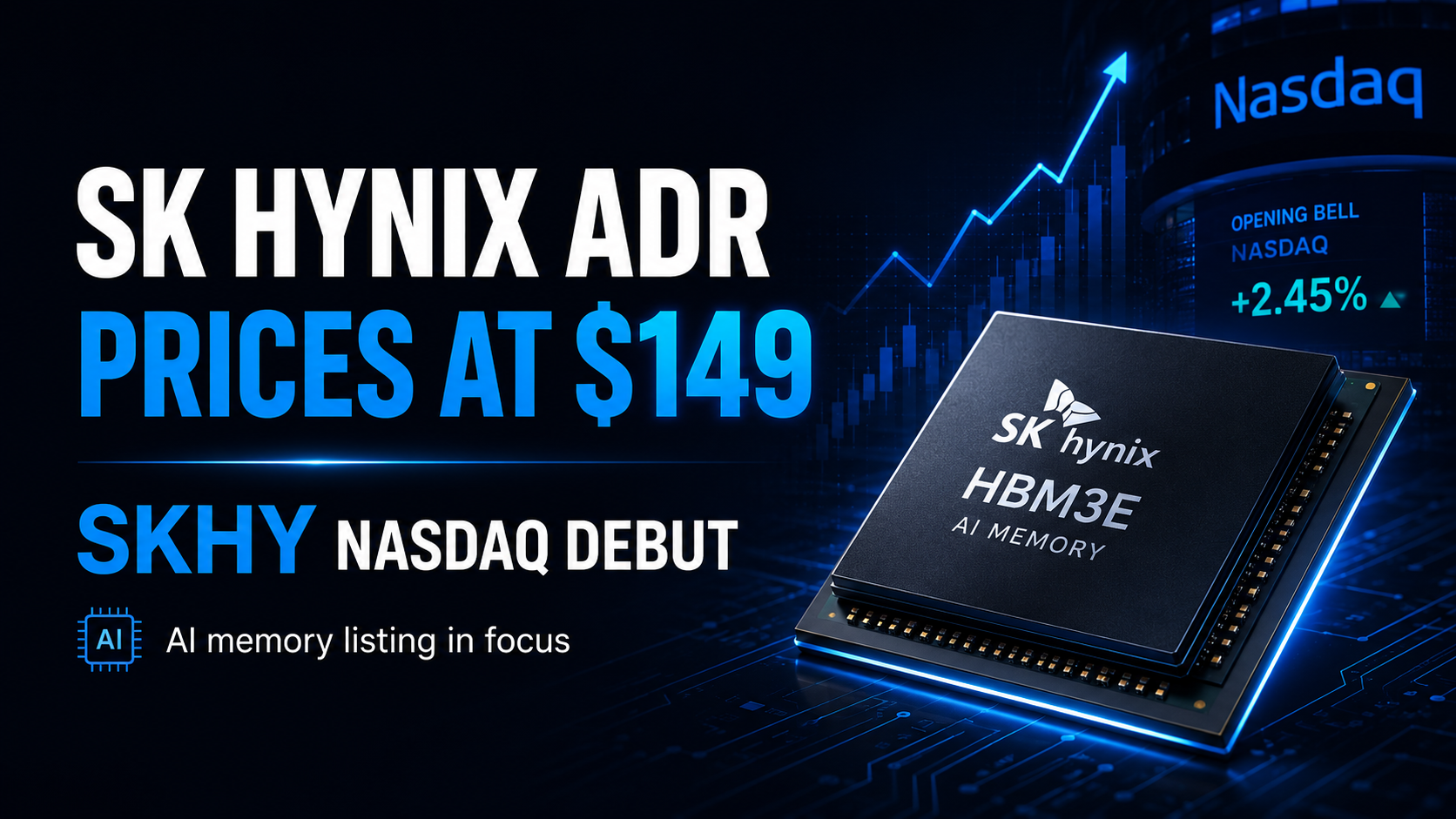
SK Hynix ADR Prices at $149 as SKHY Nasdaq Debut Nears
SK Hynix has officially priced its U.S. American Depositary Receipts (ADRs) at $149 each, raising approximately $26.5 billion in a major U.S. offering. This move highlights massive investor appetite f

DeepSeek Funding Restart Puts China AI Valuations Back in Focus
DeepSeek funding talks have reportedly restarted at a 500 billion yuan valuation, raising fresh questions about China AI investment and IPO timing.


Related Articles
View More
OKLO Stock Price Prediction 2026–2030: Aurora, Meta, AI Power Demand and OKLOON Outlook
Summary Forecasting Oklo (NYSE: OKLO) through 2030 is fundamentally different from forecasting a mature utility. Current earnings do not yet represent the business investors expect Oklo to become. A m
Is Oklo Stock a Buy in 2026? Bull Case, Bear Case and Key Catalysts
Summary The question “Is OKLO stock a buy?” ultimately depends on whether investors believe Oklo can convert its unusually strong nuclear-development pipeline into operating assets quickly enough to j
Oklo Stock Analysis: Revenue, Cash, Aurora, Meta, Licensing, Fuel and Dilution Risks
Summary Analyzing Oklo (NYSE: OKLO) requires a different framework from analyzing a mature utility. Current revenue and earnings do not yet represent the scale of the investment thesis. Instead, inves