

Bending Spoons IPO Nasdaq: $18.4B valuation dwarfs $11B private round
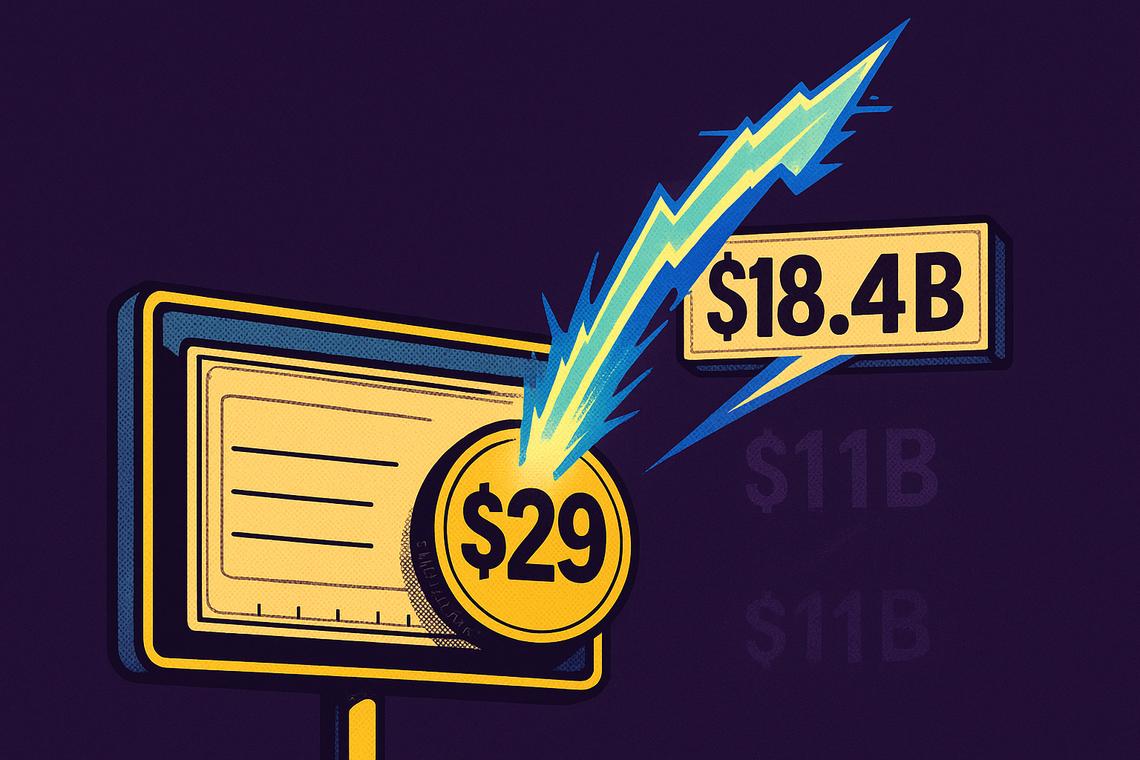
An Italian tech company just pulled off one of the most striking stock market debuts of 2026. Bending Spoons, the Milan-headquartered app giant, completed its Bending Spoons IPO on Nasdaq with shares priced at $29 each — above the previously announced $26–$28 range — and walked away with a valuation of approximately $18.4 billion. That figure alone tells a story: it’s a dramatic jump from the $11 billion valuation attached to the company’s last private financing round in 2025.
Key takeaways
- Bending Spoons priced its Nasdaq IPO at $29 per share, above the initial $26–$28 range, raising $1.68 billion from the sale of 57,971,015 ordinary shares.
- The company’s IPO valuation reached approximately $18.4 billion, up sharply from its $11 billion private valuation in 2025.
- Bending Spoons closed 2025 with $2.6 billion in revenues and a $500 million profit, underscoring the scale of its acquisition-driven model.
- The group’s app portfolio serves more than 400 million monthly active users and 10 million paying customers across platforms including Vimeo, WeTransfer, and Evernote.
- The company was founded in 2013 by five entrepreneurs under 30, including Luca Ferrari and Francesco Patarnello, and is now backed by Goldman Sachs, JPMorgan, Baillie Gifford, and former Apple CFO Luca Maestri.
Bending Spoons Debuts on Nasdaq with a Headline-Making Valuation
The numbers behind this listing are hard to ignore. The offering raised $1.68 billion through the sale of 57,971,015 ordinary shares — of which 34,398,640 came directly from Bending Spoons itself and 23,572,375 from existing selling shareholders. The closing was scheduled for July 2, 2026.
Pricing above the initial range is a meaningful signal. It indicates that institutional demand was strong enough to push underwriters past their conservative opening estimate — a vote of confidence that the $18.4 billion valuation wasn’t just acceptable to the market, but actively sought.
A Wall Street Lineup Behind the Deal
Goldman Sachs International, JPMorgan, and Allen & Company LLC served as joint lead book-running managers. The broader syndicate included Wells Fargo Securities, Bank of America Securities, Jefferies, Evercore ISI, BNP Paribas, Mizuho, Societe Generale, Crédit Agricole CIB, Intesa Sanpaolo, UniCredit, and Banca Akros – Banco BPM Group. The Italian banking presence in the syndicate — Intesa Sanpaolo, UniCredit, and Banca Akros — reflects the company’s roots and the domestic pride attached to this listing.
According to Reuters, Bending Spoons was expected to open roughly 14% above its IPO price in Nasdaq debut trading, adding further weight to the already elevated valuation set at pricing.
From Copenhagen to Milan: The Founders Behind the Company
Bending Spoons was founded in 2013 in Copenhagen by five entrepreneurs, all under 30 at the time. Luca Ferrari, originally from Settimo di Pescina in the Veronese countryside, and Francesco Patarnello from Padua are among the most publicly associated names. The founding team also included Matteo Danieli from Vicenza, Luca Querella from Turin, and Tomasz Greber, the sole non-Italian member of the group, who is Polish.
The company eventually relocated its headquarters to Milan, where it operates today. The story of five young founders building an $18.4 billion public company in just over a decade is, by any standard, an exceptional one — and it raises obvious questions about what made the model work so reliably.
The Acquisition Engine: How Bending Spoons Actually Operates
The core of Bending Spoons’ strategy is straightforward to describe but difficult to execute: acquire technology companies, restructure them for higher profitability, and redeploy the resulting cash flows into new acquisitions. It’s a compounding flywheel that the company has now run through more than 50 deals.
The portfolio reads like a directory of once-iconic internet brands. Acquisitions include AOL, Vimeo, Brightcove, WeTransfer, Evernote, Koomoot, and Eventbrite. Many of these were platforms that had lost momentum or struggled with profitability under prior ownership. Bending Spoons’ playbook involves taking them in, applying operational discipline, and extracting margin that previous management teams couldn’t.
What the Numbers Say About the Model
The financial results validate the thesis — at least through the evidence available. The group’s apps collectively serve more than 400 million monthly active users and generate revenue from 10 million paying customers. In 2025, Bending Spoons closed the year with $2.6 billion in revenues and a $500 million profit. A 19% net margin at that scale, built largely on acquired and restructured assets, is not a trivial outcome.
That profitability profile also sets Bending Spoons apart from many tech companies that arrived on public markets in prior years still burning cash. Investors here are buying into an already profitable enterprise — one that generated half a billion dollars in net income before its first day of trading.
Key Investors and Market Position
Over the years, Bending Spoons raised approximately $5 billion from a range of institutional and individual backers. Baillie Gifford, the Scottish investment manager known for its long-term holdings in companies like Tesla, was among the key institutional investors. The roster also includes Tamburi, former Apple CFO Luca Maestri, and former tennis champion Andre Agassi.
The breadth of the investor base — spanning institutional asset managers, strategic Italian investors, and high-profile individuals — suggests the company built credibility across multiple networks before arriving on Nasdaq. That kind of backing doesn’t guarantee future performance, but it does reflect how seriously sophisticated capital treated Bending Spoons’ track record heading into the public listing.
The valuation leap from $11 billion to $18.4 billion between the last private round and the IPO pricing is also worth examining analytically. It implies that public market investors, after reviewing the SEC filings and the roadshow, assigned a significantly higher multiple to the business than private investors had just months earlier. Whether that premium is sustained will depend on the company’s ability to continue sourcing, integrating, and monetizing acquisitions at pace — a model that becomes harder to execute as the available deal universe narrows and the company’s size demands ever-larger transactions to move the needle.
FAQ
What was the IPO share price for Bending Spoons on Nasdaq?
The IPO share price was set at $29 per share, above the initial $26–$28 range, reflecting strong institutional demand during the bookbuilding process.
How much money did Bending Spoons raise from the IPO?
Bending Spoons raised $1.68 billion from the sale of nearly 58 million ordinary shares, split between new shares issued by the company and shares sold by existing shareholders.
What is Bending Spoons’ estimated valuation after the IPO?
Based on the number of shares outstanding disclosed in SEC documents, the company was valued at approximately $18.4 billion at the time of the IPO — well above its $11 billion private valuation from 2025.
Who founded Bending Spoons and when?
Bending Spoons was founded in 2013 in Copenhagen by five entrepreneurs under 30: Luca Ferrari, Francesco Patarnello, Matteo Danieli, Luca Querella, and Tomasz Greber. The company is now headquartered in Milan, Italy.
Article produced with the assistance of artificial intelligence and reviewed by the editorial team.


You May Also Like

Bitcoin Exchange Binance Announces New Listings on its Futures Platform! Here Are the Details

BetOnline Take The Prize Easter Promotion Offers $30k in Cash Prizes!


