California locks in 50% Anthropic AI discount while Pentagon shuts door
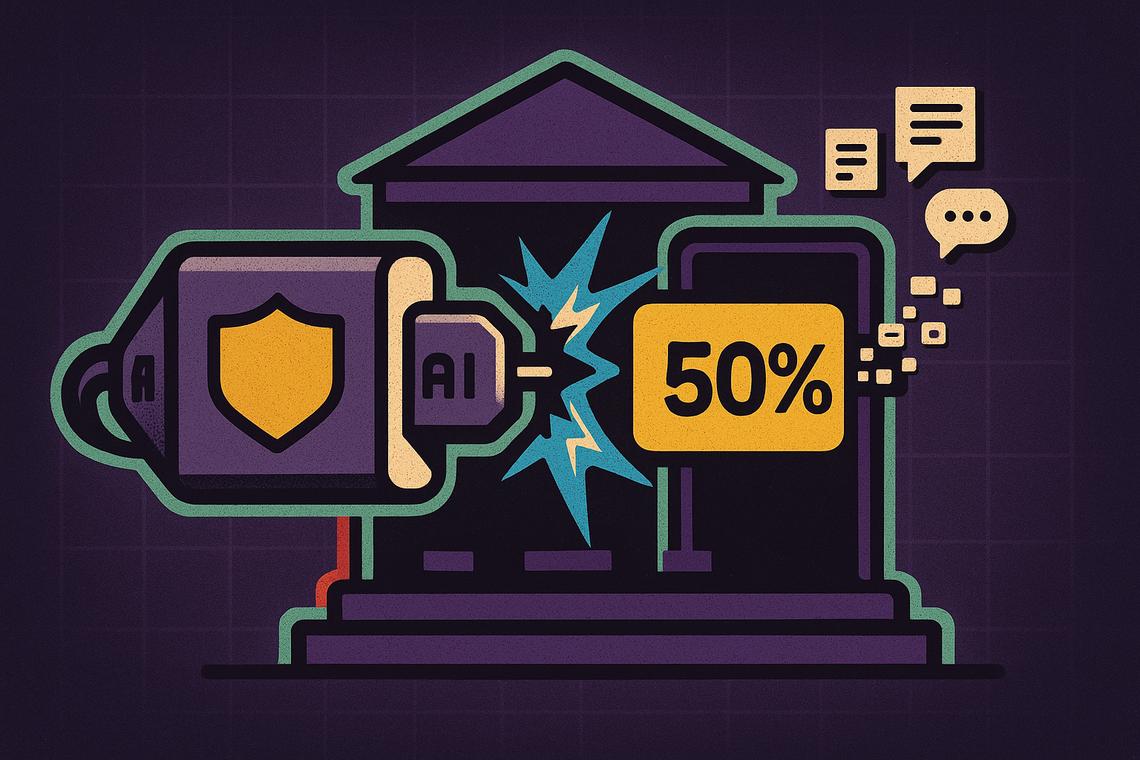
California just locked in a deal that could reshape how American governments think about adopting AI — and it came at half the usual price. Governor Gavin Newsom has secured a 50% discount on Anthropic AI services for the state’s agencies, cities, and counties, giving public-sector workers access to Claude at a fraction of typical enterprise rates. The announcement, made on June 29, marks what officials are calling a first-of-its-kind government partnership in U.S. AI procurement.
Key takeaways
- California secured a 50% discount on Claude AI for all state agencies, cities, and counties under a new deal with Anthropic announced June 29, 2026.
- Access to Claude will be available through the Statewide Information Technology Shared Services (SITeS) portal, alongside free workforce training and technical support from Anthropic.
- Several agencies are already using Claude — including the DMV, the Department of Health Care Services, and the Office of Emergency Services.
- The deal comes as Anthropic navigates a difficult relationship with the Pentagon, which labeled the company a “supply-chain risk” earlier this year.
- Anthropic is concurrently involved in federal negotiations around its more advanced AI models, Mythos and Fable.
California Secures 50% Discount on Anthropic AI for State Agencies
The agreement is straightforward in structure but significant in scope. Every California state agency, along with local governments, gains access to Claude AI at half price — bundled with free workforce training, developer-led technical assistance, and direct support for workflow integration from Anthropic’s team. The service runs through the California Department of Technology’s new SITeS portal, a centralized platform that consolidates AI tools with transparent pricing for state business needs.
Newsom has been deliberate in framing what the deal is not. “AI should not replace the human work of government; it should help our workers move faster, solve problems more effectively, and deliver better results for Californians,” he said in a statement accompanying the announcement. The deal follows his March 2026 executive order directing state agencies to accelerate responsible AI adoption while also planning for automation-driven workforce disruption.
The California AI agenda itself stretches back further — to a 2023 executive order and the subsequent Senate Bill 53 — making this partnership a natural escalation rather than an abrupt pivot.
Where Claude Is Already at Work
California isn’t starting from zero. Multiple agencies are already running Claude-powered operations, and the announcement used these cases to illustrate the technology’s practical reach inside government.
- The Department of Technology and the Office of Emergency Services are using Claude jointly for cyber defense, including scanning and patching state code.
- The Department of Motor Vehicles uses it to sharpen customer service and reduce wait times.
- The Department of Health Care Services — the largest Medicaid agency in the country — runs internal workflows through Claude.
- Claude powers Engaged California, a public input platform, and helped build Poppy, an internal tool created by state workers for state workers.
These aren’t pilot programs. They’re operational deployments, which makes the discounted access deal more about scaling something that’s already working than experimenting with unproven technology.
What the Partnership Means for Government AI Adoption
The timing matters. Businesses across the country are struggling to justify the cost of enterprise AI subscriptions, and state governments face even tighter budget constraints. A 50% reduction in AI service costs, combined with free training and technical support, dramatically lowers the barrier for adoption across hundreds of agencies that would otherwise spend months negotiating individual contracts or building internal expertise from scratch.
That’s not a minor efficiency gain — it’s a structural change in how California’s public sector can absorb AI tools at scale. State employees will use Claude to draft documents and analyze information, according to the Governor’s office, tasks that represent a significant portion of administrative work in large bureaucracies.
For Anthropic, the strategic value runs deeper than a discounted price. Embedding Claude into the operational workflows of the most populous U.S. state creates long-term institutional dependency, generates real-world data on large-scale government use cases, and builds a reference customer that other states and municipalities will inevitably watch. Anthropic’s competitive position in the government AI market improves considerably when it can point to California as proof of deployment at scale.
Anthropic’s Federal Tensions and the Bigger Picture
California’s embrace of Anthropic sits in sharp contrast to the federal government’s posture toward the company. Earlier in 2026, Anthropic clashed with the U.S. Department of Defense over a contract that would have allowed the Pentagon to deploy Claude for any lawful use. Anthropic pushed for explicit protections preventing the government from using its technology to surveil Americans or operate autonomous weapons without human oversight. Defense Secretary Pete Hegseth refused, and the agency signed with OpenAI instead — then went further, formally designating Anthropic a “supply-chain risk,” which blocked the company from working with any other Pentagon contractors.
The designation is significant. It effectively cuts Anthropic out of a major government revenue channel and signals a political divide in how different levels of government view the company. Yet California’s CIO and Department of Technology director Chris Given told Politico that the supply-chain risk label “just didn’t come up” during negotiations for the state contract — a comment that underscores how deliberately California chose to chart its own course.
Federal Negotiations Over Mythos and Fable
Alongside the California deal, Anthropic is navigating ongoing federal negotiations around two of its more advanced AI models, Mythos and Fable. The outcomes of those discussions could carry real weight for the company’s broader government market standing and investor sentiment. A favorable federal resolution would close the gap left by the Pentagon fallout; a continued impasse would make state-level deals like California’s even more strategically vital for Anthropic’s growth trajectory.
The combination of a fractured federal relationship and a high-profile state partnership puts Anthropic in an unusual position — stronger at the state level than almost any AI competitor, but effectively locked out of defense contracting while OpenAI fills that space. Whether other states replicate California’s model will determine how much the California Anthropic AI discount deal functions as a one-off or as the opening move in a broader government strategy.
FAQ
What discount did California secure for Anthropic AI services?
California secured a 50% discount on Anthropic AI services for its state agencies, cities, and counties under the deal announced by Governor Gavin Newsom on June 29, 2026.
How will California state agencies access the discounted Anthropic AI?
State agencies and local governments will access Anthropic’s Claude AI productivity assistant through the Statewide Information Technology Shared Services (SITeS) portal, operated by the California Department of Technology. The deal also includes free workforce training and technical support from Anthropic.
What are the stated goals of California’s partnership with Anthropic?
The initiative aims to improve operational efficiency and data security across government operations. Use cases include document drafting, information analysis, cybersecurity scanning, customer service improvement, and internal workflow automation.
What impact does the deal have on Anthropic’s market position?
The discounted pricing and large-scale state deployment strengthens Anthropic’s standing in the government AI market, providing a major reference customer and institutional foothold at a time when its federal contracting access has been constrained by the Pentagon’s supply-chain risk designation.
Article produced with the assistance of artificial intelligence and reviewed by the editorial team.


You May Also Like

Trump fesses up as reporter accuses him of 'profiting off presidency'

MemeCore Price Prediction: Can M Extend Its 45% Rally?