The story behind the Hainanese legacy of chicken rice, chicken chop and ‘kopi-o’ in Malaysia
GEORGE TOWN, June 28 — In Malaysia, the Hainanese may only make up about 4 per cent of the Chinese population but they have become commonly associated with kopitiam food and local coffee.
Whether it is Hainanese chicken rice, chicken chop smothered in a rich savoury gravy, or a cup of thick kopi-o, the Hainanese have contributed greatly to the country’s culinary legacy.
Among the best restaurants in Penang run by the Hainanese are Wing Look that offered Western-style food, Sin Kean Aun, Hollywood and Loke Thye Kee on Burmah Road that was established by two Hainanese brothers in 1919.
In Kuala Lumpur, the Coliseum and Le Coq D’or restaurants were established by the Hainanese and used to attract an exclusive clientele of Europeans and rich locals.
Today, many of these places have either shuttered or been taken over by other Chinese sub-ethnic groups.
Popular food like chicken rice still has the word “Hainanese” attached to it but the Hainanese presence in the food industry is no longer dominant.
According to Penang Hainan Association chairman Heng Kok Pin and deputy chairman Datuk Hun Keng Kuan, “We don’t have many Hainanese cooks and restaurants anymore… in fact, most of them are in other occupations now.”
Long before the Hainanese became synonymous with restaurants and chicken rice, they were seafarers and migrants who crossed the South China Sea in search of opportunity.
Many arrived in Penang carrying little more than their skills, faith and their hope for a better future.
The Hainanese were among the last few sub-ethnic groups to arrive in then-Malaya, after the Hokkiens, Cantonese, Hakkas and Teochews.
Heng said when the Hainanese arrived, there were few job opportunities around as those had already been taken up by the other sub-ethnic groups.
“So, they worked as cooks and some of them took up jobs as cooks for the British and Australians based in Penang,” Heng said.
He said some of them learnt recipes from their British employers and modified them with local flavours which saw the introduction of the Hainanese chicken chop, chicken stew and lamb chops.
“Of course, there were some who had arrived earlier so the early Hainanese migrants who settled in Penang founded the Penang Hainan Association in 1866,” he said.
He explained that it first started with the Thean Hou Temple on Muntri Street as the early migrants came together to worship Mazu and from there, they formed the association.
He said the association was initially based in Ghee Hin Street, now known as Church Street, and as it continued to grow with more migrants arriving from China, they started collecting donations to build the Thean Hou temple and a headquarters for the association.
The temple’s patron deity is Mazu, also known as Ma Chor Po, who was given the title Thean Hou (Heavenly Queen).
Heng said the deity is known as the patron goddess of seafarers and fishermen who protected migrants on their perilous journeys across the South China Sea so at that time, new arrivals would often worship her and give thanks for the safe journey.
The temple also has altars for the Shui Wei Sheng Niang or the Goddess of Water Margin who is another deity of the seas that originated from Hainan, China.
“We also have a memorial plaque for 108 Brothers who were Hainanese martyrs,” he said.
It is said that the 108 Brothers survived their journey at sea but were captured and wrongfully killed by the Vietnamese emperor in the 19th century but subsequently the emperor realised his mistake and conferred them the honour of martyrdom.
“Since then, they have been honoured by the Hainanese as deities protecting fishermen and sailors at sea,” he said.
The temple also houses other deities such as Guan Gong, the god of war, and Tua Pek Kong.
Interestingly, the original architectural exterior of the temple and association was vastly different from what it looks like today.
The original temple was built in the Hainanese style, and was ornately embellished with exquisite stone carvings executed in the Song dynasty style.
However, the temple and association buildings underwent massive restoration works in 1995 in conjunction with its centennial celebrations.
Heng said they hired craftsmen from the Fujian province in China so the exterior works of intricately carved stone sculptures along with the decorative embellishments now have a blend of Guangdong and Fujian influences.
However, the interior pillars and beams in the temple, along with the historical relics and calligraphic carvings that date back to the Qing dynasty have been preserved.
Some of the artefacts recovered from the renovation in 1995 were also kept and displayed in a corner of the temple.
Visitors today may notice three different names displayed across the temple and association buildings that are next to each other: Thean Hou Gong, Keng Chew Association and Penang Hainan Association.
Heng said the name “Keng Chew” reflects the historical name of Hainan Island before it became a separate province in China in 1988.
Following that change, the association formally adopted the name Penang Hainan Association while retaining the older title as part of its heritage.
“Our association has three main guiding principles; community welfare, cultural preservation and education,” he said.
First, the association served as a meeting point and support network for the Hainanese and secondly, the temple served as a safeguard of their cultural and religious traditions through their religious festivals and programmes.
“We also focused on education so that led to the establishment of the Aik Hua School within the association back in 1913,” he said.
The school stopped operations during World War II and after the war, they started collecting funds to build a new school building next to the temple.
In 1955, a new three-storey building was completed for the Aik Hua School and it was opened to students in 1956.
At its height during the late 1960s, enrolment reached between 500 and 600 students.
However, student numbers started to drop after the Repeal of the Rent Control Act in 2001 which saw families relocate to the suburbs such as Bayan Baru, Relau and Sungai Ara.
“The school was classified as a sekolah kurang murid (SKM) as the enrolment dropped to below 100, at one point there were only 60 students,” Heng said.
Eventually, the school in its original location was closed in late 2023 and was relocated to Sungai Ara.
“We maintained the building and have now rented it out to the Japanese School,” he said.
As for the Penang Hainan Association, it now has around 2,000 members and remains active in cultural and heritage preservation efforts.
The challenge they are facing now is preserving their Hainanese mother tongue as the younger generations prefer to communicate in Mandarin and English.
“Not many Hainanese can speak the dialect fluently anymore,” Heng acknowledged.
However, there are efforts to try to revive and promote the language such as last year’s World Hainanese Convention that was held in Penang.
“The convention was a gathering of Hainanese with Hainanese as the main language during the event to promote and keep the Hainanese identity alive,” he said.
The Penang Hainan Association and Thean Hou Gong will be open to the public as one of the Heritage Open Houses during the Penang Heritage Celebrations on July 5, 6 and 7.
The temple is also open to the public on normal days from 9am to 5pm.
You May Also Like
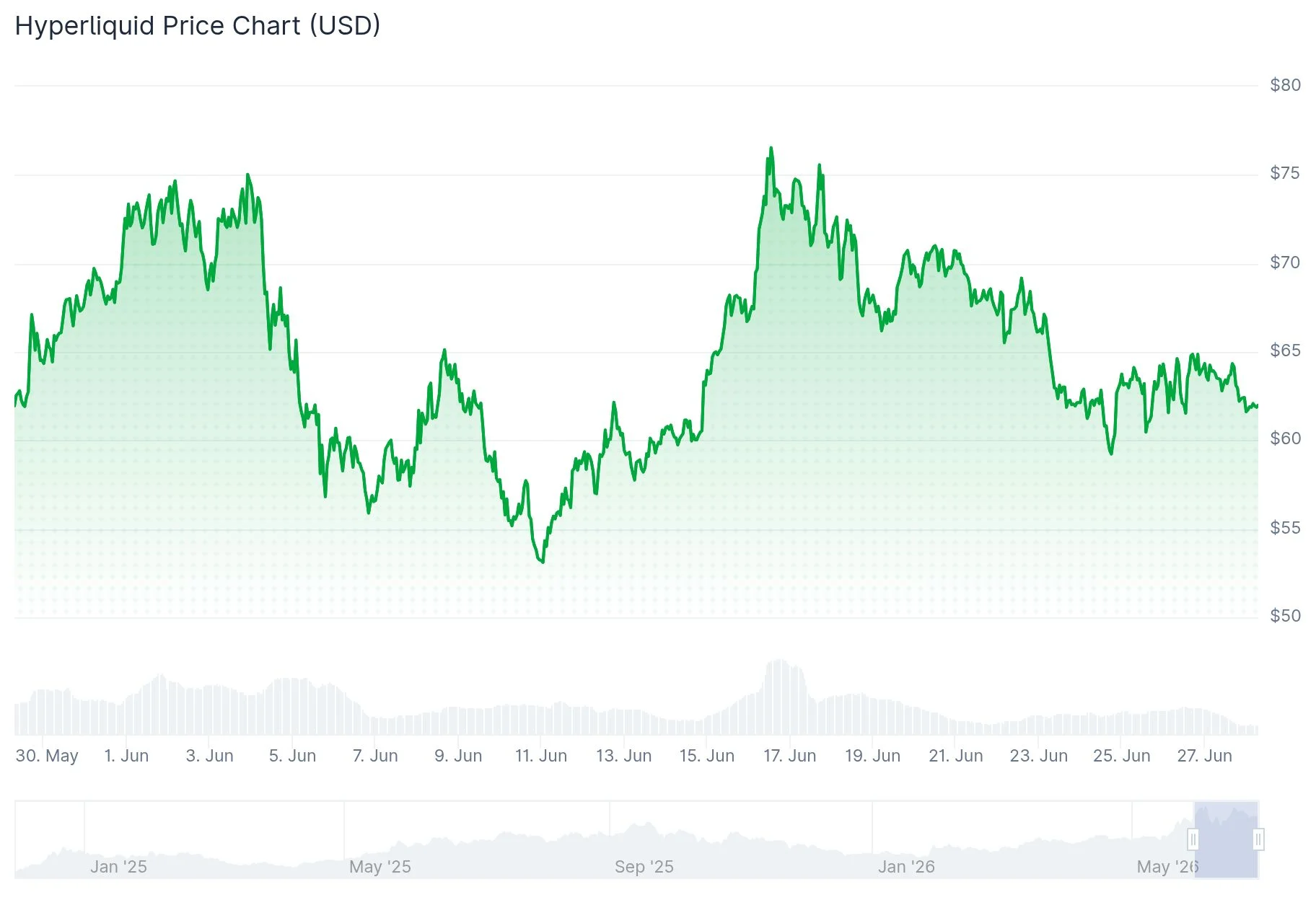
Hyperliquid (HYPE) 5-Year Price Forecast: Analyzing the Path to 2031
France records around 1,000 excess deaths in heatwave
Onn Hafiz says open debates not Johor’s way after offer from Maszlee Malik