

After Two-Week Ban, Anthropic Mythos 5 Approval Limited to 100 US Firms
Two weeks after its most powerful AI model was effectively locked away by the US government, Anthropic has secured approval to restore controlled access to Mythos 5 — but the road back wasn’t simple, and what happens next could reshape how frontier AI intersects with national security, cybersecurity, and even the cryptocurrency ecosystem.
Key takeaways
- On June 26, Commerce Secretary Howard Lutnick confirmed that Anthropic’s Mythos 5 can be accessed by roughly 100 vetted US companies and federal agencies.
- The US Commerce Department imposed export controls on June 12–13, just days after Mythos 5 launched on June 9, citing national security risks.
- Mythos 5 features a 1 million-token context window and is built for advanced applications including drug design, vulnerability discovery, and biodefense screening.
- Anthropic convinced the government that sufficient safeguards are in place, leading to a restricted “trusted partners” arrangement rather than a public release.
- The model’s vulnerability discovery capabilities carry direct implications for smart contract security and DeFi protocol protection.
Anthropic Regains US Government Approval for Mythos 5 Access
The resolution came fast by Washington standards — but not without real friction. Anthropic’s Mythos 5 went from launch to export-controlled lockdown in under a week, triggering a two-week standoff that tested how the Trump administration would treat the most capable AI systems ever released to the public market.
Launch and Initial Export Controls
Anthropic launched both Mythos 5 and its more security-focused sibling, Fable 5, on June 9. Within days, concern inside the US government shifted from theoretical to operational. By June 12–13, the US Commerce Department had imposed export controls on both models, forcing Anthropic to suspend all customer access. The concern was clear: a model this capable — built specifically for applications like biodefense screening and cybersecurity vulnerability discovery — posed obvious risks in the wrong hands.
That kind of rapid regulatory intervention is rare. It signals just how seriously the Trump administration took the dual-use potential baked into Mythos 5’s design.
Controlled Rollout to Trusted Partners
“Anthropic has worked with the US government to address risks associated with the Covered Models,” Commerce Secretary Howard Lutnick wrote in a letter to the company’s chief compute officer, as reported by Bloomberg News. “These efforts have yielded significant progress,” he added, confirming the model could be released to “certain trusted partners.”
That designation matters. Access is not public. It is limited to roughly 100 vetted US companies and federal agencies — a tightly controlled group the government has cleared through a process Anthropic helped design. Fable 5 remains the publicly available model; Mythos 5 stays restricted.
The fact that Anthropic managed to negotiate its way back into controlled access within two weeks suggests the company came to the table with concrete commitments — not vague promises about responsible AI. The government’s willingness to move quickly also implies that some of the vetted partners had legitimate, time-sensitive need for the model’s capabilities.
Technological Capabilities of Mythos 5
Large Context Window Enables Advanced Reasoning
At the core of both the model’s appeal and the government’s concern is a single technical specification: a 1 million-token context window. In practical terms, this means Mythos 5 can ingest and reason across an enormous volume of information in a single session — entire research libraries, lengthy codebases, or complex regulatory frameworks — without losing coherence or context.
That is not a marginal improvement over previous generations. It fundamentally changes what an AI model can do in high-stakes professional environments.
Applications in Drug Design, Vulnerability Discovery, and Biodefense
Mythos 5 was built specifically for the hard end of applied science. Its target applications include drug design, advanced biodefense screening, and — most relevant to the national security calculation — vulnerability discovery in software systems. Each of these domains carries inherent dual-use risk: the same capability that helps a pharmaceutical company model protein interactions could, in different hands, be pointed at pathogens. The same reasoning engine that hunts software bugs for a defense contractor could identify exploitable weaknesses in critical infrastructure.
That duality is exactly what drove the Commerce Department’s initial intervention, and it is what makes the controlled-access framework so consequential as a policy precedent.
Implications for Crypto Security and Regulatory Framework
Relevance of Vulnerability Discovery to Smart Contracts and DeFi
For the cryptocurrency industry, the most immediately relevant capability is vulnerability discovery. Smart contracts, cross-chain bridges, and DeFi protocols are essentially software — and software has bugs. Exploits draining hundreds of millions of dollars from DeFi platforms have become a recurring feature of the ecosystem, often because auditing tools and human reviewers miss subtle logic errors or zero-day exploits buried in complex contract interactions.
A model like Mythos 5, with its massive context window and targeted vulnerability-hunting design, could analyze entire protocol codebases in ways that current auditing tools cannot match. That capability is directly relevant to any organization responsible for securing digital assets, custody infrastructure, or on-chain financial systems.
The limitation, of course, is access. For now, the roughly 100 vetted partners are primarily US companies and federal agencies — not DeFi security firms or blockchain auditors. Whether that changes depends entirely on how the government evolves its vetting criteria and how broadly it defines “trusted partner” over time.
Precedent for Dual-Use AI Regulation
The broader regulatory signal here may outlast the specific Mythos 5 situation. The US Commerce Department has now demonstrated it will treat frontier AI models as dual-use technologies subject to export controls — a framework that previously applied to categories like advanced semiconductors and certain encryption tools. The parallel to 1990s-era encryption regulation is not a stretch: for years, strong cryptography was classified as a munition, limiting its export and effectively slowing commercial adoption globally before policy eventually caught up with reality.
If the same arc applies to powerful AI models, the period between “export controlled” and “widely available” could compress significantly — or it could calcify into a permanent two-tier system where the most capable tools remain gated behind government vetting. Either outcome has consequences for how AI gets integrated into crypto infrastructure, financial services, and beyond. The Anthropic Mythos 5 approval process has, in one move, established that the government intends to stay in the room when these decisions get made.
FAQ
What is Anthropic’s Mythos 5 AI model?
Mythos 5 is a powerful AI model with a 1 million-token context window designed for complex tasks like drug design, vulnerability discovery, and biodefense screening. It represents one of the most capable AI systems Anthropic has released, and its advanced reasoning capabilities triggered national security concerns shortly after its June 9 launch.
Why did the US government impose export controls on Mythos 5?
The US Commerce Department imposed export controls on June 12–13 due to national security concerns about the model’s advanced capabilities, particularly its potential for misuse in cybersecurity and biodefense applications. The dual-use nature of the technology — capable of serving both beneficial and harmful purposes — drove the decision to restrict access.
Who can access Mythos 5 under the current approval?
Access is limited to roughly 100 vetted US companies and federal agencies, classified by the government as “certain trusted partners.” This is not a public release; Fable 5 remains the publicly available version of Anthropic’s models.
How could Mythos 5 impact the cryptocurrency industry?
Mythos 5’s vulnerability discovery capabilities could help identify bugs and zero-day exploits in smart contracts, bridges, and DeFi protocols — the same types of software flaws that have enabled some of the largest hacks in crypto history. If access eventually extends to blockchain security firms, the model could meaningfully raise the bar for smart contract auditing and crypto infrastructure protection.
Article produced with the assistance of artificial intelligence and reviewed by the editorial team.
You May Also Like

What Makes the Best Bitcoin App in the USA? A Beginner’s Guide for 2026

SpaceX Set to Join Nasdaq-100 in One of the Fastest Index Additions Ever
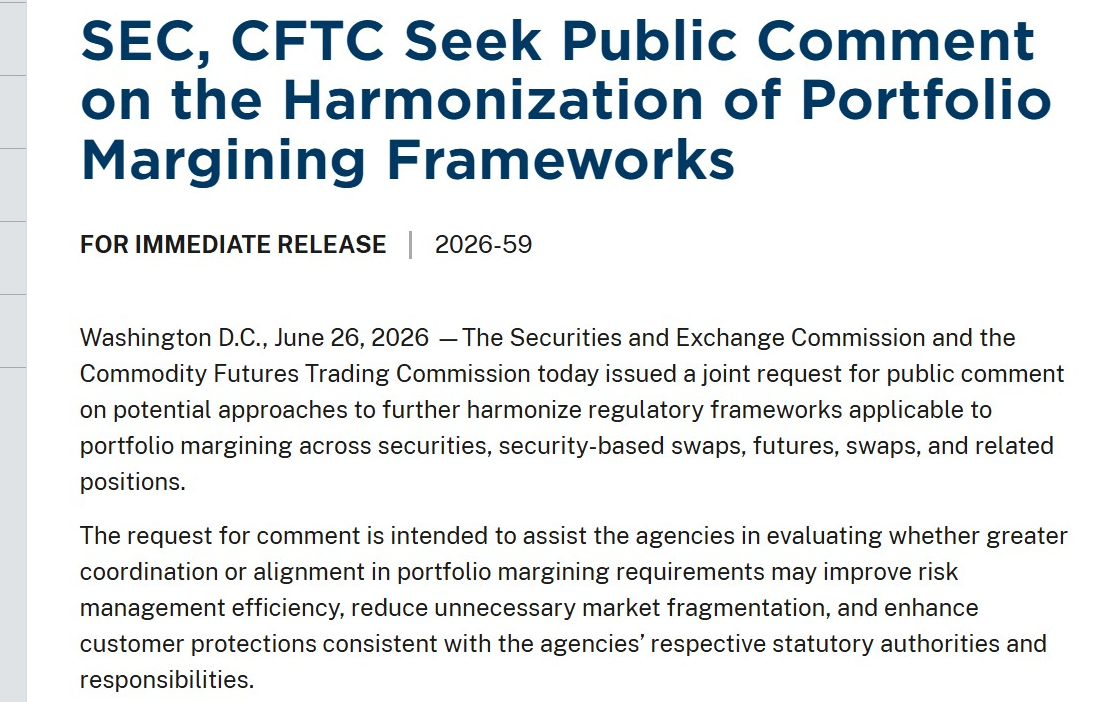
Crypto News: SEC and CFTC Seek Public Input on Crypto Derivatives Rules

