

Bitcoin Bottom Signals vs. Record $4.5B ETF Outflows: Who’s Right?
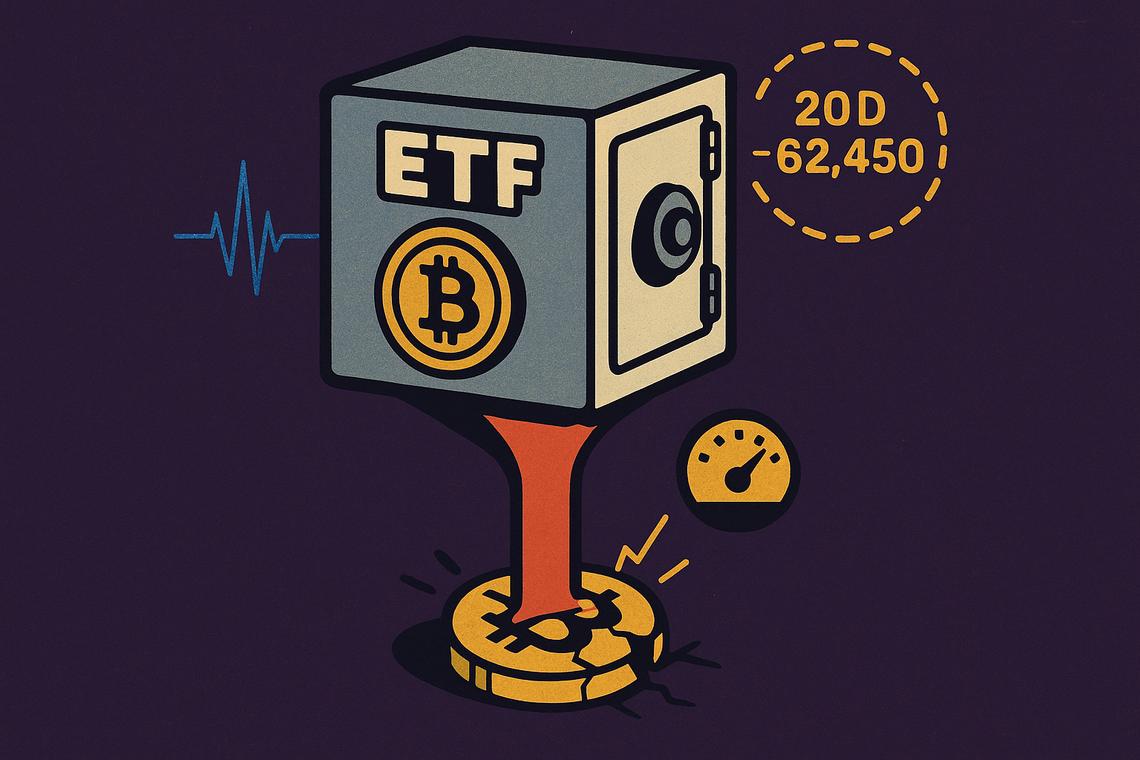
Bitcoin is hovering near $58,000 to $60,000 as of July 1, 2026, carrying the weight of a 53% collapse from its October 2025 record of $126,198 and back-to-back quarterly losses that have left sentiment in ruins. The Fear and Greed Index has sunk to a reading between 12 and 16 — deep inside extreme fear territory. That number tells you a lot about where traders are emotionally. It does not tell you where the price goes next.
Key takeaways
- Bitcoin trades near $58,000 to $60,000 as of July 1, 2026, down about 53% from its October 2025 record of $126,198.
- The Fear and Greed Index sits at 12 to 16 — extreme fear — a zone historically near local bottoms but not a reliable timing tool on its own.
- Open interest in Bitcoin derivatives collapsed from above $90 billion to roughly $44.5 billion, signaling a significant leverage flush.
- Spot Bitcoin ETFs posted a record $4.5 billion in net outflows in June 2026 — their worst month since launching — removing the institutional bid that once cushioned declines.
- Confirming a real market turn requires price reclaiming the 20-day EMA near $62,450, ETF flows reversing to inflows, open interest rebuilding, and the fear gauge lifting off its lows.
The debate over whether Bitcoin has found its floor is genuinely divided. Samson Mow, a prominent Bitcoin advocate and former chief strategy officer at Blockstream, argued publicly on June 28 that “the bottom is in,” citing his view that the traditional four-year halving cycle has accelerated — pointing to Bitcoin reaching an all-time high 37 days before the April 2024 halving as evidence. But several analysts flatly disagree, pointing to technical indicators, macro headwinds, and ETF outflows that suggest the downside may not be exhausted.
The honest answer is that the signals are stacking up on both sides — and knowing which ones to weight matters more than counting them.
Bitcoin’s current market situation and sentiment
A 53% drawdown and washed-out positioning
Bitcoin’s drop from its October 2025 peak is not a shallow correction. A 53% decline to the $58,000 to $60,000 range, with two consecutive losing quarters, meets the definition of a genuine bear market. Sellers have been relentless, and the holder base has shifted visibly toward those with longer time horizons and higher conviction.
Within that drawdown, several structural conditions associated with market bottoms have developed. Open interest in Bitcoin derivatives has collapsed from above $90 billion to roughly $44.5 billion — less than half its peak — as leveraged longs were liquidated and traders cut speculative exposure. That kind of deleveraging removes the cascading-liquidation fuel that makes markets fragile during rallies. It is one of the cleaner bottoming prerequisites, because a market without overloaded leverage is harder to break lower through forced selling alone.
At the same time, more Bitcoin has been leaving exchanges than arriving. That exchange outflow pattern is typically read as accumulation — long-term holders moving coins into self-custody rather than keeping them on platforms where selling is easy. It suggests that underneath the headline panic, some participants are quietly buying weakness. That said, exchange flow data is noisy; it can reflect institutional custody shifts or one-off operational moves rather than pure accumulation, which limits its weight as a standalone signal.
Fear and Greed Index: context, not a countdown
The Fear and Greed Index reading of 12 to 16 is extreme by historical standards. The index compresses volatility, momentum, volume, and social data into a single number, and readings this low have clustered near local bottoms in prior cycles — precisely because sellers tend to exhaust themselves when fear is this widespread. The contrarian logic is sound: when conviction is gone and positioning is stretched to the downside, the raw material of a bottom is often present.
But extreme fear is not a floor. It is a description of the present emotional state, not a forecast of tomorrow’s price. During genuine downtrends, the gauge has sat in fear for extended periods while prices kept sliding. Treating a low reading as an automatic buy signal has burned traders repeatedly. The right use of the index is as context — it tells you the backdrop is washed out and raises the odds that other bottoming signals are meaningful. On its own, it confirms nothing.
The ETF problem: the signal that matters most
If any single metric separates this cycle from prior ones, it is spot Bitcoin ETF flows. In June 2026, those funds posted approximately $4.5 billion in net outflows — their worst month since launching and a record by a significant margin. That number matters structurally, not just sentimentally.
When ETF inflows were strong, they provided a steady, price-insensitive institutional bid that cushioned declines. When that flow reverses, the floor becomes a headwind. The funds holding Bitcoin on behalf of institutional investors are now a source of net selling, and that selling is real — it has to be absorbed by other buyers at whatever price clears the market. Record outflows during a 53% drawdown means the structural support that distinguished this cycle has, at least temporarily, broken down.
Markus Thielen, founder of 10x Research, has argued that the more likely bottom is around $55,000, not arriving until somewhere between August and October. James Van Straten, a senior CoinDesk analyst, has pointed to the 200-week moving average and noted that in every major bear market since 2011, Bitcoin eventually traded below its realized price before establishing a cycle bottom — a threshold the current cycle has not yet breached. BitMex co-founder Arthur Hayes has taken an even more bearish view, calling for a bottom near $40,000 within six months.
The divergence between the bullish on-chain signals and the bearish ETF reality is where the debate lives. Extreme fear, flushed leverage, and exchange outflows point toward accumulation and capitulation. The ETF outflow record points toward an institutional exit that has not yet reversed. Until those two stories align, the bottoming case remains a setup, not a confirmation.
Technical analysis and confirmation signals
Key support and resistance levels
On the chart, support sits near $58,000, and the relative strength index has dropped close to 30 — the oversold threshold — indicating momentum has fallen hard and fast. That kind of stretch to the downside is where reversals often begin. The trouble is that oversold can stay oversold in a strong downtrend, so the level matters but does not resolve direction on its own.
The first meaningful resistance on the upside is the 20-day exponential moving average near $62,450. Reclaiming that level would break the pattern of lower highs and signal that buyers have taken control of near-term momentum. Beyond that, heavier resistance sits around $64,000, with the 200-day moving average near $65,200 and the 50-month average near $65,600 marking the bull-bear boundary that the market has fallen well below.
A break below the $58,000 support zone opens the path toward the mid-$50,000s — the range that Thielen and Van Straten have identified as a more likely base, consistent with Bitcoin testing or breaching longer-term structural averages before finding a durable floor. The 50-week moving average is also close to crossing below the 100-week line, a pattern that analysts call a “bear cross” — and which, in prior cycles, has coincided with market bottoms, making it a closely watched signal in both directions.
What a confirmed turn actually looks like
The four-signal checklist for confirming a genuine bottom is specific. First, price needs to reclaim the 20-day EMA near $62,450 and then clear resistance around $64,000 — that breaks the sequence of lower highs. Second, ETF flows need to flip back to sustained inflows, confirming that the institutional bid has returned rather than merely paused. Third, open interest needs to rebuild alongside a rising price, which distinguishes fresh conviction from a low-volume drift higher. Fourth, the Fear and Greed Index needs to lift off its extreme lows, signaling that emotional exhaustion is giving way to cautious re-engagement.
Until several of those signals align together, the constructive readings from positioning and on-chain flows describe a market that could turn — not one that has. The confirmation hierarchy matters: ETF flows are the primary signal in this cycle, because they represent direct institutional buying and selling. Reset leverage and accumulation flows are supporting evidence. Extreme fear and oversold technicals are context. Reading them in that order reduces the risk of acting on false signals.
Macroeconomic catalysts and their impact on Bitcoin
Bitcoin is trading as a high-beta risk asset, which means the macro calendar is driving sentiment as much as any on-chain metric. The Federal Reserve is currently hawkish, and markets are pricing in a meaningful probability of a December rate hike as inflation drifts back toward 4%. That policy stance pressures risk assets broadly — and Bitcoin, despite its fixed-supply narrative, has not decoupled from that pressure in the current environment.
The nearest macro catalyst is the monthly US jobs report. A strong labor market number reinforces the case for the Fed staying tight, deepening risk-off sentiment. A softer reading reopens the possibility of easier policy and could lift risk assets — including Bitcoin — meaningfully. Traders tracking the bottom signals are watching that print as closely as any crypto-native indicator.
Further out, each inflation report and Fed meeting becomes a potential inflection point. Mow’s cycle-acceleration thesis implicitly assumes the macro backdrop will eventually ease, but as long as the Fed is in a tightening posture and the ETF bid remains absent, the constructive on-chain signals remain a coiled setup waiting for a trigger from outside the crypto market itself. A hawkish surprise could extend the drawdown well past current support levels, making the mid-October 2026 bottom forecast from one cycle model look more credible than the bulls would prefer.
The division between analysts is ultimately a disagreement about timing and depth, not about direction. Nobody in this debate is calling for a new all-time high tomorrow. The question is whether $58,000 is the floor, or just a stop along the way to $50,000 or lower — and the answer depends heavily on whether the Fed pivots before the ETF bid returns.
FAQ
What does a Fear and Greed reading near 16 mean?
It means the index sits deep in extreme fear, reflecting washed-out sentiment across volatility, momentum, volume, and social signals. Historically, readings this low have appeared near local bottoms because much of the selling may be exhausted. But it is a description of the present, not a prediction — extreme fear can persist or deepen during a real downtrend.
Is extreme fear a reliable buy signal?
Not on its own. Low readings raise the odds that a bottom is near, but sentiment can stay fearful for weeks while price keeps falling. It works best as context alongside harder data on positioning, flows, and price action — not as a standalone trigger. Treating a low reading as an automatic buy has repeatedly caught traders too early.
Why does falling open interest matter?
Open interest dropping from over $90 billion to about $44.5 billion means leverage has been flushed out through liquidations and derisking. That makes the market sturdier, because the forced-selling fuel that drives cascading drops is gone. The caveat is that falling open interest can also signal fading demand, so it is a necessary but not sufficient condition for a turn.
What are exchange outflows telling us?
More Bitcoin has been leaving exchanges than arriving — a pattern typically read as accumulation, with holders moving coins into storage instead of keeping them ready to sell. It suggests conviction underneath the fear. But exchange flows are noisy and can reflect custody or institutional shifts, so they are a soft signal rather than proof the bottom is in.
Why are the ETF outflows so important?
Spot Bitcoin ETFs posted a record $4.5 billion of outflows in June 2026, turning the steady institutional bid that once cushioned drops into an active headwind. Because that bid was a structural support unique to this cycle, its reversal is the signal that most needs to flip for a convincing turn. A return to sustained inflows would validate the bullish case; continued outflows keep pressure on regardless of sentiment readings.
Where are Bitcoin’s key support and resistance levels?
Support sits near the $58,000 area. Reclaiming the 20-day EMA around $62,450 is the first upside test, followed by heavier resistance near $64,000 and the longer-term moving averages around $65,200 to $65,600. A break below support opens the path toward the mid-$50,000s, while reclaiming the moving averages would signal the downtrend is weakening.
Could Bitcoin fall further from here?
Yes. Bitcoin is down about 53% from its record with back-to-back quarterly losses, and deep drawdowns can extend. A hawkish Fed, a likely December rate hike, and key macro data all pressure risk assets. Markus Thielen of 10x Research sees a more likely bottom near $55,000 between August and October; Arthur Hayes has forecast a bottom near $40,000 within six months; one cycle model points to mid-October 2026 as the probable low.
What would confirm that Bitcoin has turned?
Four aligned signals: price reclaiming the 20-day EMA near $62,450 and then clearing resistance around $64,000; ETF flows flipping back to sustained inflows; open interest rebuilding alongside a rising price; and the Fear and Greed Index lifting off its extremes. Until several of those align simultaneously, the constructive signals describe a market that could turn — not one that has confirmed it.
Article produced with the assistance of artificial intelligence and reviewed by the editorial team.


You May Also Like

Bitcoin, Ethereum, XRP and Solana show monthly buy signals on TD Sequential

Amanah says political rivals stoking racial hatred ahead of Johor polls


