

Nightmare scenario unlocked by Trump as hero nurse fears losing her toddler
A Haitian nurse heralded as a hero during the height of the COVID-19 pandemic is living in fear in Florida as she waits to hear if she will get another work authorization extension to remain with her terminally ill mother and 17-month-old son in the United States — her home for more than 30 years.
Harlaine, a 38-year-old nurse in Coral Springs, Florida, worked on the frontlines from New York to California treating severely ill COVID-19 patients who were on critical care drips and breathing machines.
Now, she faces an uncertain future in the U.S. after the Supreme Court sided with the Trump administration on June 25, allowing the Department of Homeland Security to proceed with the termination of Temporary Protected Status (TPS) for Haitian and Syrian immigrants like her.
Harlaine, who requested Raw Story only use her first name due to employment concerns, said she received a nine-day work extension that ends on Friday.
The Supreme Court’s decision in Mullin v. Doe allows the Trump administration to end work authorizations and deportation protections for immigrants who are TPS holders, meaning they were granted protection to live and work in the U.S. due to humanitarian concerns, natural disasters or other crises in their birth countries.
“I’m on pins and needles waiting to see if we will get another extension or July 10th is it for us,” Harlaine told Raw Story via text message Tuesday.
“My anxiety is through the roof with not knowing when I will have to start worrying about my next paycheck.”
Harlaine said she is in the middle of a custody battle for her son, a U.S. citizen, whose father would fight to keep him in the U.S. if she were to be deported.
“I could relocate, and I would survive, but it comes at a cost, and that cost is separation from my son,” Harlaine told Raw Story via a phone interview.
“Even if these people are not looking at me as an individual or as a human being, think of my young son, who's innocent, who needs his mother.”
Even immigrants with TPS from countries besides Haiti and Syria are facing family separation or life-or-death situations, advocates told Raw Story.
Anil Shahi, a Nepali TPS holder and founding coordinator of United for TPS Nepal, said he recently spoke on the phone with a mother of two young children whose father was deported after being detained twice this year. He heard one of the children in the background.
“He was a toddler, but he could make out it was a man's voice, and he was constantly going “baba, baba, baba,” meaning “daddy, daddy, daddy” in Nepali,” Shahi said.
“That made me cry right there. How could you do this to a family?”
The mother faces the decision to go back to Nepal with the children, a “country where they're total aliens,” Shahi said.
Shahi, 57, himself came to the U.S. about 37 years ago and has had TPS since 2015. He said he is protected to work in the U.S. until September 9.
“Home is where your heart is, and my heart is always in New York,” Shahi said while getting choked up.
“We are through-and-through American.”
Another advocate, José Palma, a coordinator with the National TPS Alliance, said he knows a family of a Honduran man on life support who were hoping for a favorable Supreme Court ruling around TPS in order to regain work authorization and access to insurance to keep him on a machine.
“It's a death sentence for many people,” said Palma, 49, who lives in Katy, Texas and came to the U.S. from El Salvador in 1998. He has had TPS protection since 2001.
Harlaine said she hasn't been back to Haiti since she left when she was around 5 years old.
“This has been my country for the past 30-something years, so I don't know any other country. I don't know the living situation in Haiti,” Harlaine said.
“I don't even have any imagination to imagine what it is over there. I don't even know what the air smells like. I don't know what the wind feels like … I know nothing of the country. I even struggle to speak the language.”
‘Legal and moral question’
TPS allows immigrants from designated countries facing unsafe conditions and humanitarian crises, such as wars or natural disasters, to legally stay and work in the United States.
TPS does not allow a direct pathway for citizenship or a green card for lawful permanent residency.
Homeland Security Secretary Markwayne Mullin has told TPS holders to return home or apply for permanent status, but that oversimplifies the process, which requires applicants to have a legal basis for a green card such as a family member who files a petition on their behalf, an employer sponsorship or granted asylum, Harlaine said.
“It is not like after so many times of doing the right thing, you can just apply for permanent residence — so not even talking about citizenship because there is no way for somebody to become U.S. citizens before being a permanent resident,” Palma said.
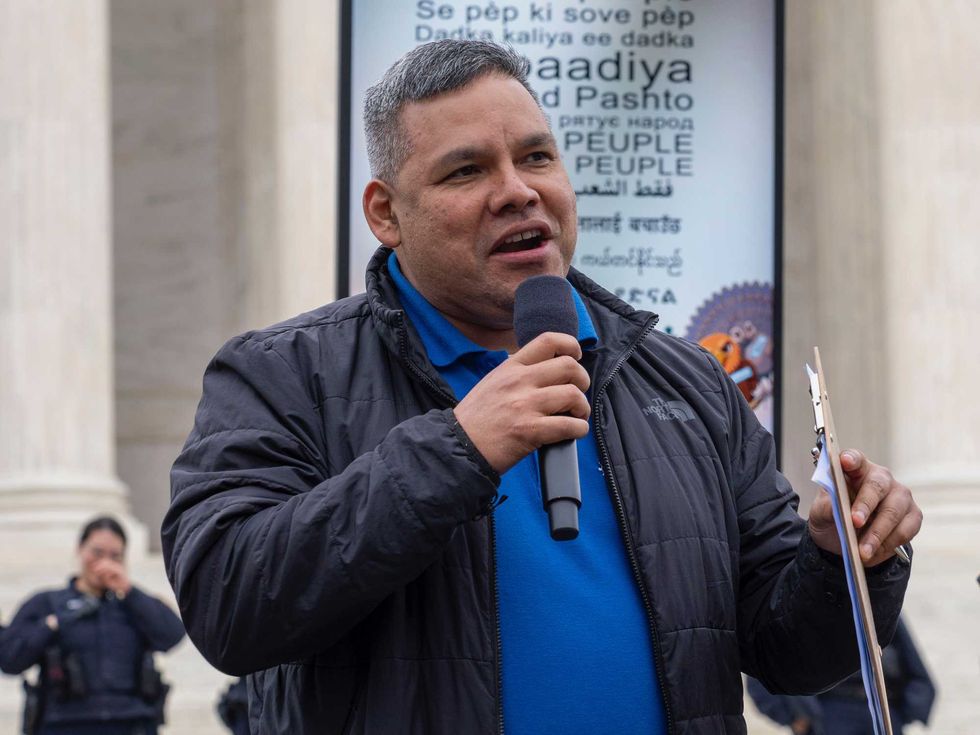 José Palma (provided photo)
TPS status for countries and individual holders are evaluated at least every 18 months. TPS holders undergo criminal background checks, Shahi said.
“There are people that have been in the U.S., TPS recipients, for decades, doing an application every year, going into [a] background check and behaving because if people commit [a] crime, they lose their immigration status,” Palma said.
“This segment of the population with TPS has been in the U.S. for decades, has been neighbors, coworker[s] and doing everything they have been asked, so I think it's a community that I believe deserves the opportunity to continue living in the United States and are people who have been vetted and doing everything the government has been asking for.”
Some TPS holders have maintained status for several decades due to continued unsafe conditions or lack of recovery after natural disasters such as Hurricane Mitch, which devastated Central American countries like Nicaragua and Honduras in 1998, or the 7.0 magnitude earthquake that struck Haiti in 2010, Palma said.
“It is unfortunate, but those countries have never recuperated, not only from the earthquake, but they also suffer more earthquakes, and then countries have gone into circumstances that haven't been safe for people to return, and the United States every year-and-a-half review[s] their country conditions, and the government at those at moments — Democrats and Republicans — agree that the protection needed to continue, and that's how we have people who have been protected by TPS for the last 27 years,” Palma said.
“So, it is a legal and moral question for the United States society. You have allowed people who build families, who are now not only the TPS recipients, but their family who are U.S. citizens. Now you want to break those families that you have allowed to be built without paying attention about the impact for those people from the community and for the U.S. citizens?”
‘Completely blindsided’
Harlaine said the Supreme Court’s decision “completely blindsided” her and her fellow community members who were “counting on continuing with our life.”
“No one expected this decision. We all assumed the best. No one thought of the worst, so we weren't prepared,” Harlaine said.
Families are facing decisions of leaving the United States with their U.S. citizen children, if they lose their work authorizations, and others are living off their savings or trying to find under-the-table jobs, Shahi said.
“They're broke, and they're tired, and now this, there’s even more reasons to be fearful,” Shahi said.
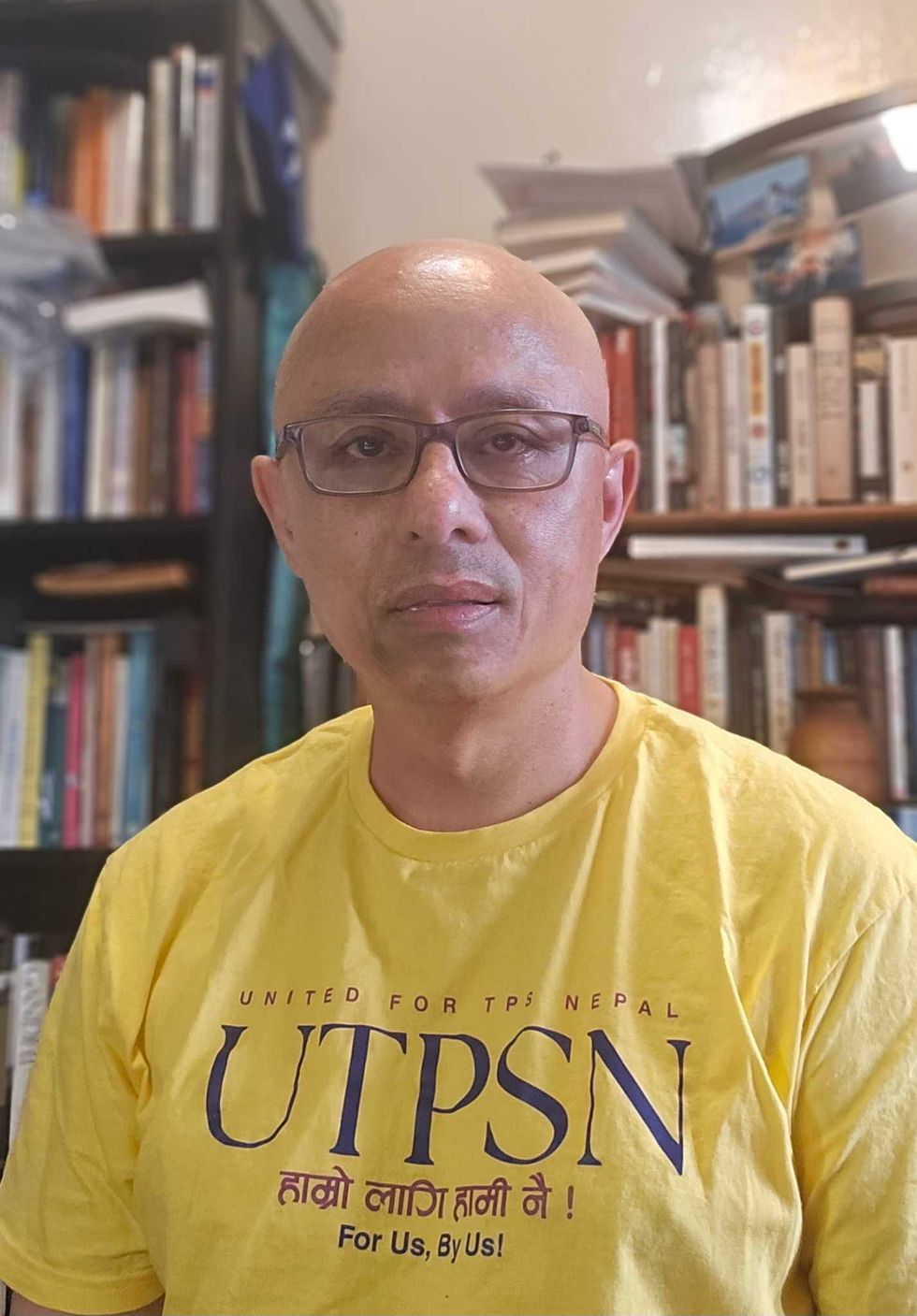 Anil Shahi (provided photo)
Families of TPS holders also have to consider leaving the homes and businesses they built in the United States, Shahi said.
“All this time we built our lives here. We built our families here. Some of us are business owners that employ American citizens. We are homeowners. We have mortgages to pay, so our lives have become American. We have integrated into the society so much,” Shahi said.
Since “people are suffering right now,” TPS holders are looking for any form of relief, Shahi said, which is why United for TPS Nepal endorsed the Dignity Act, sponsored by Rep. Maria Elvira Salazar (R-FL), which doesn’t provide a pathway to citizenship or legal residency but allows legal permits to work and live in the United States.
While it isn’t ideal, Shahi said the group’s members are looking for “anything that saves us from being detained and deported and allows us to live and work here legally.” He encouraged TPS holders to not let their frustration and sadness about the Supreme Court’s decision deter them from organizing and fighting for civil rights.
“We are humans, not a political agenda,” Harlaine said. “This is a country that has shown humanitarian efforts for decades, for centuries. Don't make an example out of us to prove a point. Think about us as human beings. Think about our young children, our American-born children.”


You May Also Like

KPMG survey finds 29% of executives can't track their own AI costs

Sony Bank Approved by U.S. Regulator to Launch Stablecoin Issuance

S&P 500 and Nasdaq Futures Rise as US-Iran Tensions Ease Thursday



