All five major Southeast Asian economies — Singapore, Malaysia, Thailand, Indonesia and Vietnam — are now in the upper-middle-income tier or higher.All five major Southeast Asian economies — Singapore, Malaysia, Thailand, Indonesia and Vietnam — are now in the upper-middle-income tier or higher.

Vietnam, Philippines upgraded to upper-middle income status
For feedback or concerns regarding this content, please contact us at crypto.news@mexc.com
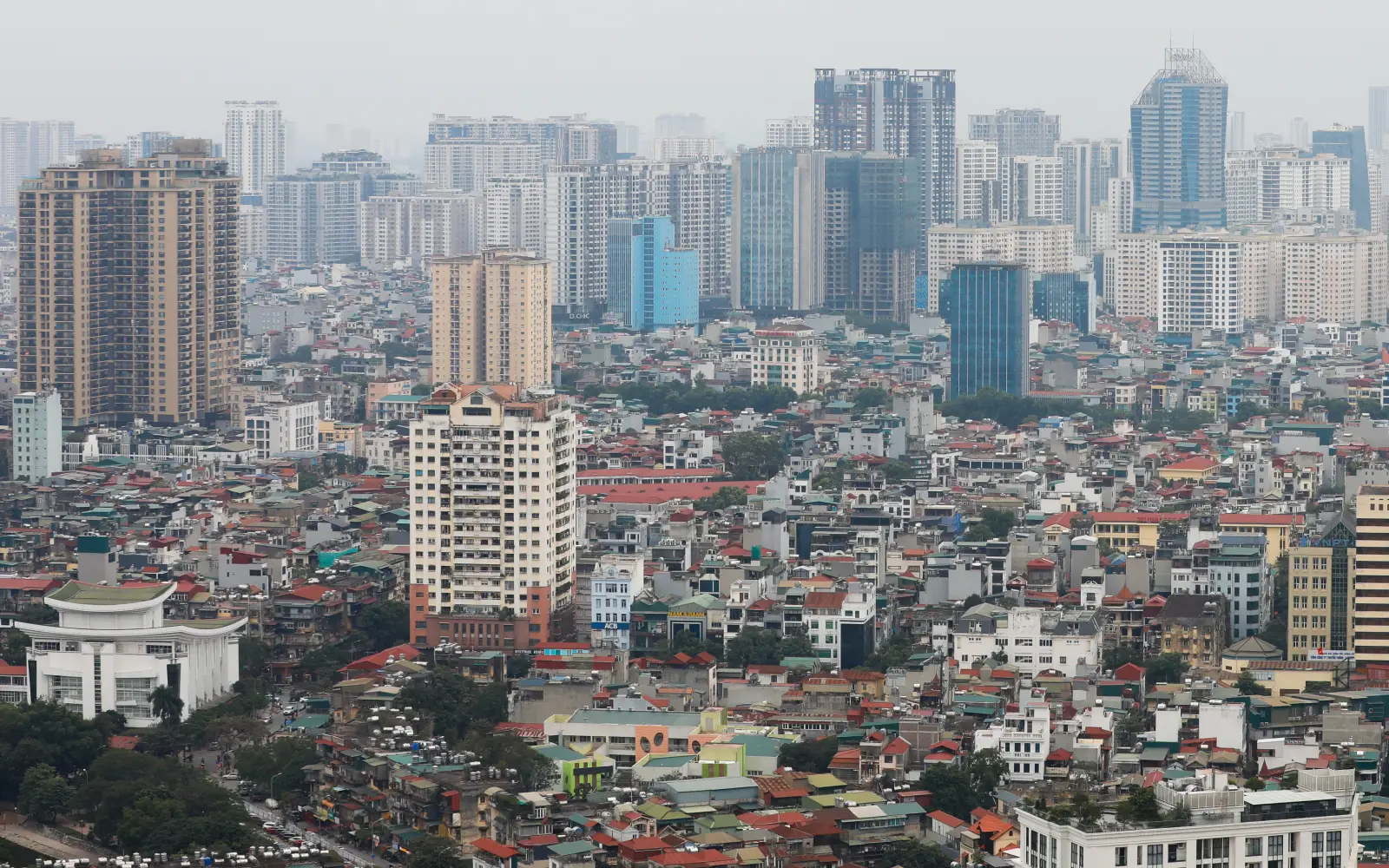
A general view of Hanoi as Vietnam’s capital expands both outwards and upwards.  (EPA Images pic)

MANILA: The World Bank has elevated Vietnam and the Philippines to upper-middle income status after years of brisk of economic expansion, potentially bolstering investor confidence in the two nations.

All five of the major Southeast Asian economies — which include Singapore, Malaysia and Thailand — are now at the upper-middle income tier and above, according to a release from the World Bank on Wednesday.

Vietnam had been categorized as lower-middle income since 2009, while the Philippines was there since the late 1980s, the data showed.

The World Bank cited Vietnam’s export-led growth model and the Philippines’ broad-based expansion, “reflecting gains across all major industries, not a single sector boom, but an economy-wide shift.”

Their gross national income per capita reached US$4,970 and US$4,850 in 2025, respectively, exceeding the World Bank’s US$4,636 threshold for the category.

“Despite global and domestic shocks, we have relentlessly pursued inclusive growth, strengthened fundamentals, and remained on track with our development agenda,” Philippine Economic Planning Secretary Arsenio Balisacan said in a statement.

One of Asia’s fastest-growing economies, Vietnam is targeting annual double-digit growth this year, fueled in part by a spate of business-friendly reforms and a massive infrastructure investment drive.

A general view of Makati’s financial district skyline in Manila, where a growing number of skyscrapers reflects the country’s economic growth. (AFP pic)

The Philippines, however, faces a trickier path ahead. It cut its economic growth targets from 2026 through 2030 due to the Middle East tensions and an intense El Niño weather event.

Other countries that moved to upper-middle income category are Jordan, Micronesia, and Sri Lanka. Togo was reclassified to lower-middle income from low income. The share of economies classified as low-income has declined to 11% from 30% since 1987, the World Bank said.

Financing Impact

As upper-middle income nations, though, governments may get more limited access to development funding. The Philippines, for example, gets loans that carry below-market interest rates to help finance infrastructure, disaster recovery and social programs.

“The main point is, the more you go up the ladder of their classification means you are more self-sufficient and able to supply your own needs and resources as a nation, including, the fiscal part,” said Ruben Carlo Asuncion, chief economist at Union Bank of the Philippines.

Balisacan said while some concessional Official Development Assistance may decline over time, the “gains from stronger fundamentals and improved market access are expected to outweigh these adjustments.”

He said the new classification does not diminish the Philippines’ ongoing challenges as income disparities persist and many still face economic difficulties.


Market Opportunity
Major Logo
Major Price(MAJOR)
$0.0353
$0.0353$0.0353
+0.02%
USD
Major (MAJOR) Live Price Chart

World Cup Combo: Aim for 200x

World Cup Combo: Aim for 200xWorld Cup Combo: Aim for 200x

Combine up to 20 World Cup matches in one order

Disclaimer: The articles reposted on this site are sourced from public platforms and are provided for informational purposes only. They do not necessarily reflect the views of MEXC. All rights remain with the original authors. If you believe any content infringes on third-party rights, please contact crypto.news@mexc.com for removal. MEXC makes no guarantees regarding the accuracy, completeness, or timeliness of the content and is not responsible for any actions taken based on the information provided. The content does not constitute financial, legal, or other professional advice, nor should it be considered a recommendation or endorsement by MEXC.

You May Also Like

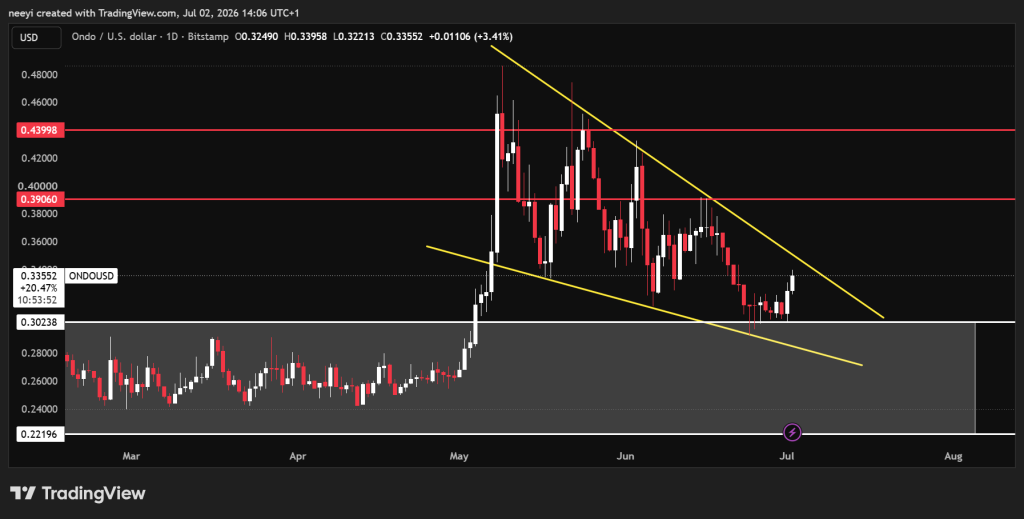
ONDO Price Jumps 8% Amid Bitcoin Recovery and RWA Catalysts: Is This a Trap for Buyers?

ONDO Price Jumps 8% Amid Bitcoin Recovery and RWA Catalysts: Is This a Trap for Buyers?

ONDO price has moved higher at a time when Bitcoin and the wider crypto market are dealing with a fresh retracement. The rally looks interesting because ONDO had
Share
Captainaltcoin2026/07/02 22:30
Binance Surpasses $1 Billion in U.S. Stock Trading Volume Within First 30 Days

Binance Surpasses $1 Billion in U.S. Stock Trading Volume Within First 30 Days

Binance has reported a strong start for its newly introduced stock trading platform, announcing that users purchased more than $1 billion worth of U.S. equi
Share
Hokanews2026/07/02 22:07
Franklin Templeton CEO Dismisses 50bps Rate Cut Ahead FOMC

Franklin Templeton CEO Dismisses 50bps Rate Cut Ahead FOMC

The post Franklin Templeton CEO Dismisses 50bps Rate Cut Ahead FOMC appeared on BitcoinEthereumNews.com. Franklin Templeton CEO Jenny Johnson has weighed in on whether the Federal Reserve should make a 25 basis points (bps) Fed rate cut or 50 bps cut. This comes ahead of the Fed decision today at today’s FOMC meeting, with the market pricing in a 25 bps cut. Bitcoin and the broader crypto market are currently trading flat ahead of the rate cut decision. Franklin Templeton CEO Weighs In On Potential FOMC Decision In a CNBC interview, Jenny Johnson said that she expects the Fed to make a 25 bps cut today instead of a 50 bps cut. She acknowledged the jobs data, which suggested that the labor market is weakening. However, she noted that this data is backward-looking, indicating that it doesn’t show the current state of the economy. She alluded to the wage growth, which she remarked is an indication of a robust labor market. She added that retail sales are up and that consumers are still spending, despite inflation being sticky at 3%, which makes a case for why the FOMC should opt against a 50-basis-point Fed rate cut. In line with this, the Franklin Templeton CEO said that she would go with a 25 bps rate cut if she were Jerome Powell. She remarked that the Fed still has the October and December FOMC meetings to make further cuts if the incoming data warrants it. Johnson also asserted that the data show a robust economy. However, she noted that there can’t be an argument for no Fed rate cut since Powell already signaled at Jackson Hole that they were likely to lower interest rates at this meeting due to concerns over a weakening labor market. Notably, her comment comes as experts argue for both sides on why the Fed should make a 25 bps cut or…
Share
BitcoinEthereumNews2025/09/18 00:36