Gold Falls Below $4,000 as Fed Rate Hike Fears and Tech Rally Weigh on Prices
TLDR
- Gold dropped below $4,000 an ounce, its worst monthly fall since 2008
- The metal is down nearly 30% from its January peak of $5,589
- Investors rotated out of gold and into tech and chip stocks, with the semiconductor index up over 100% this year
- The Federal Reserve is now expected to raise rates, hurting non-yielding assets like gold
- Bitcoin also fell below $60,000, down over 53% from its October all-time high
Gold is under pressure from multiple directions. Rising inflation fears, a hawkish Federal Reserve, and a powerful rally in tech stocks have combined to push the metal into bear market territory.
Spot gold fell to around $3,994 an ounce on Wednesday, dipping below the key $4,000 level for only the second time since November. Gold futures also dropped, trading near $4,008.
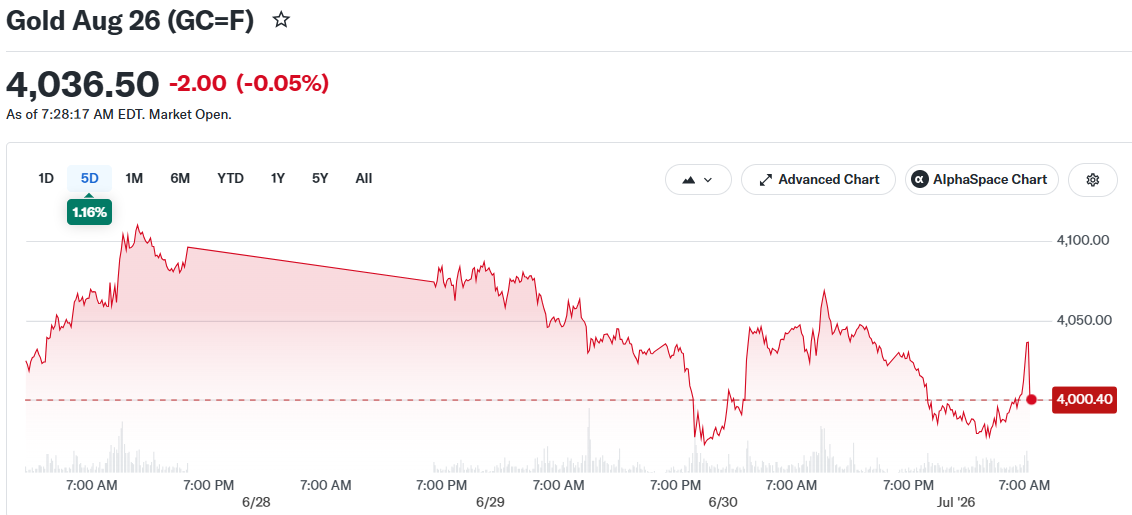 Gold Aug 26 (GC=F)
Gold’s Worst Quarter in Over a Decade
Gold slid roughly 14% in the second quarter, its worst quarterly performance since 2013. For June alone, the metal fell about 11.7%, the steepest monthly drop since 2008.
The selloff accelerated after the Federal Reserve’s June meeting, where several policymakers signaled support for at least one interest rate hike in 2026. That was a sharp reversal from expectations at the start of the year, when markets had anticipated rate cuts.
New Fed Chair Kevin Warsh reinforced that tone during his first policy meeting, emphasizing the Fed’s focus on bringing inflation back to its 2% target. Warsh is set to speak at a European Central Bank panel in Sintra, Portugal later Wednesday, and markets are watching closely.
Higher rates hurt gold because they raise the opportunity cost of holding a non-yielding asset. The stronger dollar, boosted by rate expectations and the belief the U.S. is somewhat insulated from the Iran war’s energy impact, has added further pressure.
Global gold ETF holdings are down about 1.5% since the start of the year. The World Gold Council noted that flows in May slowed “to a trickle,” with investors rotating back into technology stocks to keep pace with benchmarks.
Tech Rally Pulls Investors Away
The PHLX semiconductor index has gained more than 100% since January and posted its best quarter ever, up around 88% in the three months ended June. That kind of performance has drawn billions away from gold portfolios.
Other precious metals also struggled. Spot silver fell 0.5% to $58.29 an ounce, while platinum edged up slightly to $1,556.49.
Bitcoin followed gold lower, sliding below $60,000. The crypto asset is down more than 53% from its all-time high of $126,198 set in October, with a 13% drop in the second quarter and a 32% decline so far in 2026.
Not everyone is bearish on gold’s longer-term outlook. Central banks added 244 tons in the first quarter, and China has bought gold for 19 straight months. Around 84% of central banks surveyed by the World Gold Council expect to increase holdings over the next five years.
ING strategist Ewa Manthey forecasts gold averaging $4,300 in the third quarter, rising to around $4,600 in the fourth. UBS analysts say the bull run is “on pause, rather than over,” and see the $4,000 level attracting long-term buyers.
Fresh jobs data is due Wednesday, with U.S. employment figures for June releasing Thursday.
The post Gold Falls Below $4,000 as Fed Rate Hike Fears and Tech Rally Weigh on Prices appeared first on CoinCentral.


You May Also Like

Ripple Price Outlook: Can XRP Reclaim $2.5 by 2027?

Hamster Kombat Daily Cipher 2 July 2026: Play And Win