

Crypto Plunges While Tech Rallies: Why Micron’s Surge Couldn’t Save Bitcoin
Key Highlights
- BTC declined to $59,200 before bouncing back near $60,700, marking a 5.4% weekly drop
- Major altcoins including Ether, XRP, Solana, Dogecoin, and HYPE suffered significant weekly declines; Tron bucked the trend with gains
- Micron surged approximately 15% following exceptional earnings results, pushing Nasdaq 100 futures up 1.8%
- Qualcomm revealed data center chip expansion plans, aiming for $15 billion in AI-driven revenue growth
- Market observers note Bitcoin’s proximity to its 200-week moving average, historically signaling extended bearish periods
The cryptocurrency market experienced significant pressure this week as Bitcoin dipped beneath the $60,000 threshold, dragged down by spot ETF withdrawals and Federal Reserve hawkishness, while artificial intelligence-focused equities rebounded strongly following Micron’s impressive quarterly performance.
Bitcoin Tumbles as Broader Crypto Market Bleeds
Bitcoin’s price touched approximately $59,200 during Wednesday’s session before mounting a modest recovery toward $60,700 by Thursday. Despite this rebound, the leading cryptocurrency remained down 2.9% over 24 hours and suffered a 5.4% weekly decline, based on CoinDesk market data.
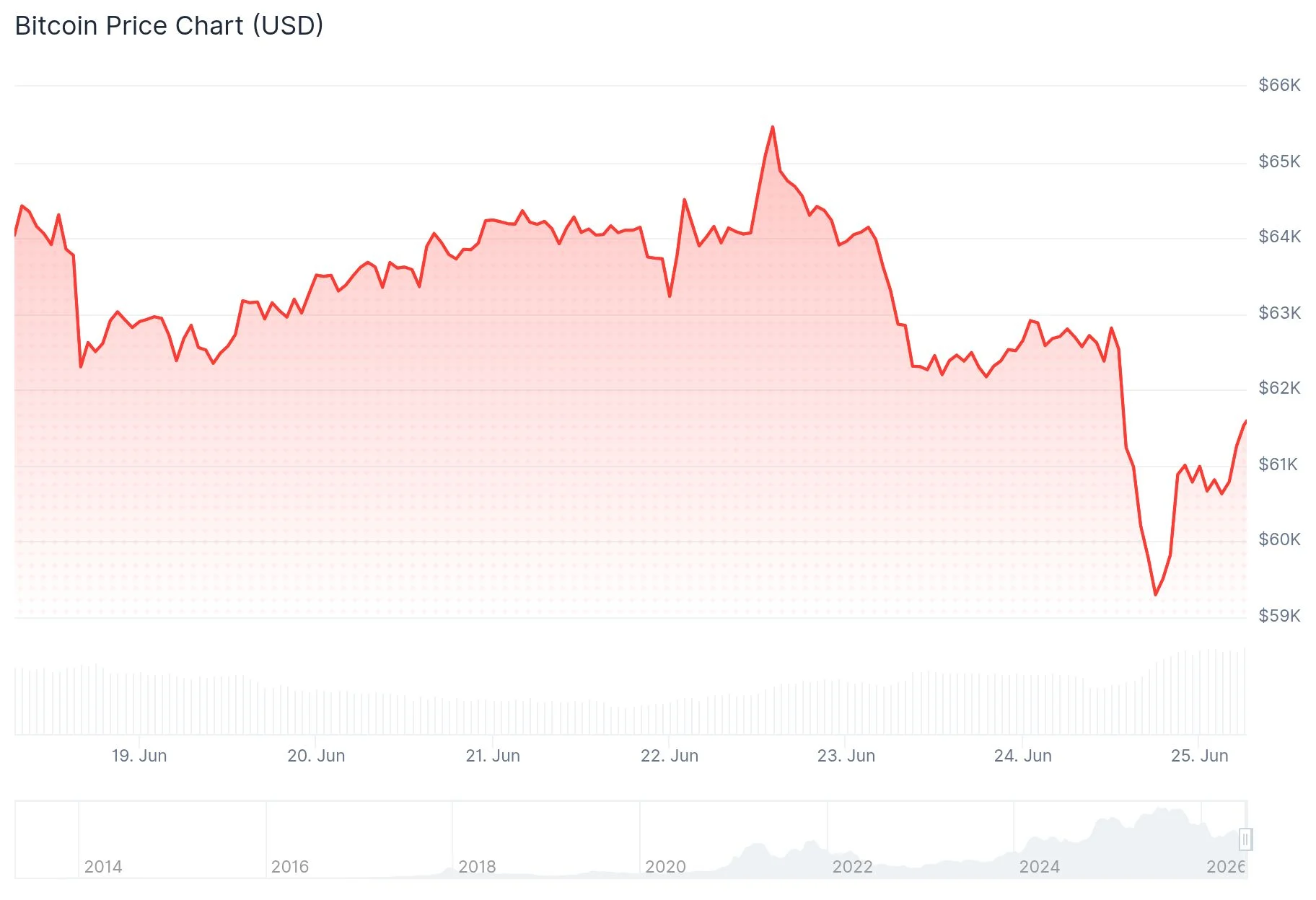 Bitcoin (BTC) Price
Altcoins experienced even more severe drawdowns throughout the period. Ether retreated 2.8% to $1,616, accumulating a 7.9% weekly loss. XRP declined to $1.07, shedding 9.2% across seven days. Solana contracted to $68.
Dogecoin and Hyperliquid’s HYPE token suffered the steepest weekly corrections, plummeting 11.9% and 11.7% respectively. Tron emerged as the sole major cryptocurrency posting weekly gains, advancing 1.9%.
Alex Kuptsikevich, FxPro’s chief market analyst, identified three primary headwinds: persistent withdrawals from U.S. spot Bitcoin ETF products, the Federal Reserve’s restrictive monetary policy position, and a U.S. dollar that reached seven-month highs.
Dollar strength typically increases Bitcoin’s cost for international investors and redirects capital away from speculative assets.
Kuptsikevich highlighted Bitcoin’s current position near its 200-week moving average as particularly concerning. Historical analysis shows that Bitcoin’s previous encounters with this technical level preceded extended weakness periods: approximately nine months in 2015, six months during 2018, and roughly six quarters following the 2022 market collapse.
According to FxPro’s assessment, this pattern indicates a potential prolonged downturn rather than a rapid recovery scenario.
The analyst identified $61,800 to $62,000 as the critical resistance zone ahead. Should Bitcoin fail to reclaim these levels, $55,000 represents a reasonable downside target for the current cycle. Kuptsikevich recommended prioritizing capital preservation strategies over directional speculation.
Micron and Qualcomm Drive Technology Sector Rally
While digital assets faltered, technology equities experienced substantial gains. Micron surged approximately 15% during premarket hours after delivering quarterly financial results that significantly exceeded analyst expectations. The company’s forward guidance also impressed investors, demonstrating robust demand for memory components powering artificial intelligence infrastructure.
Nasdaq 100 futures advanced 2.2% while S&P 500 futures climbed 0.8%. Dow Jones futures registered a modest 0.1% increase.
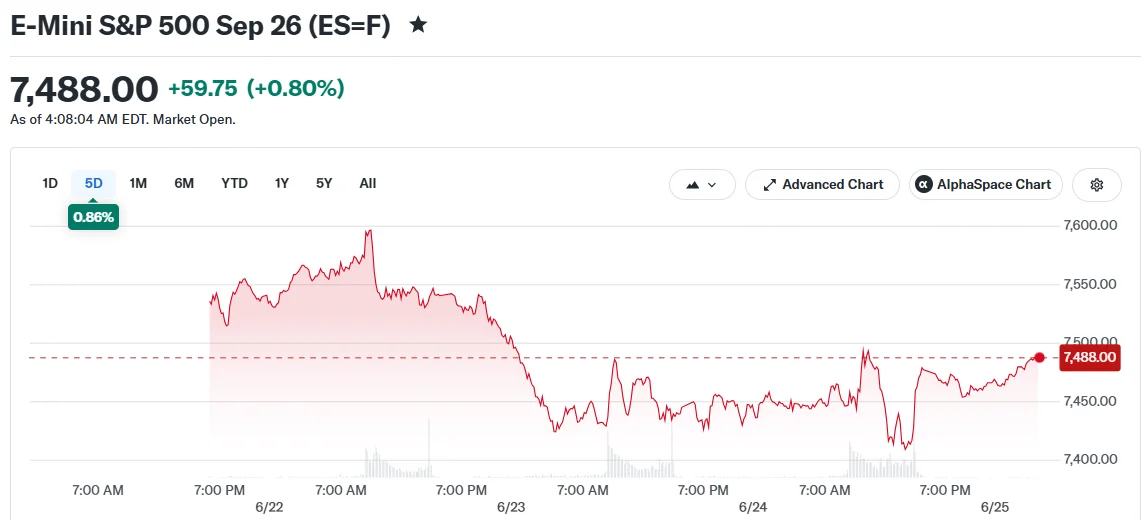 E-Mini S&P 500 Sep 26 (ES=F)
Qualcomm contributed additional momentum to technology sentiment. The semiconductor giant unveiled strategic expansion into data center infrastructure, including processors and server systems, with ambitious targets of capturing $15 billion in AI-related revenue streams. Qualcomm shares climbed over 12% on the announcement.
The technology sector’s strength failed to provide support for cryptocurrency markets. Digital assets are grappling with distinct challenges—ETF capital flight and diminished institutional appetite—that equity market recoveries cannot address.
Market participants are now focused on Thursday’s Personal Consumption Expenditures data release, the Federal Reserve’s preferred inflation metric, seeking direction on future monetary policy adjustments.
The post Crypto Plunges While Tech Rallies: Why Micron’s Surge Couldn’t Save Bitcoin appeared first on Blockonomi.


You May Also Like

Amazon (AMZN) Stock: $48B India Investment Fuels Cloud Battle Against Tech Giants

Govt drafting new law to tighten e-commerce platform accountability, plug regulatory gaps

Saudi developer Ladun pursues move to main market



