

“AI cannot benefit all of humanity if Africa is not included”— Emmanuel Lubanzadio, OpenAI’s Africa lead
As the debate over global artificial intelligence regulation and infrastructure dominates the airwaves, the conversation in Kigali this week took a markedly different turn. Speaking at the Africa CEO Forum 2026, Emmanuel Lubanzadio, OpenAI’s Africa lead, outlined a vision for the continent that shifts the focus from mere market expansion to structural empowerment.
Addressing a packed hall of over 2,500 executives, investors, and policymakers, Lubanzadio said that OpenAI was explicitly tying the success of its global mission to its adoption and utility across the African continent, signalling a strategic shift from merely providing access to actively cultivating developer ecosystems.
“The company’s mission is that AI benefits all of humanity, but it cannot benefit all of humanity if Africa is not included,” he emphasised.
Since taking the helm of the firm’s continental operations in early 2025, Lubanzadio has overseen a period of rapid, largely organic growth. He revealed that OpenAI now commands a staggering global base of over 900 million weekly active users, with a meaningful proportion of that traffic originating from Africa, drawn primarily to the company’s free intelligence tier. Yet, the core challenge facing the African tech ecosystem is not simply turning the software on; it is ensuring the underlying economics and education align with local realities.
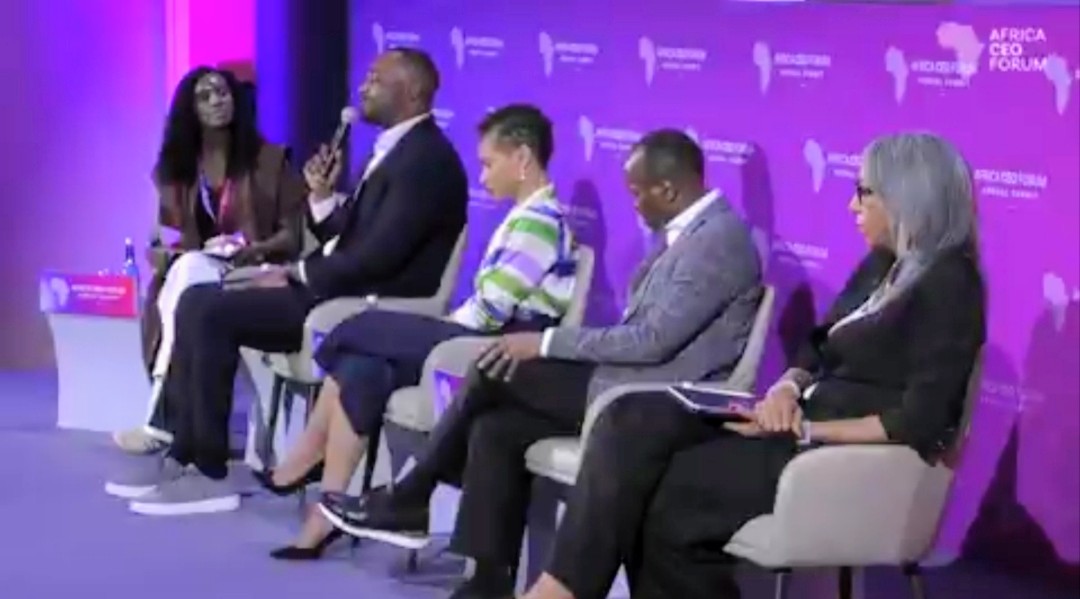 Africa CEO Forum 2026
To bridge this gap, Lubanzadio detailed a three-pronged continental strategy anchored in affordability, literacy, and developer support.
The first pillar is commercial access. Recognising the price-sensitive nature of emerging markets, the company has deployed ChatGPT-Go, an affordable iteration of its flagship generative model.
“If we are true to our mission that AI should benefit all of humanity, it needs to be not only accessible but also affordable,” Lubanzadio explained.
However, raw access without the requisite skills risks widening the digital divide rather than closing it. Acknowledging this, Lubanzadio pointed to the newly launched OpenAI Academy, an initiative piloted in Nigeria with plans to scale continent-wide. The fundamental premise is straightforward: democratising the tools means little if users lack the technical fluency to deploy them effectively.
“We believe that literacy is quite important,” he said. “It’s great to have access, but access without knowledge of how to utilise the technology is important.” He confirmed that additional academy rollouts are planned across other African markets.
OpenAI courting Africa’s AI talent
Beyond general consumer literacy, OpenAI is aggressively courting the continent’s technical talent through its Codex Ambassador programme. This initiative is designed to embed the company’s tools directly into local developer communities. For Lubanzadio, this is where the highest potential for regional transformation lies.
While policy discussions and high-level government meetings remain a staple of his mandate, he expressed a distinct preference for the grassroots tech scene. “What I do enjoy even more is actually engaging with the community, the builders, the coders, the developers who are actually doing the magic,” he says.
Also read: Sampson Ovuoba started coding at 13, dropped out of medical school to build a global developer tool
This community-first approach is already bearing fruit in East Africa’s ‘Silicon Savannah’. Lubanzadio confirmed the appointment of two Codex Ambassadors in Nairobi, Kenya, with an inaugural technical meet-up scheduled for this weekend that has rapidly drawn more than 300 registrations.

The ultimate objective, according to OpenAI’s regional head, is transitioning African users from mere consumers of free intelligence to architects of their own context-specific solutions, equipping them with the tools to build software, launch startups, and solve acute challenges in sectors like healthcare.
“We are just providing the technology, but people actually do the magic. The motto is not only providing access but also giving people the tools to utilise this transformational technology for their respective contexts,” Lubanzadio concludes.
The address in Kigali sends a clear signal to the global tech industry. As Africa cements its position as the youngest and fastest-growing digital market in the world, the next era of AI development will not just be consumed here. It will be built, iterated, and driven by African founders applying global models to local infrastructure challenges. The platforms may provide the canvas, but the continent’s developers are holding the pen.


You May Also Like

Iran’s foreign minister targeted in assassination attempt, wife killed

Bitget Unveils AI Agent Accounts to Enable Autonomous Crypto Trading




