

Sampson Ovuoba started coding at 13, dropped out of medical school to build a global developer tool
It was late in the afternoon on a quiet day in Lagos, the clock inching towards 5:00 p.m. Sampson Ovuoba sat in his chair, exhausted but expectant, staring at the screen. He had launched his software, Windframe, into the wild only hours prior, pushing it onto Product Hunt and Reddit with the nervous anticipation known only to independent founders.
Then, his phone lit up.
A notification flashed across the screen: a new subscription had been created. Somewhere in the world, an anonymous user had just paid $25 to use his product.
“I literally jumped out of my chair,” Ovuoba recalls, his voice still carrying the visceral thrill of that moment half a decade later. “It was so surreal. Someone out there in the world who doesn’t even know me, has never met me, and doesn’t even know what I look like, paid for it. It served as validation that I could actually make something people want.”
Today, the startup is not just validating its existence; it is quietly powering the internet. With over 100,000 developers who have tested the platform and upwards of 17,000 active users on its dashboard, the visual builder for Tailwind CSS has carved out a fiercely loyal niche.
It is a tool born out of personal frustration in Nigeria that is now fundamentally altering how top-tier Silicon Valley developers execute their work, including engineers at the venture capital behemoth Andreessen Horowitz (a16z).
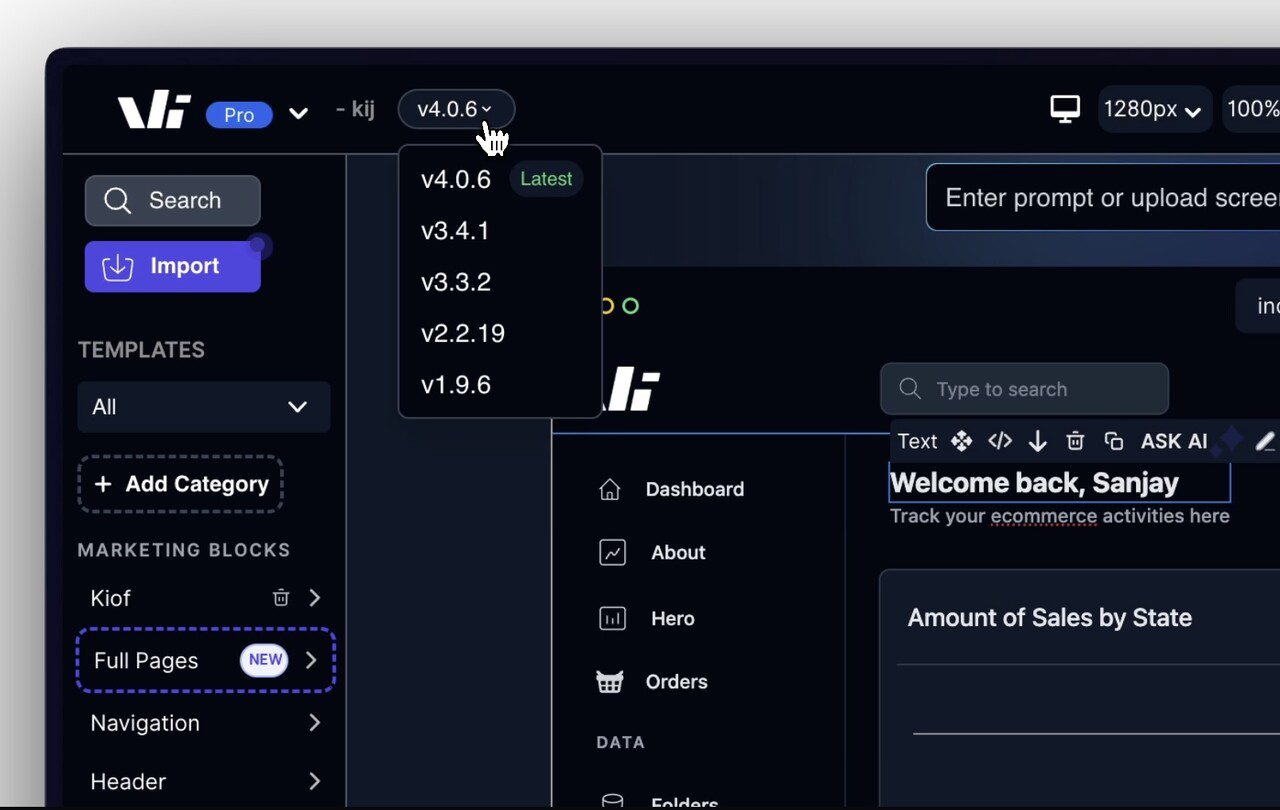 Windframe
However, the journey to creating a globally adopted developer tool was far from straightforward.
Sampson Ovuoba: The Medical School dropout
Ovuoba’s journey into software engineering did not begin in a high-tech incubator. It started in a classroom at Marist Brothers High School, a Catholic institution in Nigeria, when he was just 13.
In Senior Secondary 1 (SS1), Ovuoba was introduced to QBasic, a rudimentary programming language. He was fortunate to have a teacher who went beyond the standard Nigerian curriculum, introducing his teenage students to university-level computing concepts. Ovuoba quickly realised he had a singular aptitude for it; he went fully in for it.
In a Nigerian educational system not typically renowned for early-stage computer science, Ovuoba was privileged in all senses of the word.
“I don’t think I would be where I am today without being introduced to coding that early,” he notes. “When you are young, you don’t have a lot going on. I was giving my all to it; I was basically coding morning to night.”
Yet, the traditional expectations of a Nigerian household almost derailed his tech trajectory. Pressured to pursue a more conventional, prestigious career path, Ovuoba enrolled in Ebonyi State University to study medicine. For nearly three years, he walked the labyrinthine path of a medical student before making a quiet, monumental decision: he dropped out.
When he finally moved from the East to Lagos, he transitioned to computer science at the University of Lagos (UNILAG); he was immediately met with the systemic hurdles of the Nigerian education system. Relentless academic strikes and the eventual onset of the COVID-19 pandemic halted his progress. Refusing to wait on a broken system, Ovuoba pivoted entirely, completing his degree through the British Computer Society’s online programme.
That resilience, the refusal to wait for permission or perfect conditions, became the defining ethos of his career.
 Sampson Ovuoba, founder and CEO of Windframe
“You learn a lot from trying to do those kinds of things,” he notes reflectively. It was a rigorous, chaotic foundation, but it instilled in him a relentless, problem-solving mindset.
The Friction of the Canvas
As Ovuoba began freelancing, a persistent frustration gnawed at him. Building user interfaces (UIs) felt unnecessarily tedious. The mental tax of writing heavy, complex logic for purely visual tasks seemed fundamentally flawed. He didn’t want to become a full-time designer, but he craved an environment where developers could command visual control without sacrificing code quality.
The turning point came when he discovered the “indie hacker” movement, a global community of independent developers bootstrapping profitable software without venture capital.
“Most people don’t really give a damn if you built it in Nigeria or in San Francisco,” Ovuoba explains. “The only important thing is, does this work? Does it actually solve a problem?”
He set out to build Windframe. For seven to eight months, long before the current generative AI boom made coding look like magic, Ovuoba laboured over a custom rendering engine. It was an isolating, technically exhaustive period. There were nights marked by crushing frustration when the canvas simply refused to render correctly. But he was driven by what he calls the pure, unadulterated excitement of creation.
“There are few things in the world as interesting as the joy of actually taking your time to learn,” Ovuoba reflects. “I’m a big proponent for people to be beginners once in a while. It felt really interesting to make mistakes, spend days researching deep into the night, and get into a flow state. If you can't land on the sun, you can land on the moon. If you can't land on the moon, you can land somewhere on the stars.”
Protecting the soul of Windframe
In an African tech ecosystem that often equates success with massive venture capital funding rounds, Ovuoba represents a quiet rebellion. He has deliberately chosen the bootstrapped path.
He understands the VC model, the pressure to hyper-scale, to find every conceivable way to monetise, and the inevitable boom and bust cycle that leaves discarded startups in its wake. By retaining full autonomy, Ovuoba has protected the soul of Windframe. He doesn’t have to force a pivot to appease board members or abandon his core users to chase unicorn status.
“Once you are bootstrapped, you don’t necessarily have that external pressure,” he explains. “If you are growing 10% month over month, you are fine. My guiding star has always been to build something that people want and people love.”
This independence is precisely what allows the product to survive among giants. While multi-billion-dollar tech conglomerates like Google release broad, universal developer tools, Ovuoba has ruthlessly niched down. Windframe is tailored specifically for developers using Tailwind CSS. It is a highly specific remedy for a highly specific pain point, and it works flawlessly.
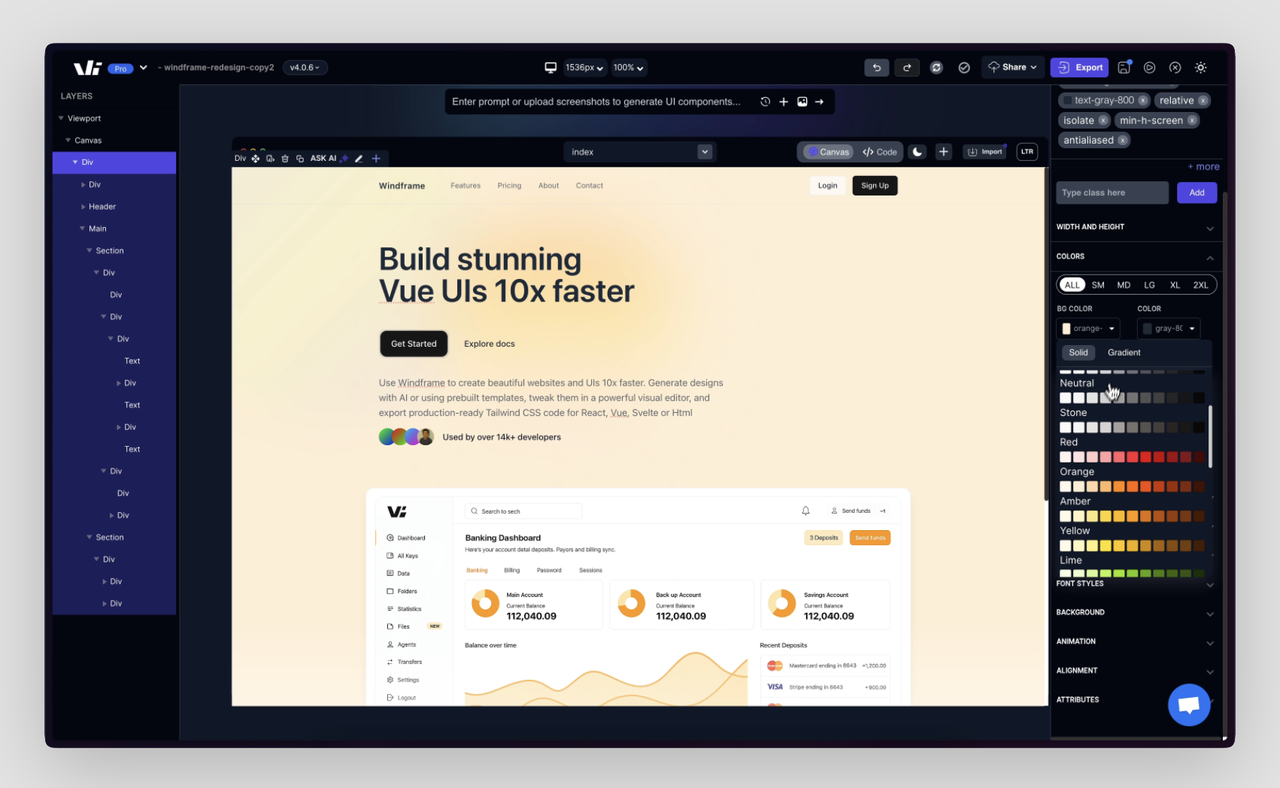 Windframe
This hyper-focus is precisely what caught the attention of global tech titans.
“When I got the email from someone at a16z telling me that they were using the product to build internal tools and having a blast, it was just surreal,” Ovuoba says. “It was the motivation to keep on going.”
Today, developer burnout is a profound industry crisis. The sheer friction of translating an idea into a functional interface can drain the creativity from even the most passionate engineers. Ovuoba views Windframe not just as a productivity tool but as a mental health buffer.
By reducing a two-hour UI coding session into a ten-minute visual drag-and-drop process, Windframe allows developers to reclaim their time and cognitive load.
Furthermore, Ovuoba isn’t fighting the AI revolution; he is advocating for the middle ground, embracing it, a world where developers don’t abandon code but are freed from its unnecessary friction. The company recently introduced an MCP (Model Context Protocol) server that connects to coding agents, allowing developers to inject their own unique taste and artistic flair into AI-generated code.
From the teenage boy tinkering with QBasic in his school laboratory to a founder whose software architecture is utilised by the brightest minds in Silicon Valley, Sampson Ovuoba’s legacy is already taking shape. He isn’t building software that forces humans to think like machines. He is building software that finally allows developers to think like artists again.


You May Also Like

BREAKING: FED Member Stephen Miran, Appointed by Donald Trump, Has Announced His Resignation

Fidelity launches AAA-rated tokenized fund via Chainlink – Details




