

Gold Is Losing Its Safe-Haven Shine — Here’s Why the Iran War Is Different
TLDR
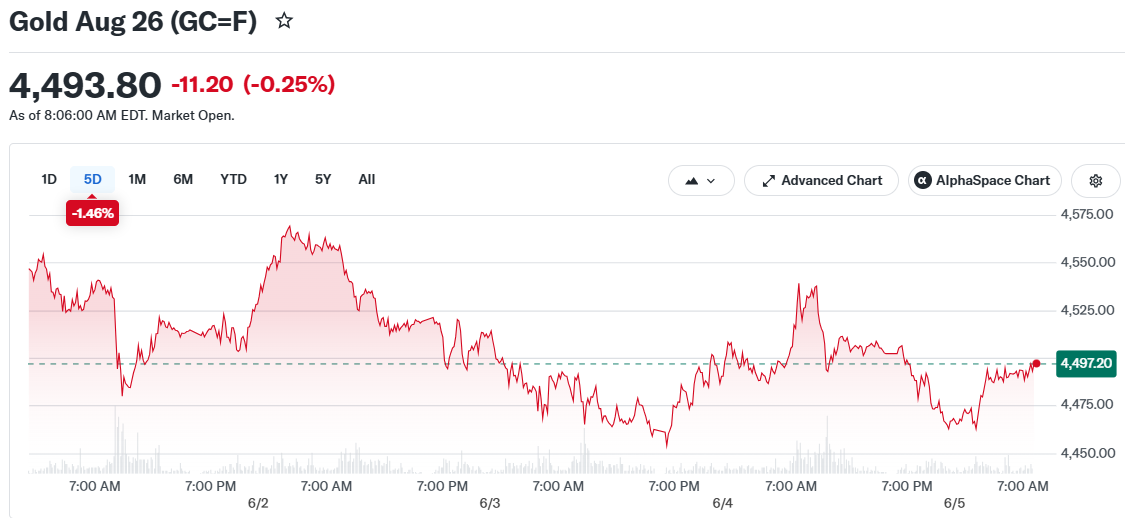
- Gold is heading for a weekly loss, down about 1.6% over the past week, trading around $4,465 per ounce.
- The Strait of Hormuz has been closed since late February due to the U.S.-Iran conflict, pushing oil prices higher and raising inflation fears.
- The Federal Reserve is now expected to keep rates unchanged through 2026, then raise them in early 2027.
- Hezbollah rejected a U.S.-brokered Israel-Lebanon ceasefire, making an Iran peace deal less likely in the near term.
- Gold has dropped roughly 12% over the past three months despite being seen as a safe-haven asset.
Gold prices are falling this week as Middle East tensions keep oil high and stoke fears of longer-lasting inflation. The precious metal has lost about 12% over three months even as geopolitical conflict rages, with a stronger dollar and rising rate expectations working against it.
 Gold Aug 26 (GC=F)
The Middle East Conflict Is Driving Oil and Inflation Fears
The Strait of Hormuz has been closed since late February, when the U.S. and Israel launched a joint military operation against Iran. About one-fifth of the world’s oil passes through the strait, and the closure has disrupted global supply and pushed energy prices higher.
Analysts at Saxo Bank warned that rapid inventory drawdowns from the closure are likely to cause fuel price shocks. They said energy prices are expected to stay elevated for an extended period.
Those higher energy prices are feeding broader inflation concerns around the world. Central banks, including the Federal Reserve, are responding by keeping interest rates higher for longer.
According to CME’s FedWatch Tool, the Fed is now expected to hold rates steady through the rest of 2026, then raise them in early 2027.
That is bad news for gold. The metal does not pay interest, so when rates stay high, it becomes less attractive compared to interest-bearing assets.
Hezbollah Rejects Ceasefire, Dimming Peace Hopes
A possible peace deal between the U.S. and Iran appeared further away after Hezbollah rejected a U.S.-brokered ceasefire between Israel and Lebanon.
Iran has made a halt to fighting in Lebanon a key condition in its own peace negotiations with Washington. Hezbollah’s refusal complicates those talks.
The announcement came as Israeli attacks killed at least four people in Lebanon. Lebanese troops moved into areas of southern Lebanon on Thursday, according to state media cited by the Associated Press.
Gold Struggles Despite Safe-Haven Status
Gold has traditionally been seen as a safe-haven asset during times of conflict and uncertainty. But this war has been different.
Spot gold slipped 0.2% on Friday to around $4,465 an ounce. Futures dropped 0.3% to $4,492 an ounce. Over the past week, gold is down about 1.6%.
Over the past three months, gold has fallen roughly 12%. A stronger U.S. dollar has added to the pressure. Because gold is priced in dollars, a stronger dollar makes it more expensive for buyers in other countries.
The dollar has strengthened partly because the U.S. is a major energy exporter and is seen as better insulated from the oil price spike caused by the conflict.
Investors are now watching Friday’s U.S. jobs report for clues about how the American labor market is holding up amid the economic pressure from the war.
The post Gold Is Losing Its Safe-Haven Shine — Here’s Why the Iran War Is Different appeared first on CoinCentral.


You May Also Like

Eltropy Named to Inc. Regionals Pacific 2026 List of Fastest-Growing Private Companies

BlackRock’s $732M IBIT Buying Lifts Bitcoin as $79K Caps Upside

Solana price confirms bearish crossover following Drift exploit, will it crash?


Trending News
More24/7 Live News
More
