Oil Prices Rise 8% as Strait of Hormuz Remains Closed and Iran Talks Stall
TLDR
- Brent crude climbed above $109 a barrel, up nearly 8% for the week
- The Strait of Hormuz remains largely closed, with tanker traffic far below normal
- Trump said he is “losing patience” with Iran and hinted at further military action
- The IEA warned global oil markets could stay “severely undersupplied” through October
- The Trump-Xi Beijing summit ended without a major concrete deal on trade or energy
Oil prices surged this week as the Strait of Hormuz stayed largely shut and diplomatic efforts to end the Iran conflict made little headway.
Brent crude climbed above $109 a barrel by Friday, up close to 8% on the week. West Texas Intermediate traded near $105. Both benchmarks posted their sharpest weekly gains in recent months.
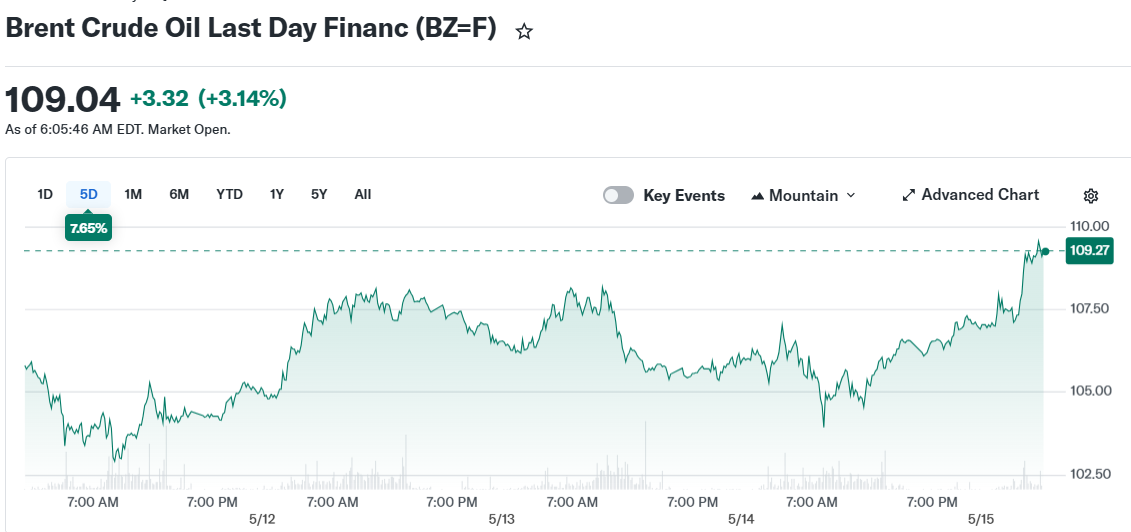 Brent Crude Oil Last Day Financ (BZ=F)
The Strait of Hormuz is the world’s most important oil shipping lane. Around one-fifth of global oil supply normally flows through it.
Since hostilities began in late February, tanker traffic through the strait has dropped sharply. Flows of crude and fuels fell by almost 6 million barrels a day in the first quarter, according to the U.S. Energy Information Administration.
Iranian state media reported around 30 vessels crossed the waterway this week. But shipping traffic remains well below normal, and tanker operators are still reluctant to resume regular transit due to security risks.
Trading house Vitol Group is offering Iraqi crude — sourced outside Hormuz — to buyers. This suggests some cargoes have found alternative routes out of the region.
Trump Loses Patience With Iran
A ceasefire has been in place since early April, but there have been several flareups. Washington and Tehran appear far apart on any lasting resolution.
The war has driven global oil inventories down at a record pace. The International Energy Agency said this week that markets could remain “severely undersupplied” through October, even if the conflict ends next month.
Trump-Xi Summit Ends Without Major Deal
President Trump met with Chinese President Xi Jinping in Beijing for a two-day summit. Talks covered the Iran war, energy security, and trade ties.
Both leaders agreed the Strait of Hormuz must stay open for global energy flows. Xi also expressed interest in buying more U.S. crude oil to reduce dependence on Gulf supplies.
Xi said China and the U.S. agreed to stabilize trade relations and strengthen communication on regional issues. Chinese state media said both sides reached “important consensus.”
However, no major concrete agreements came out of the summit. Trump said Xi liked the idea of purchasing more American oil, but China’s official readout did not include energy among the topics discussed.
Friday also saw a broad selloff in bond markets. Investors grew concerned that oil flows will not normalize quickly, which could push inflation higher.
Physical crude markets have tightened again in recent days, reflecting the wider strain on the global oil industry caused by the ongoing conflict.
The post Oil Prices Rise 8% as Strait of Hormuz Remains Closed and Iran Talks Stall appeared first on CoinCentral.


You May Also Like

Spot CVD Chart Reveals Critical Bitcoin Support Levels as Institutional Orders Surge on April 2

Bitcoin Exchange Supply Hits Lowest Level Since 2018 While Ethereum Supply Rises