Overview
The market is not reacting because a Chinese company has already produced a commercially proven EUV machine that can replace ASML. It is reacting because the durability of one of the semiconductor industry's strongest industrial moats is becoming less certain.
ASML's valuation rests on its exclusive position in production grade EUV lithography, its leadership in advanced DUV systems, its large installed base, and recurring service revenue. Progress across China's domestic semiconductor equipment ecosystem, combined with tighter export controls, is forcing shareholders to reassess how much of that advantage can be converted into future revenue.
The issue has become more consequential as artificial intelligence drives demand for GPUs, high bandwidth memory, advanced logic chips, networking processors, and custom accelerators. If China gradually develops viable domestic alternatives for mature node lithography, components, and selected advanced processes, the global semiconductor supply chain could split into separate technology systems. The consequences would extend beyond ASML to foundries, memory producers, chip designers, mining hardware manufacturers, and crypto assets linked to the computing narrative.
Key Takeaways
ASML's effective monopoly applies primarily to production grade EUV lithography, not to every part of the lithography equipment market.
Chinese suppliers do not need to replicate ASML's most advanced EUV systems immediately to reduce its addressable market in mature nodes, packaging, components, and selected DUV applications.
Export controls protect Western technology advantages in the short term, but they also accelerate China's incentive to develop domestic equipment and reduce dependence on imported systems.
AI infrastructure spending supports demand for advanced chips, but packaging, memory, power, and capacity allocation remain critical constraints alongside lithography.
The impact on crypto is indirect and is most relevant to ASIC supply, wafer costs, mining hardware efficiency, and the broader valuation of computing related tokens.
The Market Is Repricing the Scope of ASMLs Monopoly
EUV Remains One of the Hardest Industrial Systems to Replicate
ASML is the only company supplying production grade EUV lithography systems at commercial scale. According to the company's overview of its
EUV lithography systems, the technology uses light with a wavelength of approximately 13.5 nanometers to print extremely small patterns on silicon wafers.
The moat does not depend on a single machine design or patent. An EUV platform combines a high power light source, precision mirrors, vacuum systems, wafer stage control, computational lithography, mask technology, software, and a highly specialized supplier network. A competitor would need to solve not only resolution, but also throughput, uptime, overlay accuracy, yield, maintenance, and customer qualification.
ASML is also advancing High NA EUV, which is designed to support smaller features through a higher numerical aperture. Potential competitors are therefore trying to catch a platform that continues to move forward rather than a fixed generation of equipment.
ASML Does Not Control Every Lithography Segment
Describing ASML as the absolute monopoly supplier for all lithography equipment is inaccurate. ASML dominates advanced immersion DUV and exclusively supplies commercial EUV, but Nikon continues to participate in parts of the DUV market. Canon remains active in conventional lithography and is developing
nanoimprint lithography as an alternative patterning approach.
ASML's own
DUV product portfolio extends from advanced immersion systems to equipment used for less demanding production steps. These mature and specialized segments are the most plausible entry points for Chinese competitors because customers place greater weight on cost, local support, and supply security.
The relevant shareholder question is therefore not whether ASML will lose its EUV position in the immediate future. It is whether competition can gradually weaken its position in older DUV systems, mature node equipment, upgrades, spare parts, and services linked to its Chinese installed base.
Why Chinas Equipment Progress Matters to Shareholders
Competition Is Emerging Across the Manufacturing Stack
China's semiconductor equipment strategy does not require a single company to reproduce an entire ASML machine. A more realistic approach is to develop domestic capabilities across light sources, optics, wafer stages, masks, coating and developing equipment, deposition, etching, inspection, and computational lithography.
Shanghai Micro Electronics Equipment Group and other domestic suppliers already operate in packaging lithography and selected mature process applications. The company's
public corporate and product information shows that China is not beginning from a blank industrial base.
The decisive test is not whether a machine can be demonstrated in a laboratory. It is whether the equipment can run reliably inside a fabrication plant while meeting requirements for throughput, overlay, yield, maintenance intervals, and total cost of ownership.
This type of progress may not produce a single moment when ASML's moat is visibly broken. Chinese vendors only need to replace a growing share of older DUV equipment and less demanding production tools to reduce ASML's future equipment orders, upgrades, and service opportunities.
Domestic Fabs Provide a Large Testing Environment
China has substantial mature node capacity, a large electronics manufacturing base, and policy support for domestic semiconductor equipment. Local fabs can test equipment in power management chips, display drivers, microcontrollers, analog products, and selected memory applications that do not require the most advanced process nodes.
Once domestic tools achieve acceptable production efficiency, procurement decisions can shift from choosing the globally best machine to balancing performance against supply security, regulatory exposure, and local technical support.
According to the
ASML Annual Report, China has represented a material equipment market for the company while also concentrating export control, customer mix, and geopolitical risks. Domestic substitution in mature applications could therefore affect ASML before China develops a production grade EUV alternative.
Export Controls Turn Technology Leadership Into a Geopolitical Discount
Restrictions Can Accelerate Domestic Substitution
These restrictions can delay China's access to advanced manufacturing capabilities, but they also change the procurement incentives of Chinese fabs. A customer that expects future restrictions on equipment, spare parts, software, or maintenance has a stronger reason to qualify domestic alternatives, even when those alternatives initially offer lower productivity.
Export controls therefore create two opposing effects. They reinforce the scarcity of ASML's technology in the short term, while potentially reducing the company's accessible Chinese market and accelerating the development of competing domestic systems over the longer term.
Service Revenue Is Becoming a Policy Variable
A lithography system does not operate independently after installation. It requires maintenance, replacement components, software updates, process optimization, and support from field engineers. ASML's installed base has traditionally generated recurring revenue and strengthened customer retention.
If future controls extend further into maintenance, upgrades, or specific components, ASML could lose part of the lifecycle economics attached to equipment already operating in China. Chinese customers could also invest in alternative components, local maintenance capabilities, and third party service arrangements.
Investors should therefore monitor more than quarterly equipment shipments. Order intake, regional revenue, installed base management sales, licensing conditions, and customer prebuying behavior disclosed through
ASML financial results may provide earlier signs of structural change.
AI Infrastructure Spending Raises the Stakes
AI Expands Demand for Advanced Logic and Memory
Generative AI training and inference require GPUs, custom accelerators, high bandwidth memory, networking chips, and advanced packaging.
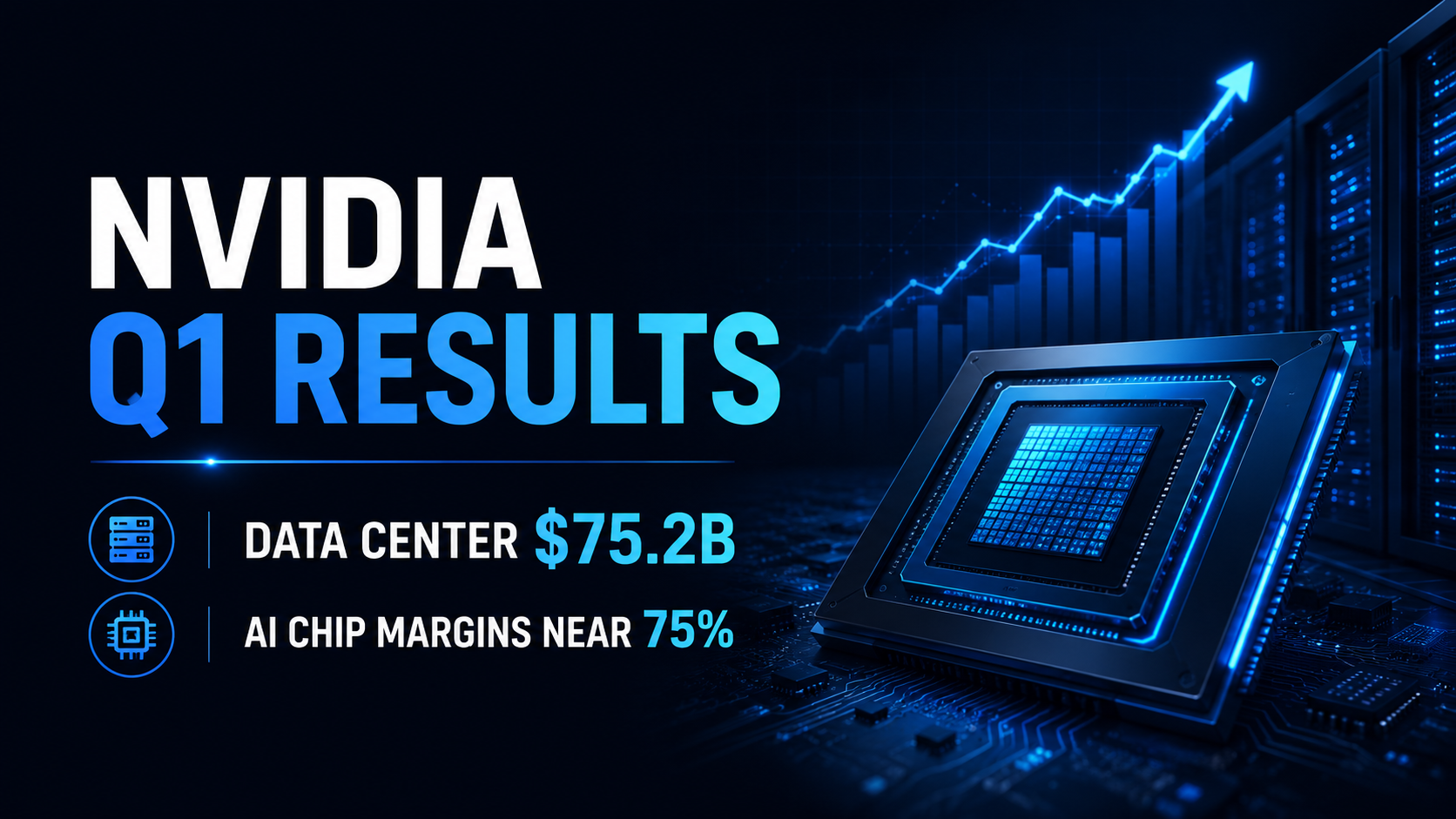
NVIDIA financial information shows how data center computing has become central to the company's growth profile, while these products depend on advanced foundry and packaging capacity.
TSMC annual reports have also emphasized high performance computing, advanced process technology, and advanced packaging as long term growth drivers. For ASML, this supports demand for EUV, advanced DUV, and services associated with increasingly complex chip production.
AI demand does not remove geopolitical risk. A fragmented semiconductor system may lead governments and companies to build duplicated capacity in different regions, use different equipment standards, and accept lower capital efficiency in exchange for supply security. ASML can still benefit from new fabs in the United States, Europe, Taiwan, South Korea, and Japan, but its accessible market may become more concentrated.
Packaging Can Constrain Supply Before Lithography Does
AI accelerator output depends on more than transistor density. Advanced packaging, high bandwidth memory, substrates, interconnects, networking equipment, cooling, and electricity can all limit the number of systems delivered to customers.
Markets often translate strong AI chip demand directly into higher ASML orders. The relationship is less predictable in practice. Foundry equipment spending is cyclical, and customers can delay capacity additions when inventories increase, financing costs rise, or end demand becomes less certain.
ASML's long term technology position remains strong, but quarterly bookings should not be expected to move in a straight line with AI investment announcements.
Implications for Semiconductor Stocks and Crypto Computing Assets
Semiconductor Stocks May Become More Differentiated
If Chinese lithography equipment continues to improve, the initial impact on ASML may appear in valuation multiples rather than an abrupt decline in earnings. Investors assign a premium to ASML because of its market share, technological visibility, and expected long term demand. Any reduction in that visibility can increase the risk premium applied to the stock.
The impact on foundries and memory producers is more complex. Additional equipment options may improve supply security for Chinese manufacturers, but fragmented technology standards can increase research, qualification, and duplicated capacity costs. Materials, component, and equipment suppliers may produce different winners depending on their geographic exposure.
Investors should distinguish between EUV, DUV, mature nodes, advanced packaging, memory, and equipment services rather than treat the semiconductor sector as a single trade. ASML's EUV franchise could remain highly profitable while its Chinese DUV and mature node exposure becomes more contested.
The Effect on Mining Hardware and Compute Tokens Is Indirect
Bitcoin ASIC miners depend on chip design, wafer fabrication, packaging, power electronics, and cooling. Tighter foundry capacity, higher wafer prices, or competition from AI customers can affect mining hardware costs and delivery schedules.
Bitcoin network computing power is still driven primarily by the Bitcoin price, electricity costs, machine efficiency, financing conditions, and regulation. The
Cambridge Bitcoin Electricity Consumption Index illustrates the energy intensive and globally distributed nature of mining. Changes in ASML's competitive position usually reach miners through the semiconductor supply chain rather than directly affecting Bitcoin demand.
The link with AI and decentralized computing tokens is even more dependent on market narratives. The
CoinGecko artificial intelligence token category includes computing networks, data projects, agents, and applications, but token prices are generally influenced by liquidity, emissions, adoption, revenue, and market sentiment.
Semiconductor supply concerns may strengthen a narrative around scarce computing resources, but they do not automatically improve the economics or token value of individual projects.
Cross asset investors can use
MEXC to observe price relationships between crypto assets, computing narratives, and traditional technology markets, while still separating industry fundamentals from short term market themes.
Exclusive View from the MEXC Crypto Pulse Research Team
The central issue is not whether China can reproduce ASML's most advanced EUV machine within the next product cycle. It is whether China can assemble a parallel semiconductor equipment ecosystem that is sufficiently capable for a growing share of domestic manufacturing. A system does not need to match the global technology frontier to reduce dependence on imported tools.
The market may be misreading the situation in two directions. One interpretation assumes that Chinese equipment progress means ASML's EUV moat is about to disappear. Public evidence does not support that conclusion. Commercial EUV requires exceptional performance across optics, light sources, control systems, uptime, and customer qualification. The opposite interpretation assumes that ASML faces no meaningful risk until a Chinese EUV system enters production. That also overlooks substitution in DUV, packaging, components, maintenance, and mature node applications.
Investors should focus on ASML's Chinese order mix, the production yield and uptime of domestic DUV systems, the scope of maintenance related export controls, and evidence that Chinese fabs are moving domestic equipment into higher value products. No single milestone would confirm that ASML's monopoly has ended, but simultaneous progress across these indicators would signal a structural shift.
The cross asset lesson for crypto is that computing power is not an abstract digital commodity. It depends on physical equipment, wafers, packaging, electricity, cooling, financing, and supply chain access. Markets can trade the computing narrative in the short term, but lasting value requires real hardware efficiency, customer demand, and sustainable cash flow.
FAQ
Does ASML Have a Monopoly on the Global Lithography Market?
ASML does not monopolize every lithography segment. Its exclusive position applies to production grade EUV systems, while it also leads advanced immersion DUV. Nikon, Canon, and Chinese suppliers remain active in mature node, packaging, and specialized applications. It is therefore more accurate to describe ASML as the monopoly supplier for commercial EUV rather than the sole supplier for the entire lithography industry.
Has China Already Developed an EUV Lithography Machine?
There is no sufficient public evidence that a Chinese supplier has commercialized an EUV system capable of supporting advanced chip production at scale. Research prototypes, patents, light source experiments, and component development do not establish production readiness. Commercial viability requires competitive throughput, overlay accuracy, uptime, yield, maintenance performance, and long term qualification by major semiconductor manufacturers.
Why Can Chinese Competitors Threaten ASML Without EUV?
Chinese suppliers can affect ASML by replacing imported equipment in mature nodes, packaging, selected DUV applications, components, and support services. Each successful substitution can reduce future system orders, upgrades, and recurring service revenue. Domestic fabs may also redesign manufacturing processes around local platforms, creating a semiconductor equipment ecosystem that is less dependent on ASML even without matching its most advanced technology.
Are Export Controls Positive or Negative for ASML?
Export controls provide short term protection by restricting access to advanced semiconductor equipment and reinforcing the scarcity of ASML's technology. They also reduce the company's accessible Chinese market, introduce licensing uncertainty, and encourage customers to qualify domestic alternatives. The net impact depends on whether growth in other regions can offset lost Chinese demand and whether restrictions expand into maintenance, software, and replacement components.
Can AI Chip Demand Offset ASMLs China Risk?
AI infrastructure demand supports investment in advanced logic chips, high bandwidth memory, and packaging, which can increase demand for ASML equipment. The relationship is not automatic. Foundry capital spending remains cyclical, while packaging capacity, memory supply, inventories, financing costs, and customer concentration influence equipment orders. AI can expand ASML's long term opportunity without fully offsetting export controls and Chinese substitution risks.
Could ASML Competition Affect Bitcoin Mining Hardware?
The effect would occur through wafer availability, foundry pricing, chip efficiency, and manufacturing lead times. Mining hardware companies rely on semiconductor fabrication and may face higher costs if AI chips absorb available capacity or if equipment restrictions reduce foundry efficiency. Bitcoin mining profitability, however, remains more directly linked to Bitcoin prices, electricity costs, mining difficulty, financing expenses, and the energy efficiency of installed machines.
Will Compute Tokens Rise if ASMLs Technology Moat Weakens?
There is no reliable direct relationship. Semiconductor supply constraints can increase investor interest in AI infrastructure and decentralized computing narratives, but token prices depend on network usage, project revenue, token emissions, liquidity, competition, and broader crypto sentiment. An ASML or lithography headline should not be treated as automatic fundamental support for any specific computing related token.
Disclaimer
This content is provided for general information and market research purposes only. It does not constitute investment advice, financial advice, legal advice, tax advice, or a recommendation to enter into any transaction. Crypto assets, stocks, and related financial instruments may experience substantial price volatility, and investors may lose part or all of their capital.
Readers should conduct independent research, verify relevant information, and evaluate their financial circumstances, objectives, and risk tolerance before making decisions. Past performance does not guarantee future results. The MEXC Crypto Pulse Team accepts no liability for direct or indirect losses arising from the use of or reliance on this information.
About the Author
The MEXC Crypto Pulse Team focuses on crypto market trends, on-chain narratives, fintech developments, and digital asset ecosystem research. The team tracks public market data, company announcements, third-party market platforms, and industry news sources to help users better understand market structure, risks, and opportunities.
Research References