Overview
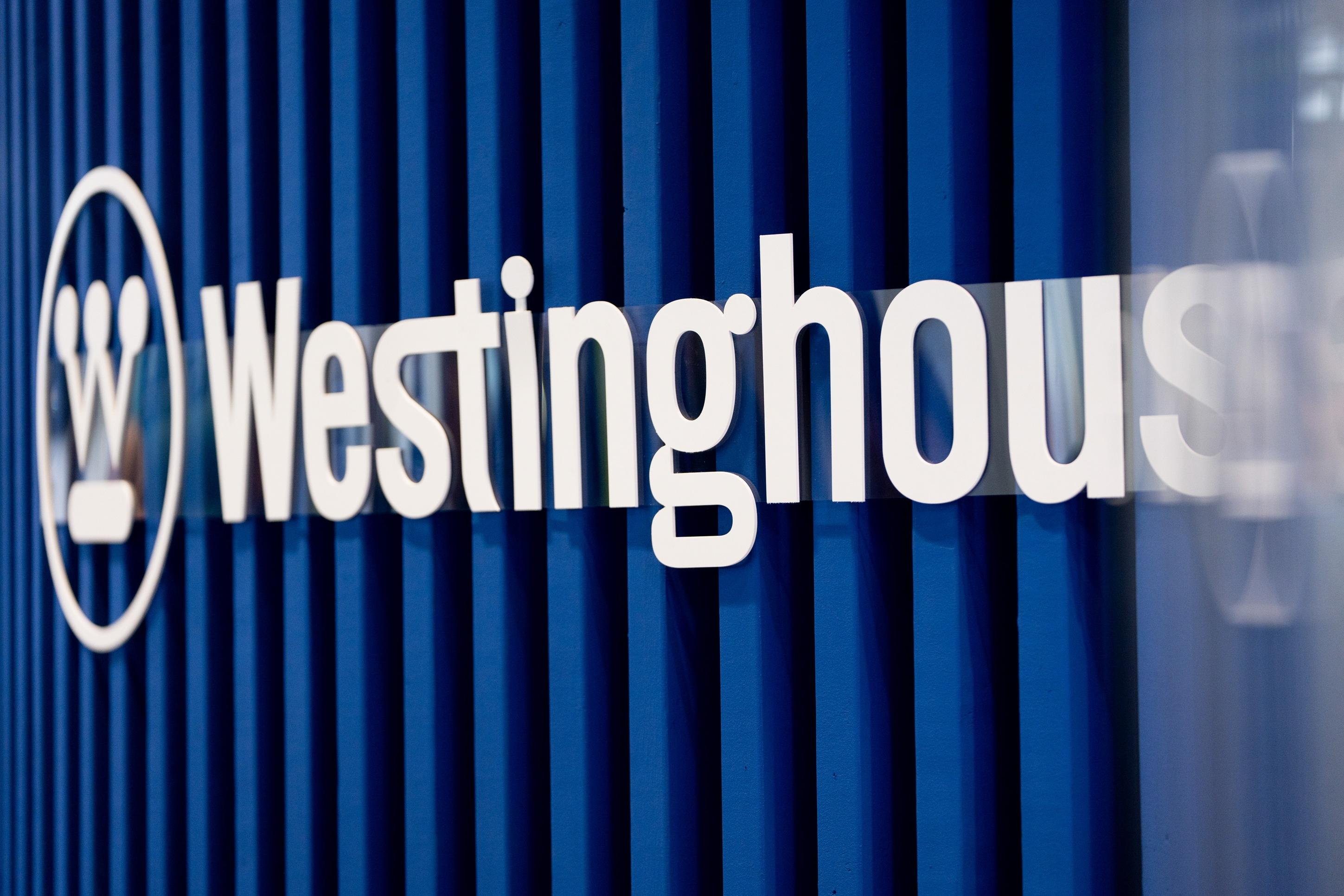
When the binding constraint on compute shifts from chips to electricity, the assets that supply the electricity get repriced. On July 31, Westinghouse Electric Company confirmed it had confidentially submitted a draft registration statement for a US initial public offering to the Securities and Exchange Commission.
Reuters reported that the nuclear technology and services supplier, jointly owned by Cameco and Brookfield Renewable Partners, was joining a wave of nuclear companies tapping capital markets, with investor enthusiasm strengthening over the past year as Big Tech's data centre buildout lifts US power demand.
One point needs establishing immediately: this is not a conventional opportunistic listing. According to an
exhibit Cameco filed with the SEC, the strategic partnership between the US Government, Westinghouse and its owners contains a clause stating that if the government's participation interest has vested on or before January 2029 and the IPO valuation is US$30 billion or more, the government is entitled to require an IPO. The listing is, to a meaningful degree, being pushed by contract structure.
The question for investors is therefore not whether the nuclear narrative holds. It is whether this offering funds future expansion or monetises gains the existing owners have already earned. Share count, price range and valuation are all undetermined, so no specific figure has any official basis yet.
Key Takeaways
Westinghouse confirmed on July 31, 2026 that it had confidentially submitted a draft Form S-1 registration statement to the SEC.
Brookfield Renewable Partners holds 51% and Cameco holds 49%, following an acquisition completed in November 2023.
The number of shares and the price range have not been set, and the proposed offering depends on market and other conditions.
The October 2025 partnership framework covers at least US$80 billion of new reactor investment, with the government granted a participation interest entitling it to 20% of Westinghouse cash distributions above US$17.5 billion.
If the participation interest vests on or before January 2029 and the IPO valuation is US$30 billion or more, the government may require an IPO and convert the interest into a five-year warrant.
If no vesting event occurs before January 2029, the participation interest ceases to have any rights with respect to Westinghouse.
Westinghouse's adjusted EBITDA reportedly grew about 30% in 2025, and Cameco's share of Westinghouse adjusted EBITDA rose to US$122 million in the first quarter of 2026 from US$92 million a year earlier.
Cameco separately reported second-quarter adjusted net earnings of US$77 million, or 18 cents a share, half the 36-cent average analyst estimate.
Behind a Confidential Filing
Ownership and Deal History
Understanding this listing starts with the asset's provenance.
The Globe and Mail traced the path: Brookfield's private equity business sold Westinghouse to Cameco and Brookfield Renewable Partners for US$4.5 billion plus US$3 billion in assumed debt, with Brookfield keeping 51% and Cameco taking 49%. Reuters described the 2023 transaction as a US$7.9 billion deal, with the difference reflecting whether assumed debt is counted.
The asset's industrial standing is not in dispute. Reuters noted that Westinghouse built the world's first commercial pressurised water reactor at Shippingport, Pennsylvania in 1957, and that more than half of the nuclear reactors operating globally use its technology, according to the firm. The Cranberry Township, Pennsylvania-based company announced last month that it is partnering with the US Department of Energy to strengthen the domestic commercial nuclear supply chain.
What Confidential Submission Signals
Confidential filing is a process choice rather than a progress indicator. Reuters noted that such filings let companies keep their finances under wraps until closer to listing and prepare away from public market scrutiny. In practice, that means the only financial information currently available comes from shareholder Cameco's quarterly disclosures rather than from Westinghouse's own statements.
Timing is also worth noting.
MINING.COM, citing Desjardins Securities analyst Bryce Adams, reported his view that the filing is a normal progression of a process contemplated since October 2025 and a reminder of the potential value-creation opportunity at Westinghouse. The same report noted Adams values Cameco's share at roughly C$15.1 billion, about US$10.8 billion. That is a broker estimate, not company disclosure, and it is not guidance on final pricing.
Why Contract Structure Is Driving This Listing
The $80 Billion Partnership and the Participation Interest
This is the part most often simplified and most worth reading in full. Per Cameco's regulatory filing, the agreement provides for the US Government to arrange financing and facilitate permitting and approvals for new Westinghouse reactors built in the US, with an aggregate investment value of at least US$80 billion, including near-term financing of long lead time items.
In exchange, the government is granted a participation interest. Once vested, it entitles the government to 20% of any cash distributions in excess of US$17.5 billion made by Westinghouse after the interest is granted. Vesting requires the government to make a final investment decision and enter definitive agreements for construction of new US reactors with an aggregate value of at least US$80 billion. The filing also states that if no vesting event occurs before January 2029, the participation interest ceases to have any rights with respect to Westinghouse.
The $30 Billion Threshold
The second layer matters more. The filing specifies that if the participation interest has vested on or before January 2029 and the IPO valuation is US$30 billion or more at that time, the government is entitled to require an IPO. Immediately prior to or in connection with the listing, the participation interest converts into a five-year warrant to purchase equity equivalent to 20% of the public value of the IPO entity at exercise, after deducting US$17.5 billion from that public value.
For ordinary investors, that structure has direct consequences. The US$30 billion figure is not merely a market expectation; it is a contractual trigger. It also means a potential dilution source sits on the other side of the listing. The filing further notes that the parties expect to negotiate and enter definitive agreements replacing the binding term sheet, and that the term sheet remains effective until they do, which means the arrangement has not reached final form.
The Bottleneck Has Moved From Chips to Electrons
Queues and the Supply Gap
Nuclear captured capital markets attention now because power supply is structurally tight. According to a
filing Greenbacker Renewable Energy submitted to the SEC, hyperscalers have guided to more than US$600 billion of capital spending in 2026 alone, roughly three-quarters of it on AI infrastructure. The filing states plainly that the bottleneck is the speed at which new power generation can be built and the locations where it can be built, and notes that interconnection queues are so clogged that roughly a third of announced data centre projects face delays purely for lack of power.
That is where the bottleneck trade framing comes from. When the constraint shifts from chips to electrons, the valuation premium migrates from the semiconductor supply chain toward generation and transmission assets.
The Timelines Do Not Line Up
The same filing supplies the most direct challenge to the nuclear case. It states that gas turbine manufacturing capacity is not scaled to today's demand and is effectively sold out with roughly five-year lead times, while new nuclear is a decade away and still has much to prove on cost competitiveness.
That sentence identifies the core tension. AI compute buildouts are measured in quarters and hyperscaler capital is being deployed now, while a large pressurised water reactor's path from final investment decision to grid connection runs far longer. Westinghouse's AP1000 technology is widely deployed and the supply chain built during Vogtle units 3 and 4 shortens some lead times, but it does not compress a decade into two or three years.
Nuclear is the long-run answer to the power bottleneck. It is not an immediate source of supply for this cycle of compute expansion. Aligning those two timelines incorrectly is the most common analytical error with names like this.
The same logic applies to bitcoin mining, where electricity is likewise the dominant cost. Miners and data centre operators bid into the same power markets, so rising power prices compress both sets of margins simultaneously, and nuclear capacity will not relieve that tension until the next decade. Investors tracking cross-asset structure can follow both curves on venues that list crypto and equities together, such as
MEXC, where the energy constraint is often priced on different schedules in the two markets.
Financial Clues and the Valuation Blank
Because the submission is confidential, Westinghouse's full financials are not public. The available clues come from shareholder disclosures and reporting.
Forbes' analysis noted that Westinghouse's adjusted EBITDA reportedly increased 30% in 2025, while Cameco's share of Westinghouse adjusted EBITDA rose to US$122 million in the first quarter of 2026 from US$92 million a year earlier.
The same piece framed the questions investors need to answer for themselves: how much of that growth came from recurring services, and how much from contract timing, pricing or new projects. The nuclear story may be powerful, but the financial disclosure still has to support it. It also observed that key IPO details including valuation and selling intentions remain confidential, so investors can understand the ownership history but cannot yet judge the stock.
Shareholder data provides another reference point. MINING.COM reported that Cameco posted second-quarter adjusted net earnings of US$77 million, or 18 cents a share, half the 36-cent average analyst estimate, against US$308 million and 77 cents a year earlier. The same report cited Scotia Capital analyst Orest Wowkodaw's view that while the quarter was softer, a potential Westinghouse IPO is likely to be received positively by investors.
That contrast tells you what is driving pricing right now: a premium based on expected revaluation of the portfolio rather than on current earnings.
Risks and Scenarios
The first risk is the absence of a valuation anchor. Until share count, price range and full financials are published, judgements about whether a valuation is reasonable lack a basis. Forbes framed the point directly, arguing investors must separate Westinghouse's strong recurring revenue from speculative growth and scrutinise whether the offering primarily funds future expansion or monetises existing owners' substantial gains.
The second is execution timeline. New nuclear projects run on decade-long schedules involving licensing, supply chain, cost overrun and interest rate variables. Historic large nuclear builds have frequently exceeded budget and schedule, and those risks rarely appear in early trading prices.
The third is the structural effect of the government terms. The participation interest converts, under specified conditions, into a warrant equal to 20% of public value after deducting US$17.5 billion, which is a genuine dilution source. Meanwhile, if no vesting event occurs before January 2029 the interest lapses, which also implies uncertainty around the US$80 billion construction commitment tied to it.
On scenarios, the base case is that the offering proceeds when conditions allow, with a valuation near or above US$30 billion establishing a new pricing benchmark for the nuclear sector. A second is delay, since a confidential submission is not a commitment to list and timing can slip if markets weaken. A third is that the listing completes but project execution runs slower than expected, at which point valuation reverts from narrative-driven to cash-flow-driven, a transition that typically comes with considerable volatility.
As of publication, no offering size, price, listing date or final valuation has been announced, and no official timetable exists.
Exclusive View from James Mitchell
What deserves attention here is not the nuclear revival narrative but the fact that the listing trigger is written into a contract. The regulatory filing states that if the participation interest vests on or before January 2029 and the valuation reaches US$30 billion or more, the government may require an IPO. That changes the analytical frame. When listing timing is set partly by contract terms rather than by shareholders picking their moment, the alignment between the pricing window and market sentiment weakens. Investors habitually assume issuers list when conditions are most favourable, and that assumption does not necessarily hold here.
Three misreadings look likely. The first is treating US$80 billion as booked orders. The filing conditions vesting on the government making a final investment decision and entering definitive agreements, and the parties still expect to negotiate final agreements replacing the binding term sheet. This is a conditional commitment, not a backlog. The second is treating nuclear as an immediate remedy for the current power squeeze. A regulatory filing states plainly that new nuclear is a decade away while gas turbines carry roughly five-year lead times, yet hyperscaler capital is being deployed this year. The timelines simply do not meet. The third is ignoring the warrant. The government interest can convert into a warrant for 20% of public value after deducting US$17.5 billion, and that cannot be omitted from any per-share calculation.
Three verifiable markers deserve tracking. First, when the public prospectus arrives and how it splits recurring service revenue from project revenue, the only basis for judging growth quality. Second, progress on the government's final investment decision and definitive agreements, which determines whether the participation interest vests and whether the US$80 billion framework converts into real orders. Third, existing shareholders' selling intentions: if the deal is weighted toward secondary sales rather than primary proceeds, it resembles an exit more than a financing, and the two carry very different implications for post-listing performance.
The cross-asset lesson is that bottlenecks move, and the valuation premium follows them. For several years the premium sat in the semiconductor supply chain. It is now migrating toward generation and transmission, and the next stop could be transformers, grid equipment or site rights. The same pattern applies to crypto. Bitcoin mining's dominant cost is electricity, miners bid into the same power markets as AI data centres, and structurally higher power prices compress both sets of margins, with nuclear capacity unable to relieve that until the next decade. Bitcoin remains well below last year's high, which suggests energy cost pressure is not yet fully reflected in crypto pricing, and that dislocation is worth watching. From a risk management standpoint, the essential discipline with long-cycle infrastructure narratives is to put the timeline into the valuation rather than only the terminal market size.
This analysis rests on published regulatory filings, shareholder disclosures and credible reporting available now. Offering terms, financial data and project progress could each change the conclusion, and no single scenario should be treated as a fixed expectation.
FAQ
Is Westinghouse already listed?
No. The company confirmed on July 31, 2026 that it had confidentially submitted a draft Form S-1 registration statement to the SEC, which is only the first step. Cameco's announcement states that the number of shares and the price range have not been determined, and that the proposed offering is subject to market and other conditions. Confidential submission lets companies keep financials private until closer to listing, so Westinghouse's full statements are not yet visible.
Who owns Westinghouse?
Brookfield Renewable Partners holds 51% and Cameco holds 49%, following an acquisition completed in November 2023. The Globe and Mail reported the consideration as US$4.5 billion plus US$3 billion in assumed debt, while Reuters described the transaction as a US$7.9 billion deal. The company is headquartered in Cranberry Township, Pennsylvania, and traces its lineage to the business founded in 1886 by George Westinghouse.
What is the US Government's role in this?
The government reached a strategic partnership framework with Westinghouse and its owners in October 2025 covering at least US$80 billion of new reactor investment, with Washington arranging financing and facilitating permitting and approvals. In exchange it receives a participation interest entitling it, once vested, to 20% of Westinghouse cash distributions above US$17.5 billion. Vesting requires a final investment decision and definitive agreements, and the interest lapses if no vesting event occurs before January 2029.
Why is this listing described as contractually required?
Because the agreement contains a trigger. Per Cameco's regulatory filing, if the participation interest has vested on or before January 2029 and the IPO valuation is US$30 billion or more at that time, the government is entitled to require an IPO. That makes US$30 billion a contractual threshold rather than merely a market expectation. The interest would then convert into a five-year warrant for 20% of public value after deducting US$17.5 billion.
Can nuclear actually solve the AI power bottleneck?
Long term yes, near term no. A filing submitted to the SEC states that new nuclear is a decade away and still has much to prove on cost competitiveness, while gas turbine lead times run roughly five years with manufacturing capacity effectively sold out. The same filing notes that roughly a third of announced data centre projects face delays purely for lack of power. AI buildouts are measured in quarters, which leaves a clear mismatch with nuclear construction cycles.
Is Westinghouse profitable?
Full financials are not public because the submission is confidential. The available clues come from shareholder disclosure: Westinghouse's adjusted EBITDA reportedly grew about 30% in 2025, and Cameco's share of Westinghouse adjusted EBITDA rose to US$122 million in the first quarter of 2026 from US$92 million. How much of that came from recurring services versus contract timing or new projects cannot be separated yet and requires the public prospectus.
What does this mean for Cameco shareholders?
It implies a potential revaluation while current earnings remain soft. Cameco reported second-quarter adjusted net earnings of US$77 million, or 18 cents a share, half the average analyst estimate, against US$308 million a year earlier. One analyst argued that despite the softer quarter a potential Westinghouse IPO would likely be received positively, and another valued Cameco's stake at roughly US$10.8 billion. Both are broker views rather than company disclosure.
How does this connect to crypto markets?
Through the shared constraint of electricity cost. Bitcoin mining and AI data centres bid into the same power markets, so structurally higher power prices compress margins in both. Nuclear is regarded as the long-run answer, but capacity will not arrive until the next decade, so tightness persists near term. For crypto investors, tracking power prices and the pricing of generation assets offers more practical signal than following any single sector narrative.
Disclaimer
This article is provided for informational and research purposes only and does not constitute investment advice, financial advice, legal advice, tax advice or any recommendation to transact. The offering developments, contractual terms and financial figures described here come from public regulatory filings, shareholder disclosures and credible reporting; formal announcements from Westinghouse and its owners and the eventual public prospectus are the authoritative sources, some information was not public at the time of writing, and the text notes that status where applicable. Broker valuations and third-party views cited here are those institutions' judgements and do not establish the company's value. Prices of crypto assets, equities and other related financial instruments can move sharply over short periods, newly listed securities are especially prone to severe volatility in early trading, and investors may lose their entire principal. Historical performance, technical indicators and on-chain data cannot guarantee future outcomes and should not be read as a promise or forecast regarding any asset. Readers should conduct their own independent research, verify official information directly, and evaluate any decision against their own financial circumstances, investment objectives, experience and risk tolerance, consulting a qualified professional adviser where appropriate. The MEXC Crypto Pulse team accepts no liability for any direct or indirect loss arising from use of or reliance on the information in this article.
About the Author
James Mitchell specializes in technical analysis, market trends, and trading strategies for both Bitcoin and altcoins. Based in London, he has over 10 years of experience in financial markets. Before joining MEXC Learn, James worked as a senior analyst at a leading European investment firm, where he developed expertise in risk management and quantitative trading. His transition to cryptocurrency markets began in 2017, and he has since become recognized for his data-driven approach. He holds a Master's degree in Financial Economics from the London School of Economics. His analytical approach combines traditional technical analysis with on-chain metrics to provide readers with actionable insights.
Areas of Expertise:
Research References